Table of Contents
What if the best Korean meal you ever have isn’t at a famous barbecue restaurant at all? What if it’s a bowl of soup at a plastic table in a Busan back alley? That question sits at the heart of a quiet shift happening in Korean food tourism right now.
For years, visitors landed in Korea with the same shopping list: Korean barbecue, fried chicken, spicy tteokbokki. Good choices, sure. But they only tell part of the story.
Beyond Barbecue: The New Face of Korean Food Tourism
Something has changed in how people plan their trips to Korea. Instead of relying only on guidebooks, travelers now scroll through TikTok, Reddit, and Instagram before they even land at Incheon.
What they find there is different from the usual highlight reel. They find dishes locals actually eat on a Tuesday afternoon, not just the ones designed for tourist photos.
This matters because Korean food tourism has always been shaped by what gets shown, not necessarily by what gets eaten most often. Online communities are closing that gap fast.
Travel bloggers now recommend soups, snacks, and convenience store combos alongside the classics. According to reporting from Korea Times, this trend reflects a growing appetite for everyday Korean life, not just its highlight reel.
Why does this shift matter for you as a traveler? Because it means your trip can taste more like a local’s actual week, not a curated tourist menu.
Korean food tourism is no longer just about big, famous dishes. It’s about small, honest ones too.
Dwaeji Gukbap: Busan’s Comfort in a Bowl
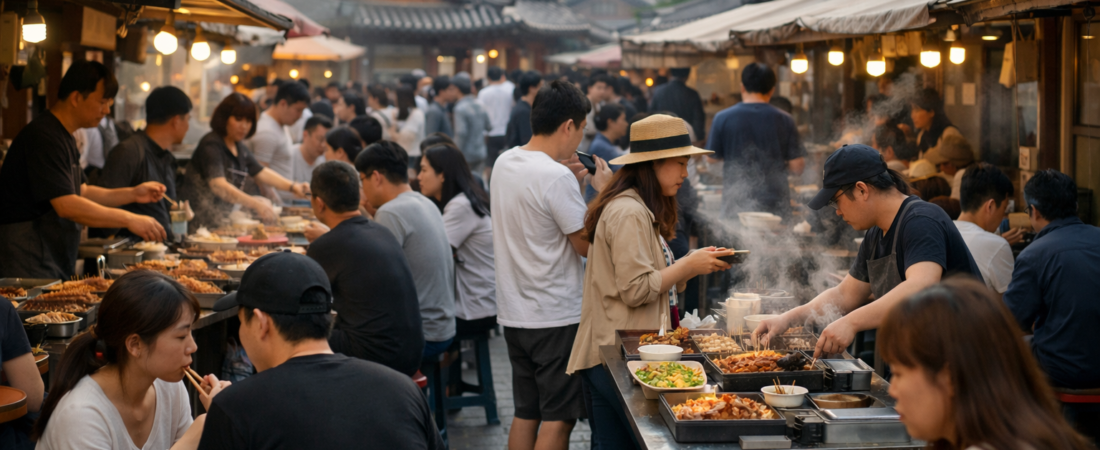
Let’s talk about dwaeji gukbap, Busan’s pork rice soup. If you’ve never heard of it, you’re not alone — it rarely makes the front page of tourist brochures.
But ask any Busan local what they eat when they need comfort, and this bowl comes up again and again. The broth is milky, made from slow-simmered pork bones, and it carries real depth without any spice at all.
That last point is worth pausing on. Korean food has a reputation for heat, and plenty of dishes earn it.
Dwaeji gukbap breaks that pattern. It offers warmth without fire, which makes it an easy entry point for travelers who love Korean flavors but fear the chili.
Here’s the fun part: you get to build your own bowl. Salt, fermented shrimp paste, and chopped chives sit on the table, waiting for your spoon.
Want more kick? A spoonful of red chili paste turns the soup bold and spicy in seconds. This kind of customization is rare in Korean dining, where dishes usually arrive fully seasoned and final.
Think of it like building your own bowl of ramen toppings — except this one comes with centuries of Busan port-city history behind it. That history matters, too.
Busan grew as a fishing and trading port, and dwaeji gukbap reportedly traces back to the Korean War era, when pork was affordable and communities needed hearty, warming meals. Understanding that background adds another layer to your bowl of soup.
Snacks, Convenience Stores, and the Social Media Effect
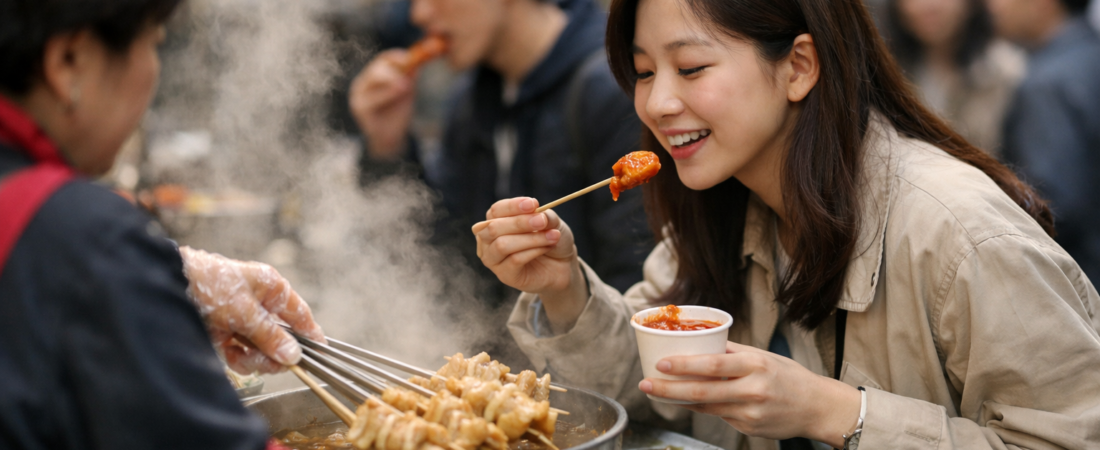
Here’s a fact that might surprise you: some of the most searched Korean foods online right now aren’t restaurant dishes at all. They’re convenience store snacks.
Korea’s convenience stores, found on nearly every corner, have quietly become creative kitchens. Store brands mix sweet and savory in ways that rarely exist elsewhere — think cheese-dusted rice cakes or spicy noodle cups turned into upgraded meals with a few added toppings.
Travelers film themselves building these combos and post the results. The videos rack up views, and suddenly a $2 snack becomes a bucket-list item for Korean food tourism.
Koreans take their convenience store snacks seriously — this is not an exaggeration when you see the seasonal lineup changes every few weeks. Why does this trend spread so fast?
Because social media rewards discovery, not just familiarity. A stranger’s video showing an unexpected snack hack feels more authentic than a polished restaurant ad.
That authenticity is exactly what today’s Korean food tourism seems to be chasing. It also explains why sweet and savory snacks, once overlooked by foreign visitors, now trend across travel forums.
These aren’t dishes designed for tourists. They’re everyday products that happened to go viral, which makes them feel more real.
Real-time trends move fast, and Korean food culture moves right along with them, launching new limited items almost weekly.
What This Shift Means for Travelers and for Korea
So what does this all mean going forward? Korean food tourism is maturing, moving past its “greatest hits” phase into something more textured and personal.
Visitors no longer want a checklist. They want a feeling — the sense that they ate what a local actually eats, in the place a local actually eats it.
This shift carries real weight for small businesses too. Family-run soup restaurants and neighborhood convenience stores now find themselves featured to global audiences they never expected to reach.
That visibility can bring both opportunity and strain, since a sudden wave of foreign visitors can crowd out the regular customers these places were built to serve. Some Busan soup shops have reportedly had to adjust hours or add English menus just to keep up with new demand.
There’s something quietly moving about this whole trend, if you sit with it for a moment. Food, at its core, is one of the simplest ways humans share dignity with each other — a stranger hands you a warm bowl, and for a moment, distance disappears.
But let’s be honest, too: viral attention can flatten a dish into a trend, stripping away the daily, unglamorous meaning it holds for the people who ate it long before any camera showed up. The hope lies in travelers who slow down enough to ask why a dish matters, not just how it looks on a screen — and in the local vendors who keep cooking with care, whether or not anyone is filming.
That balance, between visibility and authenticity, will likely shape the next phase of Korean food tourism. Restaurants and convenience stores now face a choice: adapt to global attention or stay quietly local.
The best version of this trend probably lets both exist side by side. A Busan grandmother’s soup recipe and a viral snack hack can both be true, valuable parts of Korean food culture at the same time.
Korean food tourism, at its best, invites you to slow down and taste something real. So here’s a question worth sitting with: next time you plan a trip to Korea, will you search for the famous dish, or the one your favorite blogger just stumbled into by accident?
AI-Generated Photorealistic Image — All people, scenes, and details in this image are entirely AI-generated and fictional. Not a real photograph of an actual person or event. 이 이미지는 AI로 생성된 가상 이미지입니다.


Leave a Reply