Table of Contents
Would you pay over 260 million dollars for a painting you can never see again? That is roughly the estimated value of a missing Vermeer, one of the most expensive stolen paintings in the world. This month, Osaka is bringing his surviving masterpieces together, and the story behind them is stranger than fiction.
Johannes Vermeer painted quiet rooms, soft light, and a handful of unforgettable faces. Fewer than 40 of his works survive today, which makes every Vermeer exhibition a rare event. From August 15 to September 27, Osaka hosts what organizers are calling a “century exhibition,” and Korean travelers are already booking flights.
Who Was Vermeer? The Mystery Behind a Rare Master
Vermeer worked in Delft during the Dutch Golden Age, a period of enormous wealth and artistic output in the 17th century. Unlike Rembrandt, who produced hundreds of paintings, Vermeer left behind only 34 to 37 confirmed works. Scholars still argue over exact numbers, because his signature and dating habits were inconsistent.
This scarcity is exactly why Vermeer’s name carries so much weight today. Museums rarely lend his paintings, and when they do, crowds follow. Do you know how few painters can pack a gallery just by having their name on a poster? Vermeer is one of them.
His technique explains part of the fascination. Vermeer used light like no one else in his era, turning ordinary domestic scenes into moments of stillness and wonder. Some historians believe he used a camera obscura, an early optical device, to study light and perspective with unusual precision.
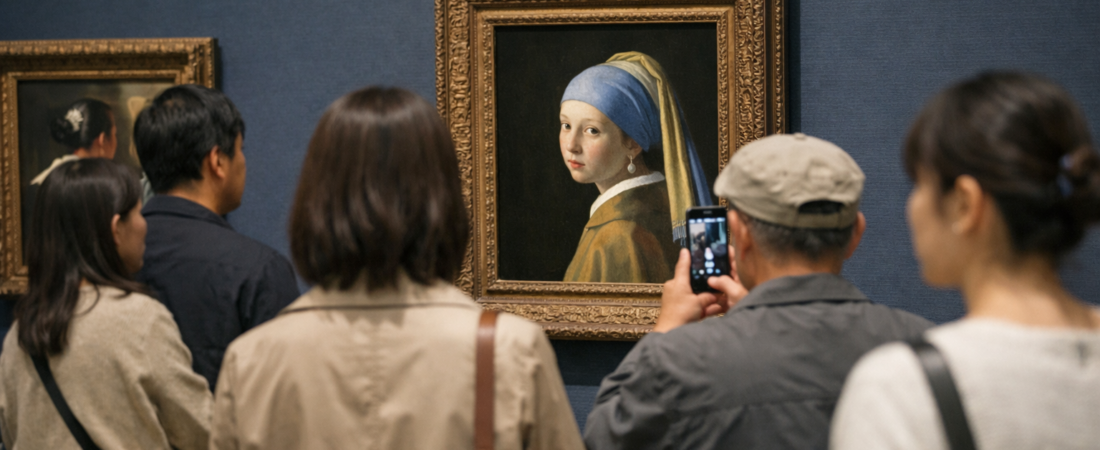
That theory remains debated, but the results speak for themselves. “Girl with a Pearl Earring,” often called the Dutch Mona Lisa, shows a young woman glancing over her shoulder with an expression no one has fully explained. Is she curious, startled, or simply caught mid-thought? Vermeer never tells us, and that ambiguity is part of his lasting power.
The Osaka exhibition brings this painting together with “The Concert,” another Vermeer work with a far darker history. Together, they represent both the beauty and the danger that come with owning something this rare. You can read more background on the Dutch Golden Age art market through Maeil Business Newspaper, which has covered the exhibition in detail.
The World’s Most Expensive Stolen Painting: A Vermeer Called The Concert
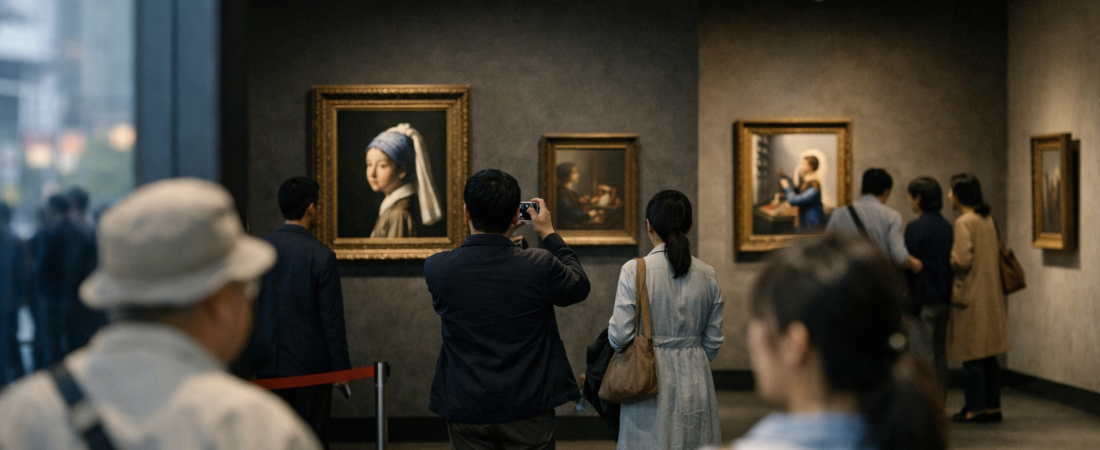
Here is where the story turns from art history into a genuine mystery. “The Concert,” a Vermeer painting depicting three musicians in mid-performance, was stolen in 1990 from the Isabella Stewart Gardner Museum in Boston. It has never been recovered, and it remains one of the most valuable unsolved art thefts in history.
Estimates place its value at around 260 million dollars, which converts to roughly 360 billion Korean won. That number alone makes it the most expensive stolen painting in the world. Thieves posing as police officers took 13 artworks that night, but the missing Vermeer is the one experts mention first.
Why does a single painting carry that much weight? Rarity explains most of it. With so few confirmed Vermeer works in existence, losing even one permanently reshapes how the artist’s entire body of work is studied and valued.
The Gardner Museum still offers a reward for information leading to its return, and empty frames hang on the museum walls today, waiting. That detail alone tells you something about how museums choose to remember loss rather than hide it. It turns absence into its own kind of exhibit.
The Osaka show does not display the stolen original, since it remains missing after more than three decades. Instead, curators use high-resolution reproductions and historical documentation to explain its significance alongside the authentic Vermeer paintings on loan. This approach lets visitors understand the full scope of Vermeer’s legacy, including the parts that no longer physically exist.
For art historians, this case has become a teaching moment about security, provenance, and the fragile line between preservation and permanent loss. Every major museum has tightened protocols because of incidents like this one. Vermeer’s missing masterpiece, in a strange way, changed how the entire art world protects its most valuable holdings.
Why Osaka? Korean Travelers and the 2026 Vermeer Exhibition

Osaka has long been a favorite short-trip destination for Korean travelers, thanks to cheap flights and a food scene that rewards wandering. Pairing that appeal with a rare Vermeer exhibition is a smart move by organizers. Expect long lines and even longer waits for photos near “Girl with a Pearl Earring” — Koreans take their travel itineraries seriously, and this one just became non-negotiable.
The exhibition’s short window, running only from August 15 to September 27, adds urgency. Limited-time access to Vermeer paintings this significant does not happen often outside of Europe. Major loans require complex insurance, climate-controlled transport, and careful diplomatic coordination between museums.
Japan has hosted Vermeer exhibitions before, and each one has drawn massive attendance. Given Osaka’s proximity to Korea, and the ease of a weekend trip, this show is expected to attract a significant number of Korean visitors alongside domestic Japanese audiences. Cultural tourism like this blurs the line between vacation and education.
There is also a broader trend at play here. Museums across Asia have been competing to host blockbuster Western art exhibitions, partly to build cultural prestige and partly to boost tourism revenue. A Vermeer exhibition checks both boxes, since his name recognition rivals that of Van Gogh or Da Vinci for casual museum-goers.
For Korean readers considering the trip, the practical advice is simple: book tickets early, and expect timed-entry slots given the crowd size. This is not a wander-in-anytime kind of show. The rarity that makes Vermeer valuable also makes the exhibition logistics genuinely demanding.
What Vermeer’s Rarity Teaches Us About Art and Loss
There is something quietly moving about a painter who left so little behind, yet still shapes how millions of people think about beauty. Vermeer’s scarcity is not just an art-market statistic. It reflects a deeper truth about how fragile human creativity actually is, and how much depends on chance for any of it to survive at all.
But that same rarity has a darker edge worth naming honestly. The value placed on Vermeer’s work is exactly what made “The Concert” a target for theft, and exactly why so many of history’s masterpieces have been stolen, hoarded, or lost to fires and wars over centuries. Scarcity creates wonder, yet it also creates greed, and pretending otherwise would be dishonest.
Still, this is not only a story of loss. Museums like the Gardner keep empty frames on their walls not out of despair, but as a quiet act of hope, a refusal to erase what was taken. Exhibitions like the one in Osaka do something similar, gathering surviving works and sharing them with people who could never otherwise stand in front of a genuine Vermeer.
That impulse, to preserve and to share rather than to hide away, says something good about how people respond to loss. Digital archives, traveling exhibitions, and careful restoration work are all small forms of repair, even when the original theft can never be undone. Human beings keep choosing to protect beauty, even knowing they cannot fully secure it against time or bad intentions.
Maybe that is the real lesson Vermeer leaves us with. Rarity teaches us to pay closer attention, precisely because nothing this fragile is guaranteed to last. What would you choose to protect, if you knew it could disappear tomorrow?
Vermeer’s paintings will keep traveling the world, drawing crowds wherever they land, and stirring the same quiet fascination they did four centuries ago. The Osaka exhibition is a reminder that rare beauty is worth the trouble of chasing, even for a few short weeks. Have you ever traveled specifically to see one particular piece of art, and was it worth the trip?
AI-Generated Photorealistic Image — All people, scenes, and details in this image are entirely AI-generated and fictional. Not a real photograph of an actual person or event. 이 이미지는 AI로 생성된 가상 이미지입니다.



Leave a Reply