Table of Contents
A Rare Cultural Moment in Pyongyang
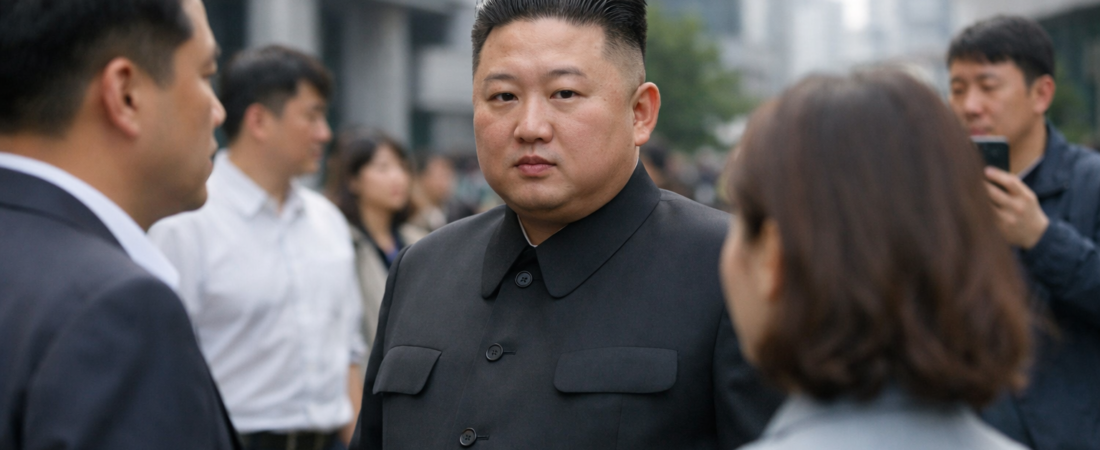
What does a dictator do to celebrate an orchestra’s 80th birthday? He shows up for a photo, of course. Kim Jong-un met with members of North Korea’s National Symphony Orchestra this week, marking the ensemble’s eight-decade history with a group portrait at the Moranbong Theater in Pyongyang.
According to state media, Kim Jong-un praised the orchestra as a source of pride for the ruling party, the state, and the people. That phrase alone tells you something important about how North Korea frames art.
Nothing in North Korea happens without political meaning attached, and this gathering is no exception. Kim Jong-un did not just pose for a picture — he delivered instructions, praised the musicians, and tied their work directly to national identity.
Have you ever wondered why authoritarian states care so much about orchestras? The answer lies in how deeply music can shape a nation’s self-image, and Kim Jong-un clearly understands this power.
Inside North Korea’s National Symphony Orchestra
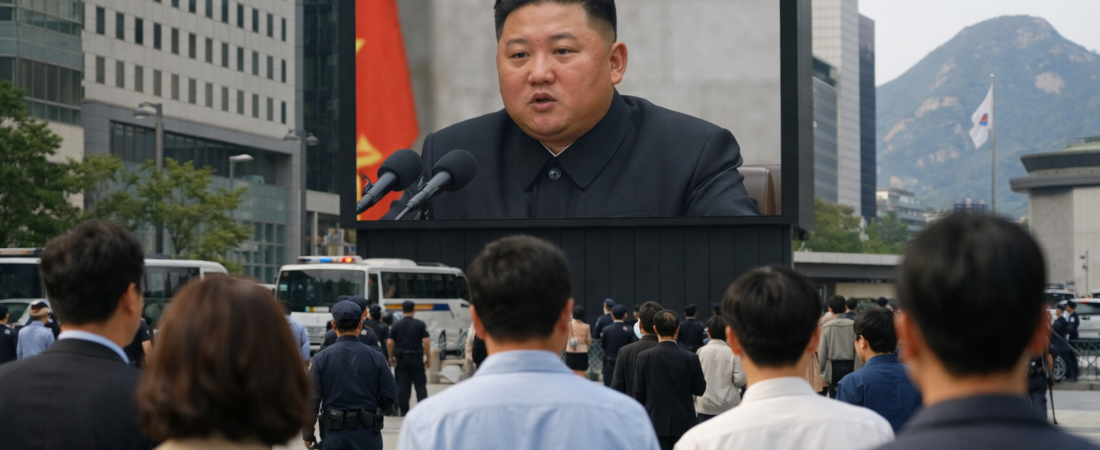
The National Symphony Orchestra was founded eight decades ago, making it one of North Korea’s oldest cultural institutions. It has survived war, famine, and decades of isolation, continuing to perform for state occasions and international audiences when permitted.
State-run Korean Central News Agency reported that Kim Jong-un met with composers and performers inside the theater’s central hall. He called the orchestra proof of “high creative skill,” language that fits a broader pattern of praising cultural institutions as extensions of national strength.
This is not the first time North Korean leadership has used music for political messaging. Kim Jong-un’s father and grandfather also relied heavily on performance art, from mass games to military choirs, to reinforce loyalty and unity.
Music, in this context, rarely stands alone as art. It becomes a tool, a symbol, and sometimes a message aimed as much at outside observers as at domestic audiences.
You can read more background on North Korea’s state media coverage of this event through SBS News, which first reported the details of the meeting.
Kim Jong-un’s Vision: Music as National Rejuvenation
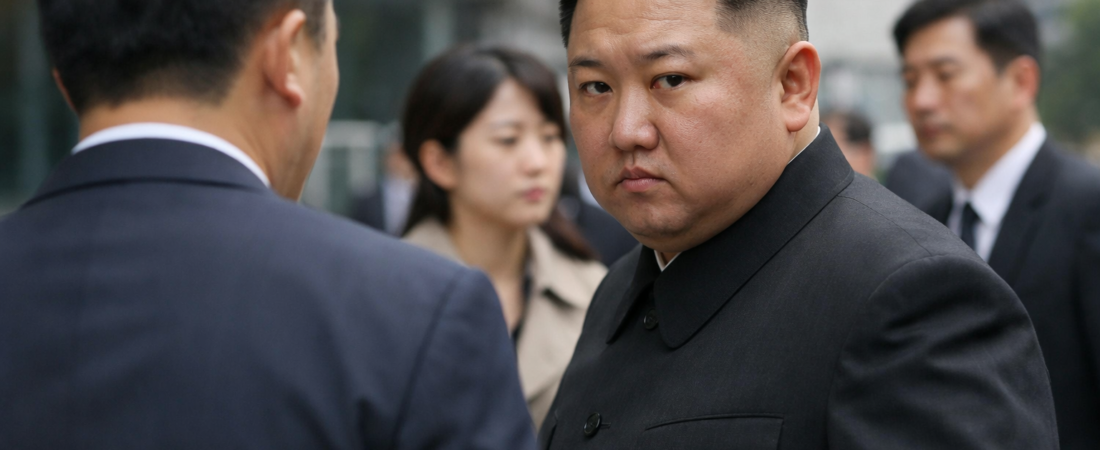
Here is where the story becomes genuinely revealing. Kim Jong-un told the orchestra that music must serve as a “powerful driving force for national rejuvenation.”
He urged the ensemble to play a “pulling engine” role in developing musical art for the country’s future. That is a striking phrase — comparing an orchestra to industrial machinery, as if beautiful sound could power economic recovery the way steel mills once did.
Why frame music this way? Because Kim Jong-un’s North Korea faces serious economic pressure, and culture offers a low-cost way to project confidence.
An orchestra costs far less to maintain than a factory, yet it can generate powerful images of national pride broadcast through state television. Kim Jong-un seems to understand this trade-off well, using cultural achievement to suggest broader national strength even when material conditions remain difficult.
This strategy is not unique to North Korea. Many governments throughout history have leaned on the arts during hard economic times, hoping that cultural pride might soften public frustration.
What makes Kim Jong-un’s version distinct is the directness of the language — “rejuvenation,” “pride,” “engine” — words usually reserved for economic five-year plans, not concert halls.
What This Photo Op Really Tells Us
So what should outside observers take from a single commemorative photograph? On the surface, it looks like a routine state visit, the kind of thing dictators do everywhere, from military parades to factory tours.
But Kim Jong-un’s choice to personally attend an orchestra anniversary, rather than send a lower official, signals how seriously his government treats cultural symbolism right now. Photo ops with musicians are hardly unique to Pyongyang — plenty of world leaders enjoy standing next to a string section for the cameras — but few governments spell out the propaganda purpose quite this openly.
It is worth being honest about what this really represents. Using musicians as political props limits their creative freedom, and framing art purely as a tool for state legitimacy flattens something that should belong to the human spirit, not the ruling party.
That critique matters, and it should not be softened. Yet even inside such tightly controlled systems, something genuine often survives — the skill in a violinist’s bow arm, the years of practice behind a horn section, the shared human urge to make something beautiful together.
History offers a hopeful counterpoint here too. When North Korean and South Korean musicians performed together in Pyongyang in 2018, audiences on both sides felt something that political rhetoric alone could never produce — a brief sense of shared humanity across a divided border.
Moments like that remind us that music can slip past ideology, even when leaders like Kim Jong-un try to control its meaning. Talent and discipline are real, regardless of who claims credit for them, and that quiet truth offers a small but genuine reason for hope.
Looking Ahead
Kim Jong-un’s remarks give a small but telling window into how North Korea plans to present itself in the coming years. Expect more state media coverage tying cultural achievements to economic and political messaging, especially as the country continues to face sanctions and limited growth.
Whether audiences outside North Korea take this seriously or view it as pure theater probably depends on how much trust remains in state narratives. Either way, Kim Jong-un has made his priorities clear: music is not just entertainment in his vision, it is policy.
What do you think — can art ever stay separate from politics in a system like North Korea’s, or is that separation always an illusion?
AI-Generated Photorealistic Image — All people, scenes, and details in this image are entirely AI-generated and fictional. Not a real photograph of an actual person or event. 이 이미지는 AI로 생성된 가상 이미지입니다.
Leave a Reply