
Table of Contents
Right now in Korea, one old movie is dominating conversations it has no business dominating. As of this week, D-War — a film that Korean critics tore apart nearly two decades ago — has climbed to sixth place on Netflix’s global rankings. Nineteen years after its release, D-War is suddenly everywhere again.
Why does a film once dismissed as a national embarrassment suddenly matter to millions of viewers outside Korea? That question deserves a real answer, not just a shrug. Let’s look at what happened to D-War, and what its strange second life tells us about how film taste actually travels.
Right Now: D-War’s Netflix Comeback
Director Shim Hyung-rae released D-War in Korea in 2007 to enormous box office numbers and equally enormous backlash. The film told a story of giant serpents fighting for transformation into dragons over Los Angeles. Korean audiences showed up in droves, but critics called it a mess.
Fast forward to this week, and D-War has landed at number six on Netflix’s global chart. That’s not a niche ranking buried in some regional category. It’s a worldwide measurement, competing against fresh releases with real marketing budgets behind them.
For a film with no new promotion, no anniversary re-release campaign, and no viral marketing push, that number is genuinely surprising. Something organic is happening here. Viewers are finding D-War on their own, and they’re choosing to press play.
Why D-War Sparked Such Fierce Debate
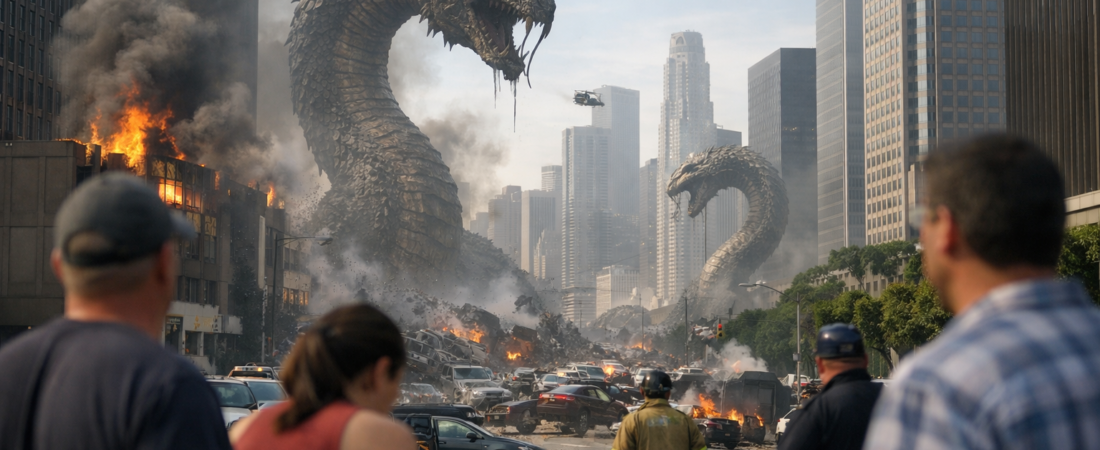
To understand why this comeback matters, you need to understand how divisive D-War was in 2007. Shim Hyung-rae had built his career on family-friendly creature films, most famously the Yonggary franchise. D-War was meant to be his leap into Hollywood-style blockbuster filmmaking.
The ambition showed. So did the seams. Korean film critics pointed to a disjointed script, uneven pacing, and dialogue that felt stitched together rather than written with intention.
Yet audiences didn’t seem to care as much as critics did. D-War pulled in over eight million admissions domestically, a staggering number for a film critics were actively warning people away from. That gap between critical opinion and audience appetite became its own story in Korean entertainment history.
Was D-War actually bad, or was it simply ahead of its time in terms of what audiences wanted from spectacle? That debate never fully resolved. Some called it a proud, flawed swing at something new for Korean cinema. Others called it proof that box office success and quality don’t always align — and both camps had a point.
Why D-War Is Suddenly Working Overseas
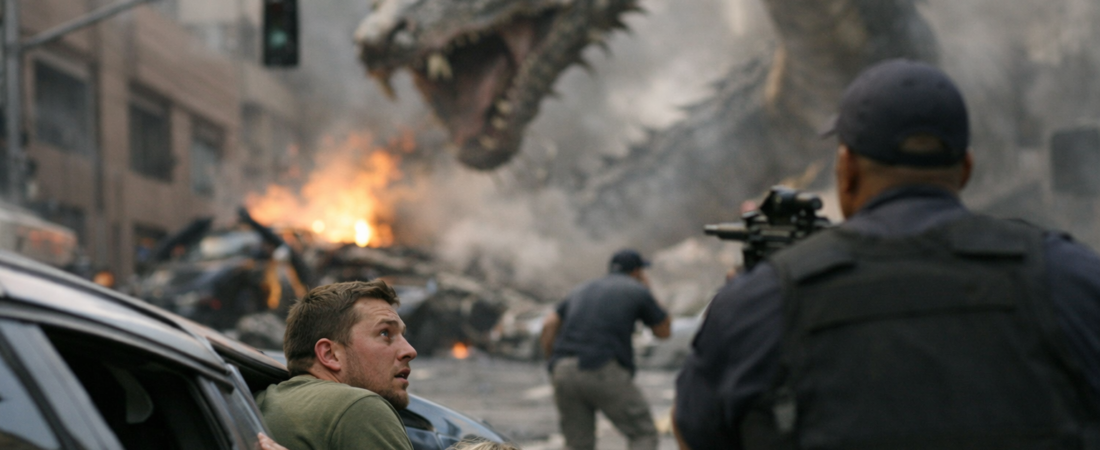
Here’s where things get interesting. The same qualities that Korean critics flagged as weaknesses may be exactly what’s drawing new viewers in now. Streaming algorithms don’t care about 2007-era critical consensus — they care about watch time, and D-War apparently delivers it.
Global audiences today have grown up on a steady diet of maximalist CGI spectacle, from disaster movies to monster franchises. D-War fits comfortably into that appetite, even with effects that look dated by today’s standards. There’s a strange charm in watching ambitious 2007 visual effects tackle giant dragons over a modern American city — call it a taste for glorious excess that never really goes out of style.
Nostalgia-driven discovery also plays a role here. Streaming platforms constantly surface older, lesser-known titles to viewers hunting for something different from this week’s algorithm-approved release. D-War, with its wild premise and Korean origin story, stands out in a crowded catalog of similar-looking blockbusters.
You can read more about the film’s original release context through Maeil Business Newspaper, which has tracked this unexpected rise closely. Their coverage highlights just how unusual it is for a film with zero new promotional push to reenter global conversation at all. That alone should tell you something about how streaming has quietly rewritten the rules of film longevity.
What This Comeback Says About Korean Cinema
So what does D-War’s second act actually mean for Korean film, beyond one lucky algorithm boost? It suggests that critical reception and audience reception operate on different timelines entirely. A film judged harshly in one era, in one country, can find an entirely different audience decades later, thousands of miles away.
This isn’t unique to Korea, of course. Plenty of films across film history get reassessed once cultural context shifts or new audiences encounter them without old baggage attached. But D-War’s case feels sharper because the original criticism was so loud, and the domestic memory of that criticism runs so deep.
There’s something worth sitting with here about how we judge creative work in the moment it’s made. Critics in 2007 weren’t wrong to point out D-War’s technical flaws — those flaws were real, and pretending otherwise would be dishonest. But critical judgment made under one set of expectations doesn’t always predict how a work will be received once time, distance, and different viewers enter the picture.
That tension between honest critique and unexpected redemption isn’t comfortable, and it shouldn’t be smoothed over. Yet it also points toward something hopeful: creative work doesn’t have a single, final verdict stamped on it forever. Shim Hyung-rae made something flawed and ambitious in 2007, and nineteen years later, strangers on another continent are giving it a second chance he probably never expected.
Korean cinema has changed enormously since 2007, with Parasite winning an Oscar and Squid Game becoming a global phenomenon. D-War’s quiet resurgence is a smaller story, but it fits into that same larger arc. Korean film content keeps finding audiences in unpredictable ways, long after its home country has moved on to the next release.
What do you think — does D-War deserve this second look, or is this just streaming algorithms doing what they do? Either way, its unlikely journey from national punchline to global top ten is worth watching closely.
AI-Generated Photorealistic Image — All people, scenes, and details in this image are entirely AI-generated and fictional. Not a real photograph of an actual person or event. 이 이미지는 AI로 생성된 가상 이미지입니다.




Leave a Reply