Table of Contents
Has Korea’s cultural wave finally crested? That question is now circulating among industry watchers, and it deserves a real answer, not just speculation. Nearly 30 years after Hallyu began, Korea’s cultural exports face a genuine reckoning.
You’ve probably watched a Korean drama, streamed a K-pop album, or tried Korean fried chicken. Maybe you didn’t realize all three trace back to one unexpected moment in 1997. That moment set off a chain reaction still shaping global pop culture today.
How Hallyu Began — And Why It Surprised Everyone
Hallyu, literally “Korean Wave,” is usually dated to 1997. That year, Chinese state broadcaster CCTV aired the Korean drama “What is Love,” a modest domestic production from 1991-92. Nobody expected it to become a hit overseas.
But it did, and audiences in China couldn’t get enough. Why did a simple family drama resonate so strongly outside Korea? Partly because it offered something familiar yet fresh — Confucian family values wrapped in modern storytelling that felt relatable across East Asia.
That accidental success planted a seed. Korean producers and government officials noticed the demand and started investing seriously in cultural exports. What began as an unplanned hit slowly turned into deliberate industrial strategy.
Think about it this way: imagine a garage band accidentally going viral, then building an entire record label around that one lucky break. That’s roughly what happened to Korea’s entertainment industry, and it worked far better than anyone imagined at the time.
From Dramas to Global Industry: Measuring Hallyu’s Reach
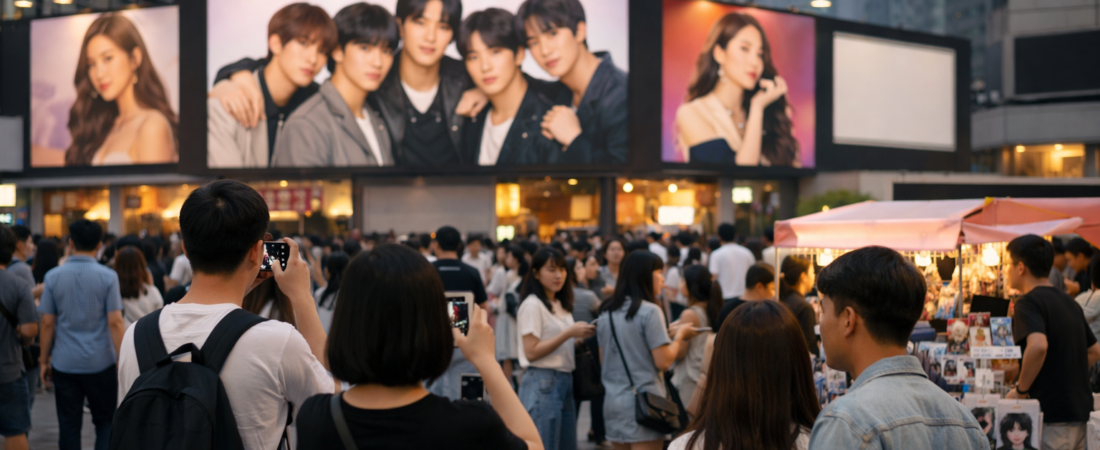
Fast forward almost 30 years, and Hallyu looks nothing like its humble beginnings. It now spans dramas, K-pop, webtoons, and video games, each pulling in significant revenue on its own. Together, they form one of Korea’s most closely watched export sectors.
But the story doesn’t stop at entertainment. Hallyu’s influence spills into tourism, beauty products, food, and fashion, creating a ripple effect across the entire economy. Ever wondered why K-beauty skincare routines suddenly appeared on shelves worldwide?
That’s Hallyu at work, quietly reshaping consumer habits far beyond music charts. Korean barbecue restaurants, K-beauty counters, and Korean language classes have multiplied in cities from London to Los Angeles. This is not a niche subculture anymore — it’s mainstream global consumption.
For deeper context on how this cultural expansion unfolded over decades, see the original reporting from Korea Herald. Understanding that trajectory helps explain why the current “peak” debate feels so significant. When something grows this large, questions about its ceiling naturally follow.
Has Hallyu Really Peaked?
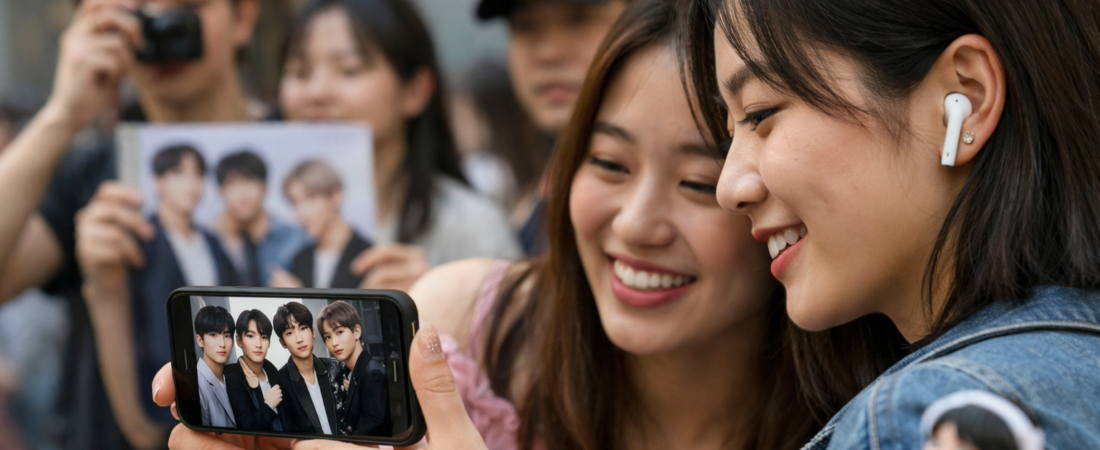
So, has Hallyu actually peaked, or is this just a natural pause before another leap? That’s the central debate right now among cultural analysts. Nearly three decades of continuous growth would make any industry wonder if the momentum can last forever.
Some point to market saturation. K-pop groups debut constantly, streaming platforms are crowded with Korean dramas, and audience attention is finite. Can Hallyu keep expanding when so many products already compete for the same global spotlight?
Others argue this is simply maturation, not decline. Established industries evolve — they diversify, adapt formats, and find new regional audiences instead of collapsing. Consider how Hollywood didn’t vanish after its early golden age; it simply changed shape repeatedly over a century.
Hallyu may be following a similar pattern rather than facing an ending. Government policy also matters here. Korea has treated cultural exports as a strategic priority for decades, funding festivals, subsidizing productions, and promoting language education abroad.
That institutional backing gives Hallyu resilience that purely commercial trends often lack. Still, no industry grows in a straight line forever, and honest observers should acknowledge that some slowdown looks inevitable.
What Comes Next for Hallyu
Where does Hallyu go from here? The honest answer involves both real challenges and real opportunity, and pretending otherwise would be dishonest. Global competition is intensifying, as other countries now study Korea’s playbook and try replicating it.
Japan, Thailand, and even Western studios have launched their own culturally-branded content strategies inspired directly by Korea’s success. That competitive pressure is real, and it will likely squeeze margins for Korean studios and agencies in coming years. At the same time, something quieter and more hopeful is happening within the industry itself.
Smaller Korean creators, independent webtoon artists, and regional tourism boards are finding niche global audiences that mainstream K-pop never reached. Success no longer requires a single mega-hit; it can grow through many smaller, sustainable connections instead. That shift mirrors something true about culture more broadly.
Influence rarely stays concentrated in one form forever, and that is not necessarily a loss. When a cultural wave matures, it doesn’t have to shrink — it can spread wider, touching more ordinary lives even if headlines feel less dramatic. The same openness that let “What is Love” travel to Chinese television screens in 1997 still exists today, just distributed across more channels and voices than before.
That’s worth remembering when the conversation turns anxious about decline. Growth and maturity are not opposites; they are often the same process viewed at different distances.
Where does this leave global fans and Korean creators alike? Hallyu’s next chapter will likely be less about single blockbuster moments and more about sustained, diversified cultural exchange. The industry that grew from one surprising drama now has three decades of infrastructure, talent, and institutional memory behind it.
That foundation doesn’t disappear just because growth curves flatten temporarily. What do you think — has Hallyu truly peaked, or is Korea’s cultural wave simply entering a quieter, more mature phase?
AI-Generated Photorealistic Image — All people, scenes, and details in this image are entirely AI-generated and fictional. Not a real photograph of an actual person or event. 이 이미지는 AI로 생성된 가상 이미지입니다.

Leave a Reply