
Table of Contents
A Korean film made for roughly 500 million won—about $360,000—just sold to 118 countries through Netflix. That is a staggering return for such a tiny budget. The film, titled “Paradise Lost,” proves that a smart story can outperform movies costing thousands of times more.
Have you ever wondered how a film with almost no money can outshine a blockbuster? “Paradise Lost” gives us a real answer. This is not a fluke — it is part of a bigger pattern reshaping how Korean content reaches Netflix viewers worldwide.
The Movie That Beat the Odds
“Paradise Lost” cost about 500 million won to make. For comparison, many big-budget productions spend tens of billions of won and still fail to turn a profit. Yet this small film found its way into living rooms across 118 countries.
That kind of reach used to be reserved for major studio releases. Now, a modest crew with a tight script can get there too. Netflix’s global platform makes this possible in a way traditional theatrical release never could.
Koreans take low-budget filmmaking seriously these days — and honestly, that is an understatement. The success of “Paradise Lost” shows that budget size and box office outcome are no longer tightly linked. Quality storytelling, it turns out, travels well even in economy class.
How Netflix Rewards Smart Spending
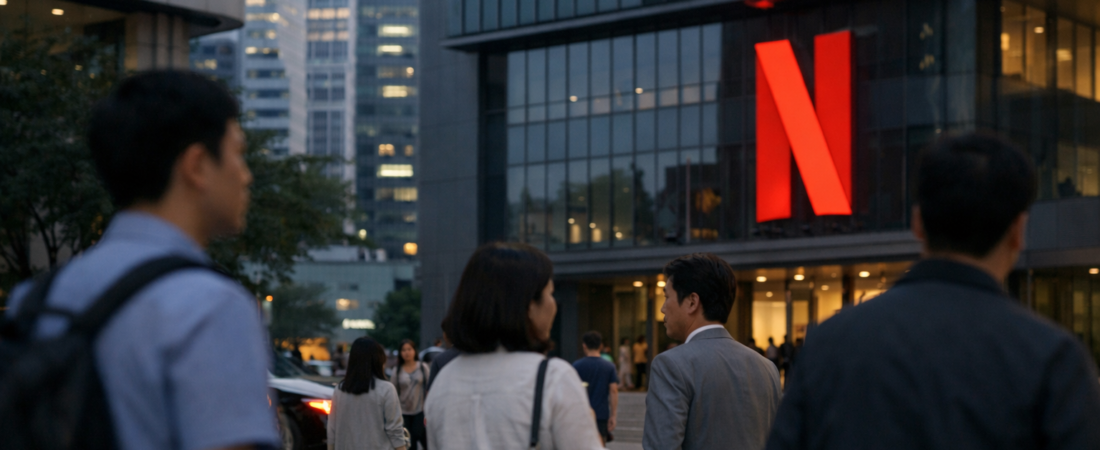
This is not an isolated case. Films like “Beasts” and “East of Eden” also climbed to the top of the Netflix charts despite relatively modest budgets. Together, they point to a strategy: maximize return relative to investment rather than simply spending more.
Why does this approach work so well on Netflix specifically? The platform does not depend on theater ticket sales or opening-weekend box office numbers. Instead, it values total viewing hours and subscriber engagement across dozens of markets at once.
That structure favors films with strong, universal narratives over those relying purely on visual spectacle. A tight, emotionally resonant story can click with audiences in Brazil, Germany, and the Philippines all at the same time. Netflix essentially levels the playing field for smaller productions with big ideas.
Industry watchers have noted this shift for a while now. You can read more detailed coverage from Maeil Business Newspaper, which first reported on this trend. The lesson is clear — Netflix rewards efficiency, not just scale.
The Story Behind “Paradise Lost”

At the center of the film is a mother named So-young, whose young son Sun-woo disappeared nine years earlier. The story follows her search for answers and the painful mystery surrounding his fate. It is an emotional, character-driven narrative rather than one built on expensive visual effects.
Why does a story like this resonate so widely? Grief, loss, and the hope of finding a missing child are universal emotions. You do not need subtitles to understand a mother’s fear — that feeling translates across every culture and language.
This is exactly the kind of narrative that performs well on Netflix’s global stage. It does not require massive sets or elaborate action sequences. It requires a story people care about, and “Paradise Lost” delivered exactly that.
What This Means for Global Storytelling
The success of “Paradise Lost” raises a bigger question for the entire film industry. Does more money really guarantee a better movie? This Netflix success story suggests the answer is often no.
Smaller studios and independent filmmakers now have real proof that low budgets do not mean limited reach. A well-written script, a compelling lead performance, and a universal theme can carry a film further than millions of dollars in visual effects ever could. That is encouraging news for storytellers who lack deep pockets but have something meaningful to say.
Still, it would be naive to celebrate this trend without acknowledging its tension. The same efficiency that makes small films succeed on Netflix also puts pressure on filmmakers to chase viral formulas rather than take creative risks. When a platform rewards engagement metrics above all else, there is a real temptation to prioritize what performs over what feels true.
And yet, within that pressure, something hopeful persists. Directors are finding ways to tell honest, human stories — grief, searching, hope — precisely because those stories connect, not because they are engineered to. The industry is not perfect, but films like “Paradise Lost” remind us that sincerity still has a market, even inside a data-driven system. Perhaps that balance, between commercial reality and creative honesty, is worth watching closely as more small productions attempt to follow this same path.
Korean cinema has long balanced art and commerce in creative ways. This latest wave of budget-conscious Netflix hits continues that tradition while adapting it for a streaming-first world. The question now is whether other countries’ filmmakers will follow this same low-budget, high-impact model.
What do you think — does Netflix’s global reach make it easier for small, meaningful stories to find an audience, or does it risk flattening creative ambition into formula?
AI-Generated Photorealistic Image — All people, scenes, and details in this image are entirely AI-generated and fictional. Not a real photograph of an actual person or event. 이 이미지는 AI로 생성된 가상 이미지입니다.




Leave a Reply