Table of Contents
What do you picture when you hear the name “Diamond Mountain”? Most Western readers imagine gemstones, not granite peaks near the Korean border. But Mt. Kumgang, sitting close to Gaeseong, has carried far heavier weight than any jewel for over a century.
This single mountain range has been a colonial tourist attraction, a Cold War flashpoint, and a rare symbol of North-South cooperation. Understanding Gaeseong and its neighboring peaks helps you understand modern Korea itself. Let’s walk through why this landscape still matters.
What Is Mt. Kumgang and Why Does Gaeseong Matter?
Mt. Kumgang, literally “Diamond Mountain,” rises along the eastern coast near the border separating North and South Korea. Gaeseong, meanwhile, sits further west and served as Korea’s capital during the Goryeo Dynasty (918–1392). Both places sit in what is now North Korean territory, just north of the demilitarized zone.
Why should you care about a mountain you likely cannot visit right now? Because Gaeseong and Mt. Kumgang together tell the story of a divided peninsula trying, again and again, to reconnect. Travel writers once described the mountain’s shifting seasonal colors, countless waterfalls, and clean mountain pools as some of the most striking scenery in East Asia.
That natural beauty is exactly why outsiders wanted access to it. Japan noticed first, during its colonial rule over Korea from 1910 to 1945. Gaeseong’s proximity made the region easy to reach by rail, turning a sacred landscape into a commercial product.
A Mountain Shaped by Empire: Colonial-Era Tourism
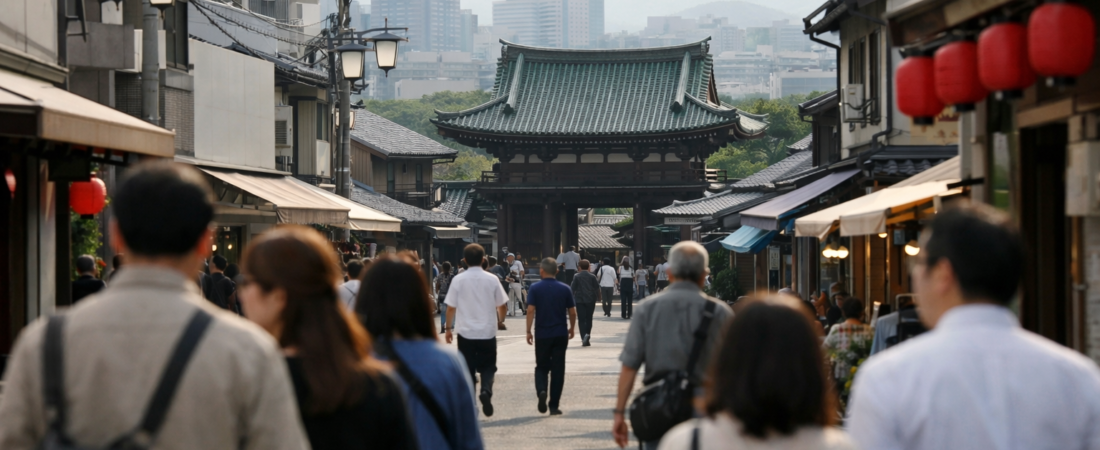
During Japanese colonial rule, Mt. Kumgang became one of the most heavily marketed tourist destinations in the empire. Japanese authorities built rail lines, hotels, and hiking trails specifically to bring visitors from Japan and beyond. Gaeseong functioned as a gateway city along these travel routes, connecting Seoul to the mountain region.
This wasn’t neutral tourism development. Colonial planners promoted the mountain partly to showcase Japan’s modernization of Korea to the wider world. Postcards, guidebooks, and posters from the era framed Mt. Kumgang almost like a scenic prize of empire, stripped of its Korean cultural meaning.
Does that history feel uncomfortable? It should. Many colonized landscapes around the world faced this same pattern — natural wonders repackaged for the colonizer’s tourism industry, with local communities pushed to the margins.
Gaeseong itself, once the proud royal capital of Goryeo, became a mere waypoint on someone else’s itinerary. That contrast between past glory and colonial-era reduction still shapes how Koreans remember this region. It’s a reminder that geography alone doesn’t determine meaning; power does too.
From Cold War Line to Cooperation Symbol
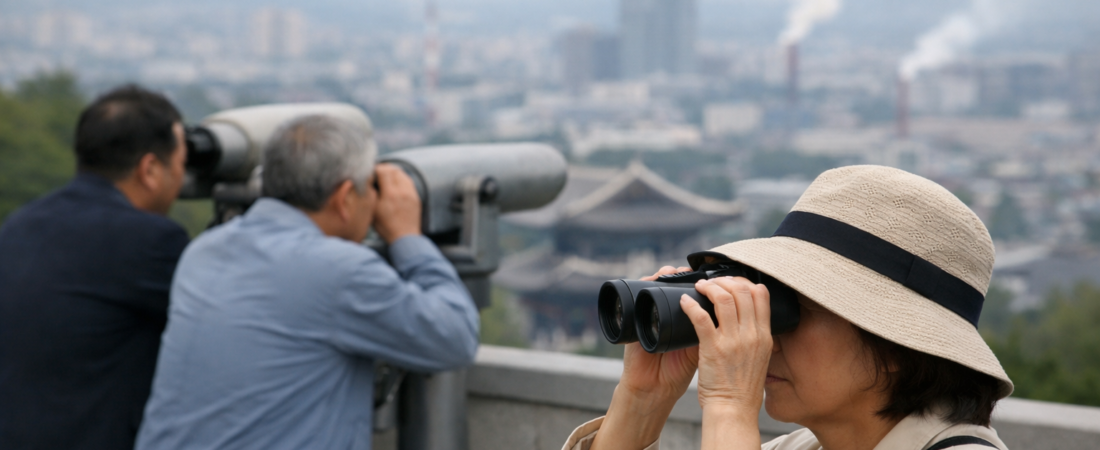
After Korea’s division in 1945, Gaeseong and Mt. Kumgang ended up on the North Korean side of the border. For decades, ordinary South Koreans could not visit either place. The mountain that once welcomed colonial tourists became sealed off entirely.
Then, in 1998, something unusual happened. Hyundai Asan launched tourism cruises to Mt. Kumgang, allowing South Koreans to visit under a special inter-Korean agreement. Millions of tourists eventually crossed over before the program halted in 2008 following a tragic shooting incident.
Gaeseong followed a similar arc of hope and setback. The Gaeseong Industrial Complex opened in 2004, letting South Korean companies operate factories using North Korean labor just north of the border. For a while, it stood as proof that economic cooperation could bridge even the deepest political divide.
That complex closed in 2016 amid rising tensions over North Korea’s weapons tests. You can find more background on these inter-Korean economic projects through Yonhap News Agency. Both Gaeseong and Mt. Kumgang, then, carry this same pattern: opening, connection, closure, and waiting.
Why Gaeseong Still Matters for Understanding Korea Today
So why should a traveler or Korea enthusiast in 2026 care about a mountain and a city they cannot currently visit? Because Gaeseong represents something bigger than any single tourist site. It’s a physical reminder that division is recent, reversible, and deeply personal for millions of Korean families.
Think about it this way: imagine your own hometown suddenly split by a border you can’t cross, with relatives on the other side you may never see again. That’s the lived reality Gaeseong and Mt. Kumgang represent for many Koreans, not an abstract geopolitics lecture.
There’s an honest tension worth naming here. The same landscape that inspired genuine cooperation — tourists sharing trails, workers sharing factory floors — also became a casualty of mistrust the moment politics soured. That’s not a reason for cynicism, though.
It’s a reason to notice how quickly ordinary people rebuilt connection whenever the door opened even slightly, whether through 1990s mountain tours or the 2000s industrial complex. Hope in Gaeseong’s story isn’t naive optimism; it’s documented behavior, repeated across two different decades. Every time the border loosened even a little, cooperation followed almost immediately, suggesting the appetite for reconnection never actually disappeared.
What might that mean for the future? If history offers any clue, another opening will eventually come, and Gaeseong will likely be part of it again. Tourism to the region once moved fast when policy allowed it — perhaps proof that bureaucratic walls fall quicker than emotional ones.
Travel restrictions and geopolitics change, sometimes overnight. What stays constant is the region’s layered identity: royal capital, colonial attraction, closed border, brief bridge, and closed border again. Anyone hoping to understand Gaeseong should hold all of these chapters together, not just one.
Next time you read about inter-Korean relations, remember that Gaeseong isn’t just a policy talking point. It’s a real place with real waterfalls, real factory floors, and real families still separated by a line drawn eight decades ago. What do you think it would take for a place like Gaeseong to reopen for good?
AI-Generated Photorealistic Image — All people, scenes, and details in this image are entirely AI-generated and fictional. Not a real photograph of an actual person or event. 이 이미지는 AI로 생성된 가상 이미지입니다.
Leave a Reply