Table of Contents
Jongno District will host the 2026 Jongno Hanbok Festival on September 11-12 at Gwanghwamun Square in Seoul. Organized by Jongno District Office under Mayor Yoo Chan-jong, the two-day event celebrates hanbok, Korea’s traditional clothing, through performances and public displays. Visitors and tourists alike can experience Korean fashion and music together in one open-air setting.
Have you ever wondered why a piece of clothing can carry an entire culture on its shoulders? Hanbok does exactly that. Its flowing lines and bold colors tell a story that goes back centuries, long before blue jeans or business suits existed.
What Is the Jongno Hanbok Festival?
The Jongno Hanbok Festival is a two-day cultural event designed to showcase the beauty of traditional Korean clothing. Jongno District organizes the festival each year, and the 2026 edition runs September 11 and 12. The goal is simple: introduce hanbok and Korean traditional music to as wide an audience as possible.
Unlike a museum exhibit behind glass, this festival puts hanbok in motion. You will see live performances, traditional music, and cultural displays happening right in the middle of the city. That’s the whole idea — bring heritage out of storage and into daily life.
The Jongno Hanbok Festival also functions as a showcase for craftsmanship. Local artisans and designers get a public stage to display fabric work, embroidery, and tailoring techniques passed down through generations. For many attendees, this is their first close look at how much skill goes into a single hanbok garment.
Why Gwanghwamun Square Matters
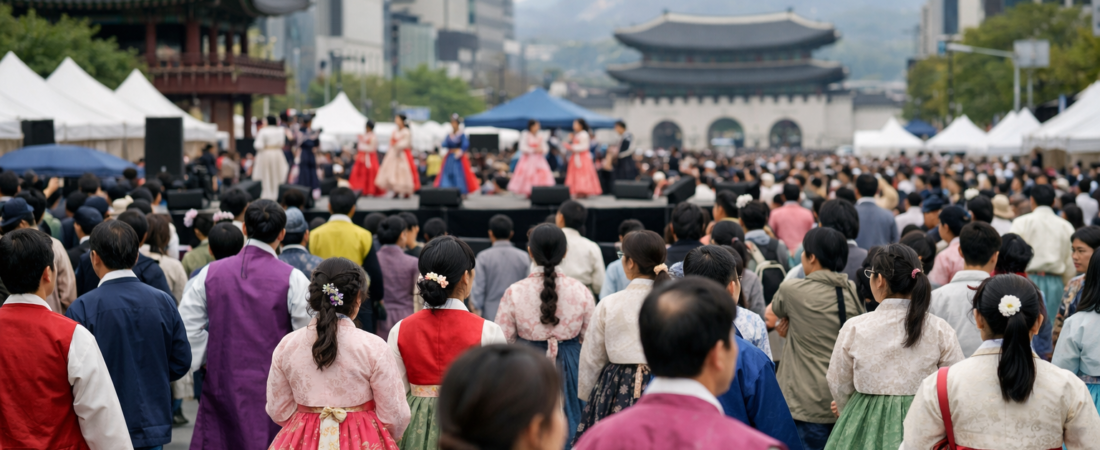
Location matters here, and Gwanghwamun Square is not a random choice. This plaza sits directly in front of Gyeongbokgung Palace, the main royal palace of the Joseon Dynasty. Holding the Jongno Hanbok Festival at this exact spot links modern celebration to centuries of royal history.
Think of it as staging a Renaissance fair right outside a real Renaissance castle. That kind of backdrop changes how an event feels. Instead of watching a performance in a generic hall, you’re standing where kings and officials once walked in exactly this kind of clothing.
Gwanghwamun Square has become Seoul’s default stage for major public gatherings, from national celebrations to seasonal festivals. Choosing it for the Jongno Hanbok Festival signals ambition. Jongno District wants this event seen by locals commuting through downtown Seoul and by international visitors exploring the palace district on the same afternoon.
The square’s central location also makes the Jongno Hanbok Festival easy to combine with a broader day of sightseeing. Visitors touring Gyeongbokgung Palace or nearby Bukchon Hanok Village can simply walk a few minutes to reach the festival grounds. That convenience matters more than it sounds — foot traffic often determines whether a cultural event reaches beyond its usual audience.
Hanbok Culture in Modern Korea
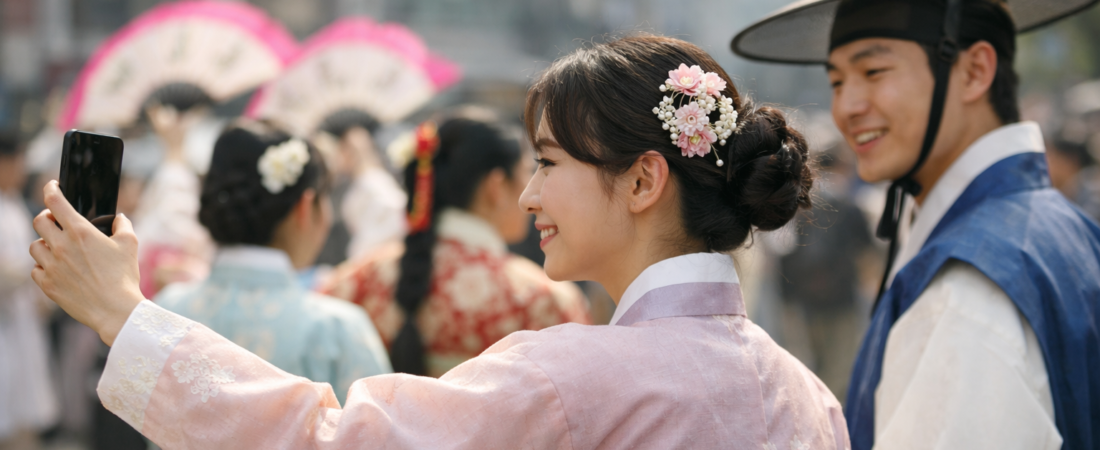
Hanbok isn’t just costume from history books. Young Koreans rent hanbok regularly to visit palaces, take photos, and mark special occasions like Lunar New Year. Some royal palaces even offer free admission to visitors wearing hanbok — a small but clever incentive that keeps the tradition visible.
Does that mean hanbok culture is thriving without complication? Not entirely. Many traditional hanbok makers struggle to compete with cheap, mass-produced rental versions that prioritize photo-friendly style over authentic craftsmanship, and younger generations sometimes know the look of hanbok far better than its cultural meaning.
Still, festivals like this one push back against that drift. By putting skilled tailors and real performances in front of ordinary citizens, the Jongno Hanbok Festival offers a corrective — a chance to reconnect a beloved image with the deeper tradition behind it. That effort, small as one weekend festival might seem, matters more than it looks on paper.
You can find more background on hanbok’s cultural role through resources like Yonhap News Agency, which regularly covers Korean traditional culture events.
What This Festival Means Going Forward
The Jongno Hanbok Festival is a small window into a much larger question. How does a society keep old traditions alive without turning them into museum pieces nobody actually touches? Seoul seems to be experimenting with an answer: put tradition in public squares, invite everyone, and let it breathe.
There’s something quietly hopeful in watching a centuries-old garment walk through a modern city square lined with skyscrapers and subway exits. It shows that heritage doesn’t need isolation to survive — it can share space with modern life and still hold its own weight. At the same time, that same public exposure can flatten meaning into spectacle, turning a garment full of history into little more than a backdrop for photos.
The honest answer probably sits somewhere in between. Events like the Jongno Hanbok Festival succeed not because they solve that tension perfectly, but because they keep trying — inviting people back year after year to encounter something older than themselves, even if only for one afternoon in a crowded square.
So what happens after September 12? The hanbok goes back into shops and closets, but the questions this festival raises don’t disappear. Do you think events like this actually deepen cultural understanding, or do they mostly offer a nice photo backdrop?
AI-Generated Photorealistic Image — All people, scenes, and details in this image are entirely AI-generated and fictional. Not a real photograph of an actual person or event. 이 이미지는 AI로 생성된 가상 이미지입니다.
Leave a Reply