Table of Contents
Korean webtoon platforms are reporting a sharp jump in paid subscriptions after authorities shut down major illegal piracy sites. Readers who once consumed webtoons for free are now paying for content again, and industry insiders say revenue has climbed significantly as a direct result. This shift shows how piracy crackdowns can translate almost immediately into real financial recovery for an entire industry.
Have you ever wondered what happens to an entire industry once stolen content stops flowing freely online? That question is exactly what Korea’s webtoon market just answered. The numbers tell a clear story, and they matter far beyond Korea’s borders.
Pirate Sites Shut Down, Revenue Jumps
For years, illegal webtoon and web novel sites scraped content from legitimate platforms and distributed it for free. These sites built huge audiences by offering stolen chapters the moment they were released. Readers got everything for nothing, while creators and platforms watched their income disappear.
Recently, a wave of these piracy sites has been shut down one after another. According to Maeil Business Newspaper, this closure wave has pushed many former pirate-site users back toward legal webtoon services. Paid payments on legitimate webtoon platforms have surged noticeably since the shutdowns began.
This is not a small or temporary bump, either. Industry data suggests readers who left for free illegal copies are now returning in meaningful numbers. That return is translating directly into higher subscription and pay-per-episode revenue across major webtoon services.
Why does this matter so much right now? Because it proves something the industry has argued for years: piracy was not just an annoyance, it was actively draining money away from creators. Removing the thieves, so to speak, let the actual economy of webtoon reading breathe again.
Why Webtoon Piracy Hurt Everyone
Korea’s webtoon industry is one of the country’s most successful cultural exports. Platforms like Naver Webtoon and Kakao Webtoon have turned Korean comics into a global entertainment format, reaching readers from Seoul to Los Angeles. But that global success made piracy an even bigger problem.
Illegal sites didn’t just steal Korean-language content. They translated stolen webtoons into English, Spanish, and other languages, distributing them to international audiences before legal platforms even finished their own translations. This meant global fans could read pirated chapters for free, often faster than paying customers received official releases.
The financial damage was substantial. Creators earn money through pay-per-view models, subscriptions, and advertising tied to legitimate platforms. Every reader who used a pirate site instead was a reader who contributed zero dollars to the artist actually drawing the story.
Isn’t it strange how normal piracy became for some readers? Many people didn’t think of it as stealing at all. It just felt like “free content on the internet,” even though real writers and illustrators were losing income with every stolen chapter.
Government and platform cooperation changed that equation. Coordinated legal action against these piracy operators, combined with public awareness campaigns, finally started closing the gap between illegal and legal webtoon consumption.
The IVE Gaeul Effect and Fan Culture
One detail circulating alongside this story has caught public attention: K-pop idol Gaeul of the group IVE reportedly pays for her webtoon subscriptions like any other fan. For a celebrity who could easily access pirated content without consequence, choosing to pay sends a quiet but powerful message. It normalizes paying for webtoons as simply the right thing to do.
Korean fan culture places enormous value on supporting the people and industries idols openly endorse. When a popular figure like Gaeul models ethical consumption, fans tend to notice and sometimes follow suit. This is not unlike how celebrity reading lists can boost book sales overnight in Western markets.
There’s a gentle irony here worth sitting with for a moment. Korean society prizes communal loyalty and shared cultural pride, the same instincts that make K-pop fandoms so devoted and webtoon communities so passionate.
But that same intensity once helped piracy spread too, as readers shared illegal links within tight-knit fan groups without much hesitation. The encouraging shift now is that those same communities are redirecting their loyalty toward supporting creators directly, proving that strong communal bonds can repair harm just as easily as they once enabled it.
(Somewhere out there, a webtoon artist is probably thinking their invoices finally make sense again.)
What This Means for Global Webtoon Fans
This story is trending in Korea this week for good reason. It confirms, with real revenue numbers, that cracking down on piracy actually works rather than just sounding good in headlines. For an industry built on digital content, that proof matters enormously.
For international readers, this matters for a very practical reason. Korean webtoon platforms are expanding aggressively overseas, bringing more titles, faster translations, and better apps to readers outside Korea. Supporting legal webtoon platforms now helps ensure that expansion continues instead of stalling.
Think about any creative industry you personally care about, whether it’s music, film, or comics. Piracy crackdowns elsewhere have shown similar patterns: when illegal access shrinks, legitimate revenue tends to rise, and creators get more resources to keep making what you love.
Korea’s webtoon recovery offers a useful case study for any country still debating how seriously to treat digital piracy. The webtoon industry’s comeback suggests that enforcement paired with convenient, affordable legal access can shift reader behavior faster than lectures about ethics ever could.
What do you think about Korea’s approach to shutting down illegal webtoon sites, and would you support similar crackdowns for other digital content in your own country?
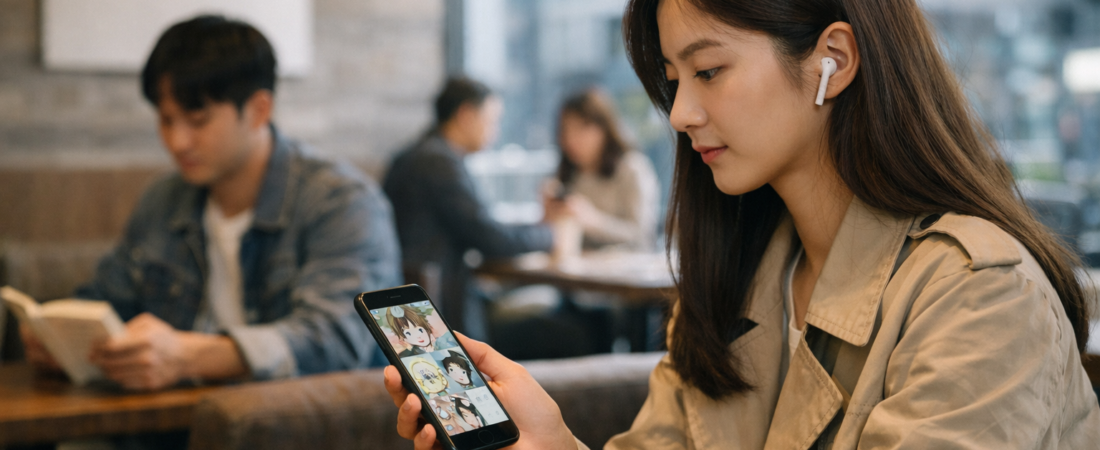
AI-Generated Photorealistic Image — All people, scenes, and details in this image are entirely AI-generated and fictional. Not a real photograph of an actual person or event. 이 이미지는 AI로 생성된 가상 이미지입니다.




Leave a Reply