
Table of Contents
Ruling party lawmaker Joo Jin-woo left a comment calling actor Yoo Hae-jin a “North Korean prize winner,” sparking outrage across Korean social media on September 30. Joo also replied to a post praising actress Kim Go-eun’s endorsement of the film, invoking former President Park Chung-hee. Critics say Joo Jin-woo crossed a clear line from political criticism into personal attack.
Can a lawmaker’s online comment change how an entire nation talks about a movie? That is exactly what happened this week in Korea.
A single comment from a sitting member of the National Assembly turned a film controversy into a debate about political decency itself. Let’s break down what actually happened, and why it matters far beyond Korean borders.
What Happened With Joo Jin-woo’s Comments
The controversy started with an online post. A user compiled a list of films actor Yoo Hae-jin has appeared in over the years, framing them as suspiciously anti-government or pro-North Korea in theme.
The post ended with a harsh line telling Yoo Hae-jin to “just go live in North Korea.” Joo Jin-woo, a member of the People Power Party, replied to that very post with two words: “North Korean prize winner.”
That comment amounted to open endorsement of an insult aimed at an actor’s character, not his political views. Many online users immediately called out Joo Jin-woo for legitimizing hate speech from an official National Assembly account.
Joo Jin-woo did not stop there. When actress Kim Go-eun posted a heartfelt recommendation of the same film, thanking audiences and expressing gratitude for present-day freedoms, Joo Jin-woo replied that those freedoms existed thanks to former President Park Chung-hee, adding the phrase “you should know before you speak.”
This second reply widened the controversy from one actor to two respected performers. Suddenly, this was not just about a film review. It was about whether a lawmaker should publicly lecture actors on history and patriotism through personal insults.
The Film at the Center of the Storm
The movie in question, titled “Assassins,” opened in Korean theaters on September 23. It dramatizes the 1974 shooting death of First Lady Yuk Young-soo, wife of President Park Chung-hee.
Official government records attribute her death to a gunman named Mun Se-gwang, a Korean resident of Japan. The film, however, suggests the incident may have served a political purpose for the ruling government at the time, a narrative choice that immediately drew fire from conservative politicians.
Before Joo Jin-woo’s comments went viral, People Power Party members had already been criticizing the film heavily. Joo Jin-woo himself raised allegations that roughly 40 billion won in Chinese capital had funded the production, and he pledged to investigate the matter during the upcoming National Assembly audit.
The production company, Hive Media Corp, firmly denied those claims. They stated the film was “planned and produced independently under domestic capital, led by Korean filmmakers and creators,” adding that “no Chinese capital was involved whatsoever.”
This funding dispute forms the backdrop against which Joo Jin-woo’s personal comments landed. Political criticism of a film’s content is normal in any democracy, but attacking the actors who appear in it takes the debate somewhere different entirely.
Why Actor Attacks Cross a Line
Historical dramas touching on sensitive events routinely spark political disagreement in Korea. That tension itself is not new, and honestly, it can even be healthy for public discourse.
But there is a meaningful difference between critiquing a film’s narrative and mocking the people who acted in it. Yoo Hae-jin has built a decades-long career playing everything from comic sidekicks to war heroes; reducing that body of work to a political smear feels less like commentary and more like character assassination (an unfortunate phrase, given the film’s own title).
Online reaction reflected this distinction clearly. Many commenters who otherwise supported scrutiny of the film’s funding sources still condemned Joo Jin-woo’s specific choice of words toward Yoo Hae-jin.
Why does this distinction matter so much? Because lawmakers hold outsized influence over public discourse, and their words carry weight that ordinary social media users’ comments simply do not.
When Joo Jin-woo, an elected official, echoes an insult originally posted by an anonymous user, he effectively grants that insult institutional legitimacy. According to coverage from SBS News, online communities widely interpreted Joo Jin-woo’s comment as tacit approval of the original poster’s hostility.
What This Means for Korean Politics and Film
Korea has a long tradition of politically charged filmmaking, from movies about the Gwangju Uprising to dramas examining the Korean War’s lingering divisions. Historical films inevitably touch nerves, especially when they reinterpret events tied to a president’s family.
Joo Jin-woo’s comments arrive at a moment when political polarization already runs deep in Korean society. Every cultural product, it seems, risks becoming a proxy battlefield for larger ideological fights.
Where does responsible political criticism end and personal attack begin? That question deserves honest reflection, not easy answers.
It is fair, even necessary, for elected officials to question a film’s funding sources or historical framing; oversight and scrutiny are core parts of their job. But turning that scrutiny into mockery of individual actors reveals something troubling about how public debate sometimes unfolds online, where insults spread faster than nuance ever could.
Still, this controversy also shows something encouraging: ordinary citizens and commentators pushed back quickly, refusing to let a lawmaker’s words go unchallenged. That kind of public accountability, messy as it can look in the moment, is exactly how healthier norms around political speech eventually take shape.
Korean audiences will keep debating “Assassins” long after this news cycle fades, and that debate should stay focused on the film’s arguments rather than its actors’ personal lives. Joo Jin-woo’s comments will likely fuel further scrutiny of how lawmakers use social media during politically sensitive moments. What do you think — where should the line sit between criticizing a film and attacking the people who made it?
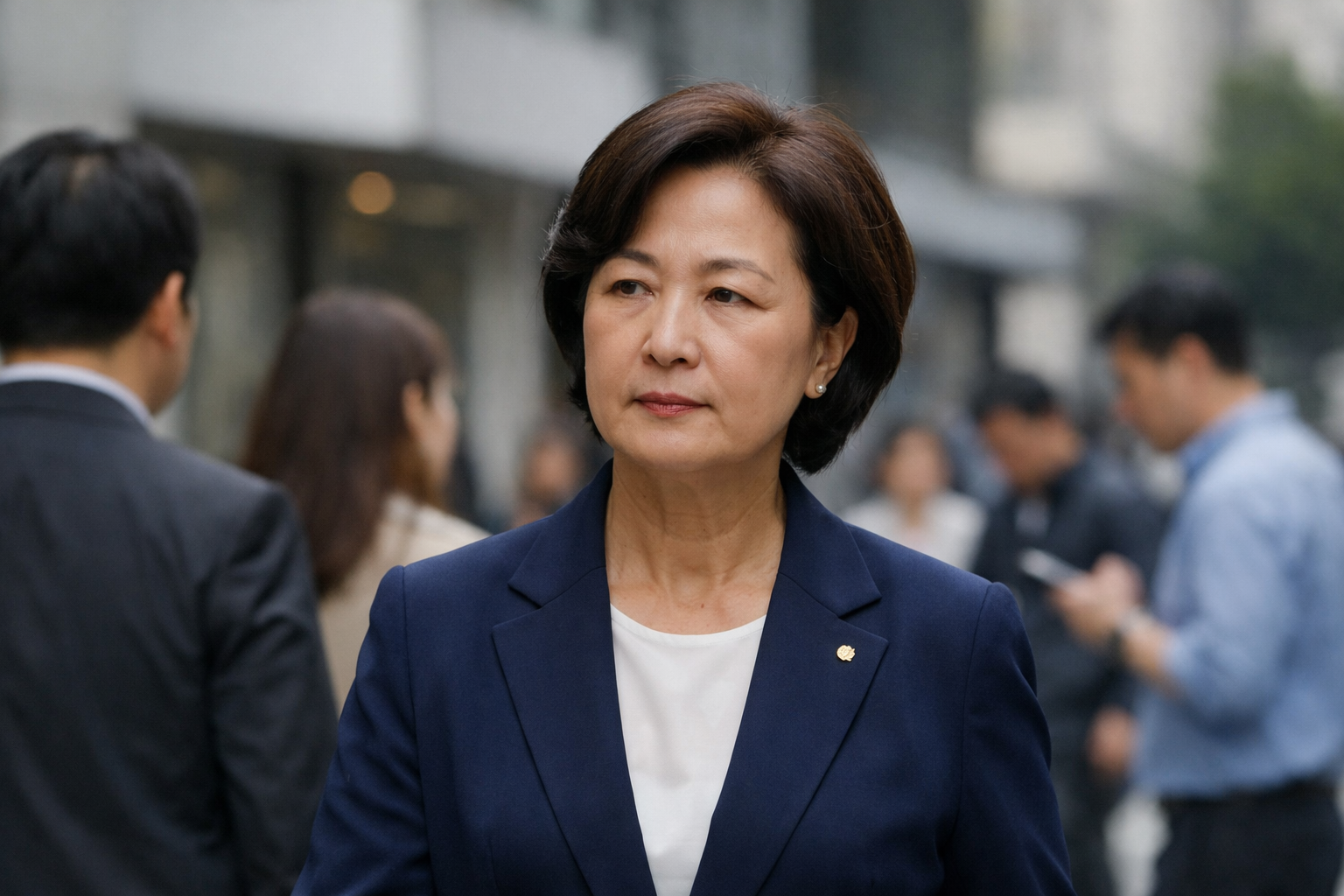
AI-Generated Photorealistic Image — All people, scenes, and details in this image are entirely AI-generated and fictional. Not a real photograph of an actual person or event. 이 이미지는 AI로 생성된 가상 이미지입니다.



Leave a Reply