
Table of Contents
A humanoid robot danced to a K-pop song in front of Korea’s top financial regulator this week. The government announced plans to build regional support hubs for physical AI, backed by local governments, policy banks, and regional lenders. The demonstration happened at the Korea Development Bank, signaling serious financial commitment behind the show.
Sound like a strange mix, a dancing robot and a finance minister? Stay with me, because this event tells you a lot about where Korea’s economy is headed.
A Dancing Robot and a Serious Policy Push
On September 22, a humanoid robot built by Robotis stepped onto a stage at the Korea Development Bank. It moved through a sharp, energetic routine set to “Red Red,” a hit song by the K-pop group Corteez. Financial officials, including the chairman of Korea’s Financial Services Commission, watched closely.
This was not just entertainment. The robot’s performance served as a live demonstration of physical AI technology, the kind of engineering that lets machines sense, move, and react in real physical spaces. You could call it a mashup of Silicon Valley and K-pop (fitting, since Korea rarely does anything without a little flair).
The event marked the launch of a broader government initiative. Officials want to connect local governments, policy finance institutions, and regional banks around one shared goal. That goal is spreading physical AI development beyond Seoul and into Korea’s regional economies.
What Is Physical AI, and Why Does It Matter
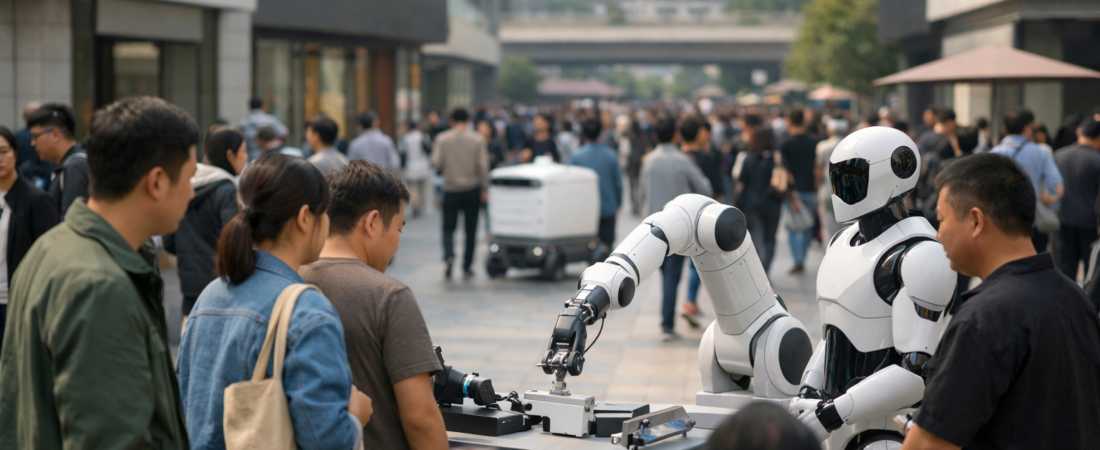
Physical AI refers to artificial intelligence systems built into machines that interact with the real world. Think robots, autonomous vehicles, or smart factory equipment. Unlike software-only AI, physical AI has to handle gravity, friction, and unpredictable environments — a much harder problem.
Why does this distinction matter to everyday readers? Because physical AI is expected to touch manufacturing, logistics, healthcare, and elder care in the coming decade. Korea, with its strong manufacturing base and aging population, has strong incentives to lead in this space rather than follow.
Global competition here is intense. Companies in the United States, China, and Japan are racing to build humanoid robots and industrial AI systems of their own. You can read more about global developments in humanoid robotics through outlets like Maeil Business Newspaper, which has tracked Korea’s growing role in this sector.
Korea’s approach stands out for one reason. It treats physical AI not just as a tech story, but as an economic development strategy tied directly to regional growth and financial policy.
Building Regional Hubs for Physical AI
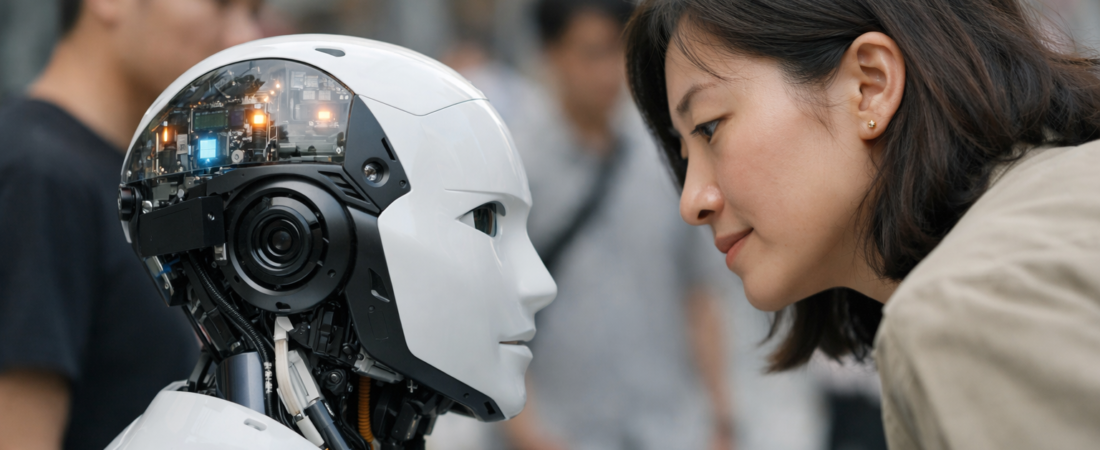
The government’s plan centers on cooperation between three groups: local governments, policy financial institutions, and regional banks. Each plays a distinct role. Local governments provide land, infrastructure, and regulatory support for physical AI startups and manufacturers.
Policy finance institutions, like the Korea Development Bank, supply capital and loan guarantees. Regional banks add localized financial access, helping smaller companies outside Seoul secure funding they might otherwise struggle to find. Together, this three-way partnership aims to prevent physical AI innovation from concentrating only in the capital region.
Why does regional distribution matter so much here? Korea has struggled for decades with overconcentration in Seoul, where jobs, capital, and talent cluster while other regions lag behind. Building physical AI hubs regionally could help rebalance that pattern, at least in one growing industry.
This is not the first time Korea has tried regional tech clusters. Similar efforts around semiconductors and biotech have had mixed results, succeeding in some cities while struggling in others. Physical AI hubs will need strong local execution, not just national-level announcements, to avoid the same uneven outcomes.
What This Means for Korea’s Future Economy
Korea’s bet on physical AI reflects a bigger question every advanced economy faces today. Can innovation reach beyond a country’s biggest city, or does it always concentrate where money and talent already live? This tension is not unique to Korea, and it deserves an honest look rather than easy optimism.
The critique is fair: past regional tech initiatives in Korea have sometimes produced impressive press events but limited long-term job creation outside major hubs. Announcements alone rarely fix deep structural imbalances built over decades. But there is also real reason for hope here, because this physical AI push ties financial institutions directly into regional economies in a way earlier programs did not, giving local banks and governments actual stakes in the outcome rather than just ceremonial roles.
Human ingenuity shows up in strange places, sometimes in a dancing robot, sometimes in a policy meeting few people notice. Korea’s willingness to keep trying, adjusting, and rebuilding regional strategies says something good about persistence. Yet persistence alone does not guarantee fairness, and the communities outside Seoul deserve outcomes measured in real jobs and real growth, not just headlines.
If these physical AI hubs succeed, Korea could offer a model other countries study closely. If they repeat old patterns, the lesson will be just as valuable, showing what regional tech policy still needs to fix.
What do you think about Korea’s plan to spread physical AI development beyond its capital city?
AI-Generated Photorealistic Image — All people, scenes, and details in this image are entirely AI-generated and fictional. Not a real photograph of an actual person or event. 이 이미지는 AI로 생성된 가상 이미지입니다.


Leave a Reply