Table of Contents
South Korea’s government announced a new plan to support physical AI regional hubs through cooperation between local governments, policy finance, and regional banks. The announcement came at a Korea Development Bank event on September 22, where a humanoid robot danced to a K-pop song. The moment captured attention, but the real story is Korea’s push to turn physical AI into a regional growth engine.
Why would a finance ministry event feature a dancing robot? That question sits at the heart of Korea’s new economic strategy.
A Dancing Robot Steals the Show
At the Korea Development Bank event, a humanoid robot made by Roboticz performed an energetic routine. It moved to “Red Red,” a song by the idol group Cortis. For a few minutes, robotics and pop culture shared the same stage.
You might wonder why officials chose entertainment over a simple slide presentation. The answer is simple. A robot dancing to a hit song communicates physical AI’s potential faster than any chart ever could.
Korea has a long habit of pairing technology with pop culture (think smartphone launches with idol endorsements). This event followed that same playbook, but with a serious policy goal underneath the fun.
What Physical AI Really Means
Physical AI refers to artificial intelligence systems built into machines that move and interact with the real world. Unlike chatbots or recommendation algorithms, physical AI controls robots, drones, and automated equipment. It blends software intelligence with hardware performance.
This distinction matters for Korea’s economy. The country already leads in semiconductors and displays, but physical AI opens a new frontier. Robots that walk, grip, and respond to their environment need advanced sensors, batteries, and actuators, all industries where Korean manufacturers already have expertise.
So why does physical AI need special government attention? Because building these systems requires deep coordination between research labs, factories, and investors. No single company can do it alone. That’s exactly why this announcement focused on cooperation, not competition.
Government, Banks, and Regions Join Forces
The government’s plan brings together three groups: local governments, policy finance institutions, and regional banks. Each plays a different role. Local governments provide land, infrastructure, and regulatory support for physical AI regional hubs.
Policy finance institutions, like the Korea Development Bank, supply capital for research and manufacturing scale-up. Regional banks connect that funding to smaller companies outside Seoul, spreading the benefits beyond the capital region. This structure aims to prevent physical AI investment from concentrating only in already-wealthy areas.
Is this approach realistic, or just another policy slogan? History gives some reason for optimism. Korea’s earlier semiconductor and shipbuilding hubs also grew through similar public-private cooperation, decades before AI entered the conversation. You can read more background on this policy direction from Maeil Business Newspaper, which first reported the announcement.
The government hopes regional universities and startups will benefit most. If policy finance flows to smaller cities, physical AI could reduce Korea’s long-standing imbalance between Seoul and everywhere else. That imbalance has shaped Korean economic debates for over a generation.
Why This Matters Beyond Korea
Global investors are watching how countries balance AI ambition with regional fairness. Korea’s physical AI strategy offers a useful test case. Can advanced technology actually help smaller cities, or does it always drift toward existing tech centers?
This tension deserves honest reflection, not easy optimism. Regional development plans often sound inspiring on paper, yet capital and talent tend to drift back toward Seoul no matter how many hubs get announced. At the same time, real signs of change exist: policy banks are placing conditions on funding that require regional partnerships, and smaller manufacturers in cities like Daegu and Gwangju are already integrating robotics into traditional factories.
That mix of caution and genuine effort feels honest. Progress rarely arrives in a straight line, and physical AI’s regional promise will likely unfold the same way, with setbacks alongside real gains. What matters is whether the effort continues even when results come slowly.
Korea’s physical AI ambitions will take years to fully prove themselves. But the direction is clear: robotics, finance, and regional policy are now moving together instead of separately.
What do you think about Korea’s plan to spread physical AI development beyond Seoul?
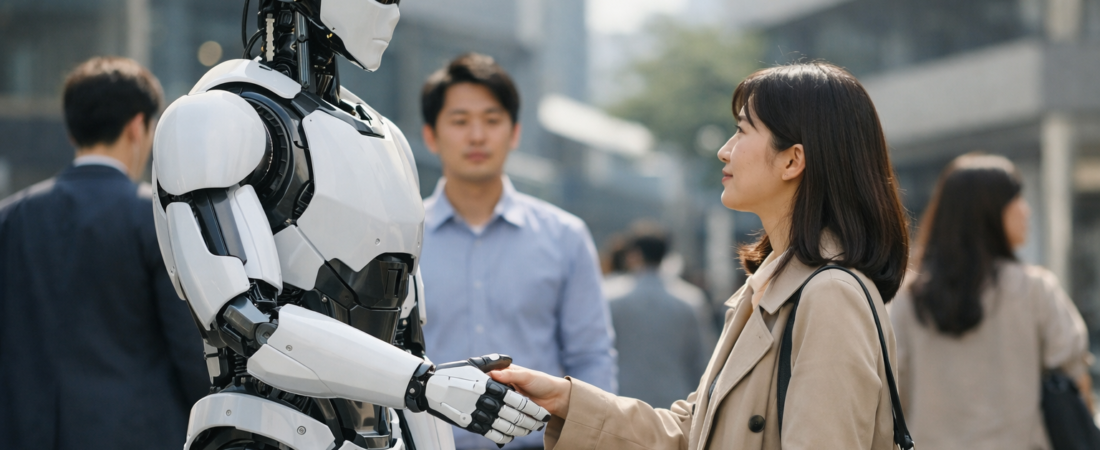
AI-Generated Photorealistic Image — All people, scenes, and details in this image are entirely AI-generated and fictional. Not a real photograph of an actual person or event. 이 이미지는 AI로 생성된 가상 이미지입니다.


Leave a Reply