Table of Contents
A far-right YouTuber filed an official notice to hold daily protests outside actor You Hae-jin’s home through the end of this month. The protest documents read “Condemn You Hae-jin, condemn the production company of ‘Assassins’.” Korean politicians across party lines have condemned the plan, calling it an alarming escalation against a private citizen.
You Hae-jin is one of Korea’s most recognized actors, known for films like “Confidential Assignment” and “Veteran.” So why would someone target his actual home, with sound equipment, every single day for weeks? That question is exactly what’s driving this story into national headlines.
What Happened to You Hae-jin
The controversy started with a single document. A registered protest notice, filed by a far-right YouTuber, named You Hae-jin and the production company behind “Assassins” as targets. The notice promised daily demonstrations, complete with loudspeakers, outside the actor’s residence until the end of October.
This isn’t a vague online complaint. It’s a formal, legally registered assembly plan aimed at one person’s private home. Protest permits in Korea are common for political rallies in public squares, but using one against an entertainer’s residence raises very different questions about intent and proportion.
You Hae-jin has not publicly responded in detail, and that silence has only amplified public concern. Many commentators note the chilling effect this kind of action can have on actors and filmmakers more broadly. If performers face home-targeted harassment over film roles, what does that mean for creative freedom in Korean cinema going forward?
The Film That Sparked the Fury
“Assassins” is the film at the center of this dispute, with You Hae-jin in a lead role. Specific plot details tied to the backlash remain murky in public reporting, but the protest notice explicitly links the film’s content to the organizer’s grievance. This suggests the anger is ideological, not personal in the ordinary sense.
Korean cinema has a long history of films touching sensitive historical and political nerves, from colonial-era dramas to stories about modern political violence. Audiences here take their movie debates seriously, sometimes spilling well beyond the theater and onto the evening news. Still, there’s a meaningful difference between criticizing a film online and showing up at an actor’s front door with amplifiers.
The production company behind “Assassins” was also named in the protest filing. That detail matters because it shows the campaign isn’t aimed only at an individual performer. It’s targeting the broader creative team, raising fears among other filmmakers about becoming the next target over a controversial script or casting choice.
Politicians Weigh In
Once this story reached the political mainstream, reaction came fast. Lawmakers across the spectrum criticized the planned protests as excessive, intrusive, and potentially harassing. Few, if any, political voices have defended the YouTuber’s approach, which is notable in Korea’s often sharply divided political climate.
Why would a dispute over a movie actor unite politicians who rarely agree on anything? Perhaps because targeting someone’s private residence crosses a line that transcends ideology. Free expression and protest rights are core democratic values in Korea, but most lawmakers seem to agree those rights don’t extend to daily harassment at a private home.
Coverage from outlets including JTBC News has placed this story squarely in the national conversation, with commentary extending beyond entertainment pages into political and legal discussion. The fact that a celebrity dispute has become a talking point for the National Assembly says something about how Korea currently handles the boundary between protest and personal intimidation.
Far-right YouTube channels have grown rapidly in Korea over the past several years, building large followings through provocative content. This particular case has become something of a flashpoint, testing how far such channels can push before facing broad political and public pushback. If nothing else, it has reminded many Koreans that online outrage can spill into very real, very physical consequences for the people it targets.
Why This Matters for Korea’s Democracy
Korea’s protest culture has deep democratic roots, going back to the candlelight vigils that helped drive major political change in 2016 and 2017. Peaceful assembly is protected and, in many ways, celebrated here as a tool of civic voice. But the You Hae-jin case forces a harder question: where exactly does legitimate protest end and personal harassment begin?
It’s worth being honest about both sides of this tension. Korea’s robust protest tradition empowers ordinary citizens to challenge power, and that’s a genuine strength worth protecting. At the same time, when that same tool gets pointed at a private individual’s home over a movie role, it exposes a real gap in how current rules balance assembly rights against personal safety and dignity.
The encouraging sign here is the near-unanimous political pushback against the planned protests, suggesting Korean society still holds a shared sense of where reasonable limits lie. Legal experts and lawmakers are now discussing whether assembly permit rules need tighter guardrails around residential targeting. That conversation, uncomfortable as it is, may ultimately strengthen rather than weaken Korea’s democratic protest culture.
This story also reflects something universal happening worldwide, from actors facing online mobs in Hollywood to public figures doxxed over unpopular opinions elsewhere. Korea is not alone in wrestling with where free speech ends and targeted harassment begins. What makes this moment notable is how quickly, and how broadly, Korean politicians stepped in to draw a line.
Entertainment industry groups in Korea may now push for clearer legal protections for actors and filmmakers facing similar pressure campaigns. You Hae-jin’s situation could become a reference case the next time a controversial film sparks public anger. Whether lawmakers follow through with concrete legislation remains the real test ahead.
Where do you think the line should sit between a citizen’s right to protest and a celebrity’s right to peace at home? And should Korea update its assembly laws to address cases like You Hae-jin’s directly?
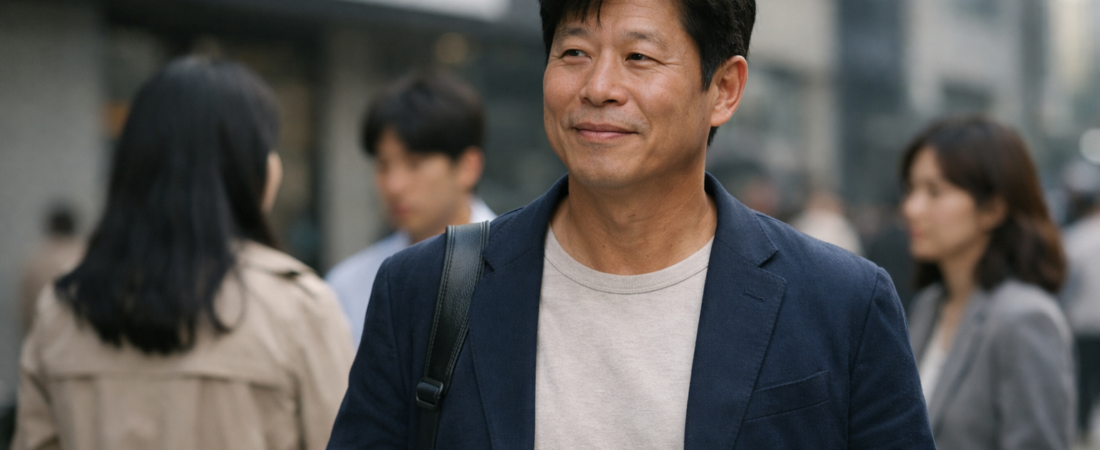
AI-Generated Photorealistic Image — All people, scenes, and details in this image are entirely AI-generated and fictional. Not a real photograph of an actual person or event. 이 이미지는 AI로 생성된 가상 이미지입니다.



Leave a Reply