Lee Chang-dong’s “Can’t Help But Love” Arrives on Netflix
Director Lee Chang-dong’s new film “Can’t Help But Love” premiered on Netflix this week, reaching general audiences for the first time. Lee himself said he feels “excited” about how living room viewers will react to the story. The film draws its roots from the 2009 Ssangyong Motor layoffs, a real labor crisis that shook South Korea.
Lee Chang-dong is not a director who chases trends. He waited roughly a decade to tell this particular story, and that patience says something about his approach to filmmaking.
Why does a film about corporate layoffs take ten years to reach the screen? That question sits at the heart of understanding Lee Chang-dong’s career.
From Factory Gates to Streaming Screens

Before this Netflix release, “Can’t Help But Love” only reached theatrical audiences. Lee noted that theater-goers tend to be film lovers or people already curious about his work. Netflix changes that equation completely.
Now ordinary viewers, scrolling through their options on a Friday night, might stumble onto the film without planning to. This shift matters for a director like Lee Chang-dong, whose films dig into Korea’s social wounds rather than offering easy entertainment.
The Ssangyong Motor layoffs remain a painful chapter in Korean labor history. Thousands of workers lost their jobs during the 2009 restructuring, and several died by suicide or illness linked to the stress that followed. Lee Chang-dong took this real tragedy and built a fictional story around it, asking what happens to ordinary people caught between corporate decisions and personal survival.
You might wonder why a filmmaker revisits such difficult history. For Lee Chang-dong, cinema has never been about comfort. It has been about honesty, even when that honesty is uncomfortable to watch.
Lee Chang-dong’s Vision: Life Beyond Good and Evil
Lee Chang-dong explained his core belief clearly: “Our lives are not divided into good and evil.” This idea runs through nearly every film he has made, from “Peppermint Candy” to “Poetry” to “Burning.” Characters in his stories rarely fit neat moral categories.
This philosophy shapes “Can’t Help But Love” directly. Workers facing layoffs are not simply victims, and company decision-makers are not simply villains. Lee Chang-dong wants viewers to sit with that discomfort instead of looking for easy answers.
Is that a hard sell for a streaming audience trained on clear heroes and villains? Maybe. But Lee Chang-dong has built his entire reputation on resisting that kind of simplicity, and audiences who find him often become lifelong followers.
He also spoke candidly about the business side of filmmaking. Lee Chang-dong admitted a real dilemma: directors need capital to make movies, even when their stories criticize the very systems that capital represents. This tension between artistic independence and financial reality is not unique to Korea, but it carries particular weight here.
South Korea’s film industry has grown rapidly over the past two decades, partly because companies like Netflix poured money into local productions. You could call that a mixed blessing (great for budgets, trickier for creative control). Lee Chang-dong seems aware of this irony, and he addressed it openly rather than pretending it does not exist.
Why Lee Chang-dong Still Matters in 2026

Lee Chang-dong has not released many films over his career, and that scarcity makes each one feel significant. He spent years as South Korea’s Minister of Culture before returning fully to directing. His films have won awards at Cannes, Venice, and other major festivals, earning him a reputation as one of Korea’s most respected auteurs.
Readers interested in the broader context of Korean cinema’s global rise can check coverage from Kyunghyang Shinmun, the outlet that first reported on this Netflix release. Korean film has moved from niche festival circuits to mainstream global platforms in just a few years. Lee Chang-dong’s work represents the thoughtful, slower end of that spectrum, standing apart from faster-paced commercial hits.
Stories about labor struggles rarely get glamorous treatment, and that gap deserves honest attention. Companies restructure, workers lose stability, and the human cost often disappears from public memory within a news cycle. At the same time, filmmakers like Lee Chang-dong keep these stories alive, and streaming platforms now give them reach far beyond what theaters alone could offer.
There is something hopeful in that combination, even though it does not erase the pain behind the original events. A difficult history finding a wider audience is not a solution, but it is a form of remembering, and remembering often comes before repair.
Lee Chang-dong’s willingness to sit in moral complexity, rather than offering tidy resolutions, reflects something true about human experience generally. People are rarely all good or all bad, and neither are the systems they build. Recognizing that complexity, without excusing real harm, might be the first step toward treating each other with more patience.
Netflix’s global reach means “Can’t Help But Love” will likely reach viewers far outside Korea who know nothing about the Ssangyong Motor layoffs. That is both an opportunity and a responsibility for Lee Chang-dong’s storytelling. Will international audiences connect with a story so specifically rooted in Korean labor history, or will the universal themes of loss and dignity carry it across cultural lines?
What do you think about streaming platforms bringing difficult, socially rooted films like Lee Chang-dong’s directly into living rooms worldwide?
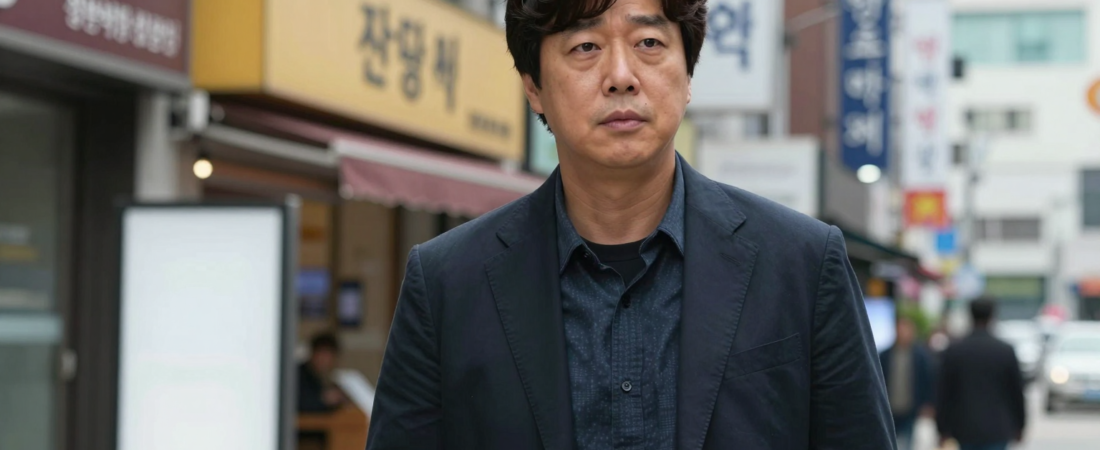
AI-Generated Photorealistic Image — All people, scenes, and details in this image are entirely AI-generated and fictional. Not a real photograph of an actual person or event. 이 이미지는 AI로 생성된 가상 이미지입니다.




Leave a Reply