Table of Contents
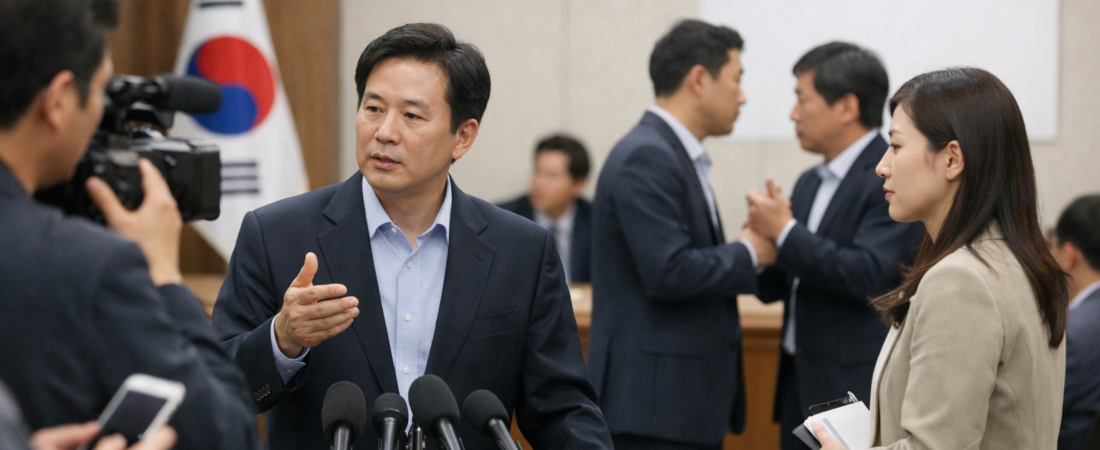
Can one sentence from a National Assembly Speaker restart Korea’s biggest political debate? That’s exactly what happened this week. A single remark about presidential terms has reignited talk of constitutional amendment across Korea’s political landscape.
National Assembly Speaker Cho Jeong-sik said that allowing a sitting president to seek a second consecutive term should be “a matter of public choice.” That phrase alone was enough to set off alarm bells. Opposition lawmakers heard something far more serious than a passing comment.
Was this an innocent observation about democratic principles? Or was it a trial balloon for something bigger? Let’s break down what actually happened, and why constitutional amendment is suddenly back in the headlines.
What Did Speaker Cho Jeong-sik Actually Say?
Speaker Cho Jeong-sik made his comment in the context of a broader discussion on constitutional amendment. He suggested that whether a sitting president could run for a second term should ultimately rest with voters. On its surface, this sounds like a neutral, almost obvious statement.
But context matters here, doesn’t it? Korea’s current constitution allows a president only one five-year term, with no possibility of reelection. This rule was written into the 1987 constitution specifically to prevent the kind of long-term authoritarian rule Korea experienced under past military governments.
So when a sitting Speaker floats the idea of “public choice” on presidential terms, people notice. Any hint of loosening that single-term rule touches a deep historical nerve. Korea fought hard for democratic term limits, and few topics are as politically sensitive as changing them.
Cho’s office moved quickly to manage the fallout. According to his aides, the Speaker was not proposing that the current president get to run again. Instead, they explained, he was making a general point: any future constitutional amendment on presidential terms needs broad public consensus and cross-party agreement before it goes anywhere.
Why the People Power Party Sees a Power Grab
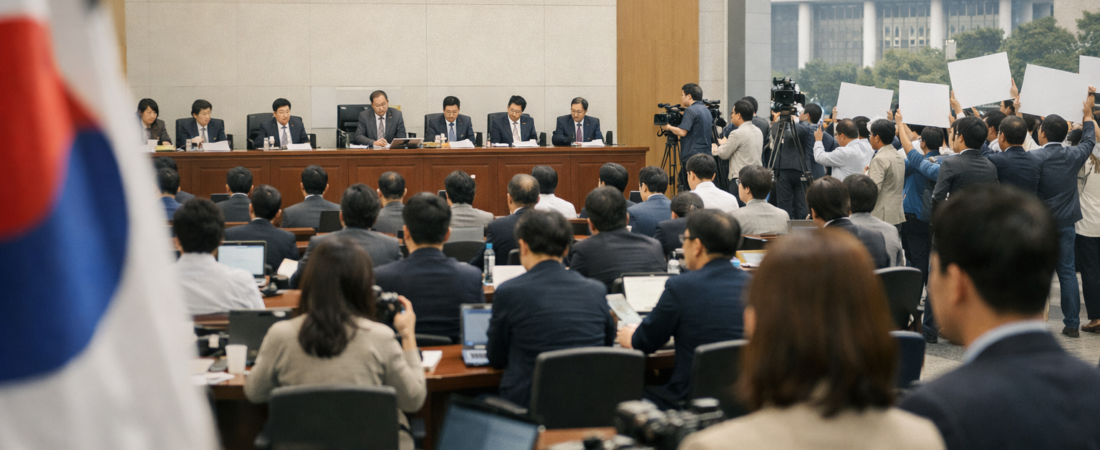
The People Power Party did not accept that explanation quietly. Party officials immediately accused Cho of hinting at an extension of the current administration’s grip on power. In Korean politics, this is about as serious an accusation as you can make.
Why does this particular phrase trigger such a strong reaction? Because history gives Koreans good reason to be suspicious. Past leaders have used constitutional amendment language before to extend their own rule, and voters remember that pattern well.
The PPP argued that Cho’s timing was no accident. Coming from the Speaker’s chair, a position meant to be politically neutral, the comment felt to opposition lawmakers like more than just theory. It felt like testing the waters for a real policy push.
Party leaders called for a clear retraction and pressed Cho to explain exactly what he meant. Some lawmakers went further, framing this as evidence that the ruling side wants to reshape constitutional rules to its own advantage. Whether or not that’s a fair reading, it shows how fast trust breaks down around any talk of constitutional amendment.
For readers outside Korea, this reaction might seem overheated for a single sentence. But you have to remember what’s at stake. Presidential term limits sit at the very core of Korea’s post-authoritarian identity, and any perceived threat to them draws immediate fire.
Constitutional Amendment 101: Understanding Korea’s Rules

So how hard is it, really, to change Korea’s constitution? Very hard, by design. The founders of the 1987 constitution built in strict safeguards precisely to prevent any single leader or party from rewriting the rules easily.
Here’s how constitutional amendment actually works in Korea. First, a proposal needs support from either the president or a majority of National Assembly members. Then it must pass the National Assembly with a two-thirds majority vote, a threshold that forces genuine cross-party cooperation.
After that, the amendment doesn’t just become law. It still has to go before the entire nation in a public referendum, and it needs majority approval from voters who turn out to vote. That’s three separate hurdles: proposal, supermajority in the Assembly, and a national vote.
This is exactly why critics questioned the practical reality behind Cho’s comment. Even if a sitting president wanted a second term, changing the constitutional amendment rules to allow it would require the current president’s own party to convince two-thirds of lawmakers and then win over the public directly. That’s an enormous political lift, especially in a divided National Assembly.
Some analysts also point out a built-in irony. Most proposals for constitutional amendment on presidential terms specify that any change cannot apply to the sitting president at the time of the amendment. This rule exists specifically to prevent the exact scenario the PPP was worried about.
If you’re new to Korean politics, this triple-lock system might explain a lot. You can find more background on how amendment procedures work through Yonhap News Agency, which covers the legal mechanics in detail. Understanding these formal steps helps explain why constitutional amendment rarely moves quickly in Korea, regardless of which party is in power.
Constitutional amendment discussions have surfaced repeatedly since 2018, when former President Moon Jae-in proposed changes that ultimately failed to gain traction. Each time, the same pattern repeats: strong opening statements, followed by gridlock over details. Does that sound familiar? It should, because Korean constitutional amendment debates rarely reach the finish line without near-total political consensus.
What Comes Next for Constitutional Amendment in Korea
Where does this controversy go from here? Probably nowhere fast, at least in terms of actual constitutional amendment. The math alone makes quick action nearly impossible without support from both major parties.
Still, the political damage from this episode is real. Every time constitutional amendment gets floated in connection with extending a leader’s time in office, public trust takes a hit. That trust is hard to rebuild once suspicion sets in.
Cho Jeong-sik’s team has tried to lower the temperature by stressing that any future constitutional amendment must reflect genuine public consensus, not a single administration’s convenience. That’s a reasonable principle on paper. But will voters believe it, given the current political climate?
This moment also reveals something important about Korean democracy today. Term limits aren’t just legal technicalities here. They represent a hard-won safeguard against the abuses Korea suffered under past authoritarian rule, and any hint of tampering with them still triggers immediate public scrutiny.
For global readers watching Korean politics, this episode is worth remembering. It shows how seriously Koreans guard their democratic institutions, even against a single ambiguous sentence. It also shows how constitutional amendment remains one of the most politically explosive topics in Korean public life, decades after democratization.
Looking ahead, expect this debate to resurface again, probably around the next major election cycle. Politicians on both sides will likely revisit constitutional amendment proposals, whether about term limits, the balance of presidential power, or electoral rules. The real question isn’t whether Korea will discuss constitutional amendment again, but whether any future effort can build the broad consensus this system demands.
What do you think? Should Korea reconsider its single-term presidential system through constitutional amendment, or does the current rule still serve its original protective purpose?
AI-Generated Photorealistic Image — All people, scenes, and details in this image are entirely AI-generated and fictional. Not a real photograph of an actual person or event. 이 이미지는 AI로 생성된 가상 이미지입니다.


Leave a Reply