
Table of Contents
Why would a city government audit its own flagship transit projects? That’s exactly what’s happening in Daejeon City right now. Officials have launched a sweeping audit covering eight major infrastructure projects, and two of them are drawing the most attention.
One is the long-delayed opening of the Line 2 tram system. The other is a canceled contract for a three-car articulated bus meant to serve as a new transit alternative. If you’ve followed Korean urban planning at all, you know timing problems aren’t rare — but this audit signals something bigger than a routine check.
Why Daejeon City Launched This Audit
Daejeon City oversees some of the largest public works budgets in the region. When multiple major projects stall or collapse, taxpayers start asking hard questions. This audit exists to answer those questions directly.
The scope is broad — eight major initiatives, not just one. But the tram delay and the articulated bus contract sit at the center of public concern. Why these two? Because both involve years of planning, significant public funds, and promises made to residents about better transportation.
Daejeon City has framed the audit as a check on process, not just outcomes. That distinction matters. Was the contract process sound? Were risks properly assessed before signing? These are the questions auditors will need to answer, and Daejeon City residents deserve clear answers soon.
The Tram Delay: A Long-Running Headache
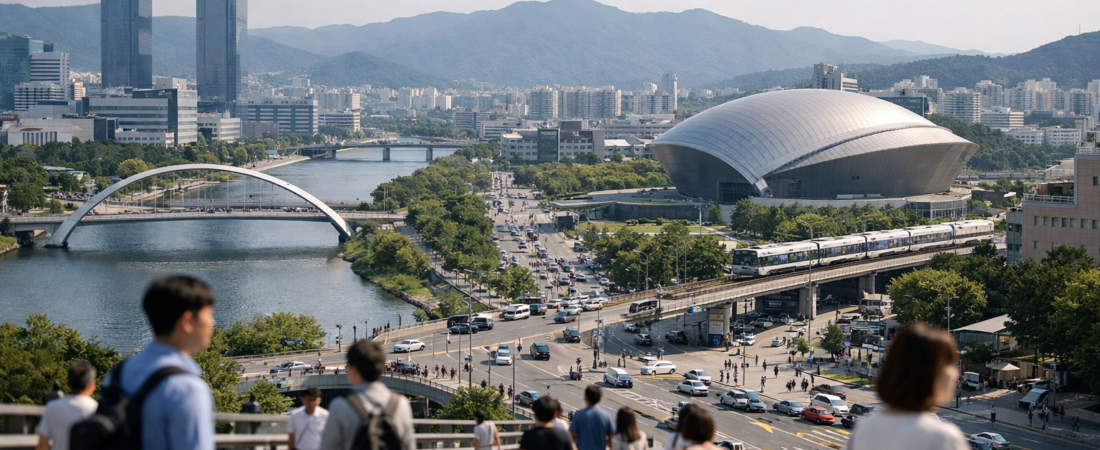
Seoul opened its subway system in 1974. Daejeon, by comparison, has waited decades for a comparable rail-based transit option beyond its existing metro line. The Line 2 tram was supposed to change that story.
Trams represent a middle ground between buses and subways — cheaper to build, easier to integrate into existing streets. Many European and Asian cities have embraced trams as a practical urban transit solution. Daejeon City bet on this model too, but the opening timeline kept slipping.
Delays in large infrastructure projects aren’t unique to Korea. Yet when a government-funded transit line falls behind schedule repeatedly, residents naturally start losing patience. Have you ever waited for a promised bus route that never seemed to materialize? Multiply that frustration by an entire city, and you get a sense of what’s at stake here.
The audit will likely examine construction timelines, budget allocation, and whether original projections were realistic from the start. This isn’t just paperwork. It’s about restoring confidence that Daejeon City can deliver on major promises to its residents.
The Articulated Bus That Never Left the Station

Perhaps more striking than the tram delay is the collapsed contract for the three-car articulated bus. This vehicle type — essentially a bus stretched across multiple connected sections — was meant to offer subway-like capacity without subway-level construction costs.
Several cities worldwide use articulated buses successfully, moving large passenger volumes along dedicated corridors. Daejeon City saw potential in this model as a faster, cheaper alternative to rail expansion. But the project reportedly fell apart before ever reaching operation.
That raises an obvious question: what went wrong in the contracting process? Was the vehicle technology unproven? Was the budget miscalculated? You can find reporting on the broader context of this story via Yonhap News Agency, which has tracked the project’s troubled path.
(Somewhere between the drawing board and the depot, that bus took a wrong turn — and taxpayers are footing the bill for the detour.) The audit will need to determine whether contract terms were appropriate from the beginning, and whether warning signs were ignored along the way.
What This Means for Public Trust in Daejeon City
Large infrastructure failures test something deeper than budgets — they test trust between citizens and their local government. Daejeon City now faces that test directly. How the audit unfolds will shape public confidence for years to come.
It’s worth being honest here: government contracting failures like this aren’t unique to Daejeon, and they reflect real structural weaknesses in how large public projects get approved and monitored. Oversight often comes too late, after money has already been spent and promises already made. But there’s a hopeful thread too — audits like this one exist precisely because accountability systems are working, even imperfectly, catching problems before they repeat.
Cities that respond to failure with transparency, rather than silence, tend to rebuild trust faster. Daejeon City has a real opportunity here to show residents that mistakes get investigated, not buried. That doesn’t erase the frustration of delayed trams or canceled bus contracts, but it does offer a path forward built on honesty rather than denial.
What happens next in Daejeon City could serve as a model — or a cautionary tale — for other Korean cities managing ambitious transit projects. Audits alone won’t build a single tram line or bus route. But they can determine whether future projects are built on solid ground instead of good intentions alone.
What do you think — should more cities audit major transit projects before problems like these become public scandals?
AI-Generated Photorealistic Image — All people, scenes, and details in this image are entirely AI-generated and fictional. Not a real photograph of an actual person or event. 이 이미지는 AI로 생성된 가상 이미지입니다.




Leave a Reply