Table of Contents
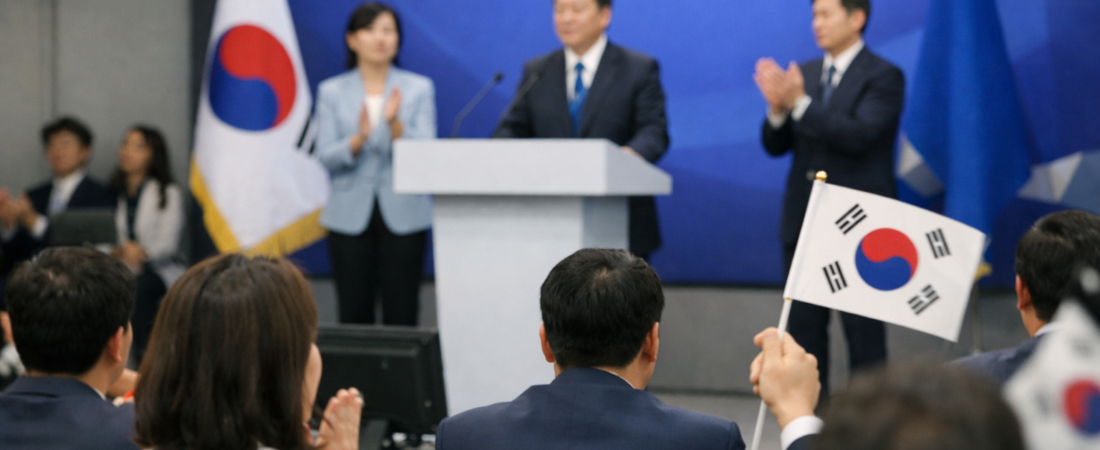
Can a religious group secretly reshape South Korea’s ruling party? That question is now at the center of the Democratic Party National Convention. Candidates are trading accusations, voters are confused, and the stakes could not be higher.
This is not a minor internal squabble. It’s a fight that touches politics, religion, and the future direction of one of Korea’s most powerful parties. Let’s break down what’s really going on.
What’s Really Happening at the Democratic Party National Convention
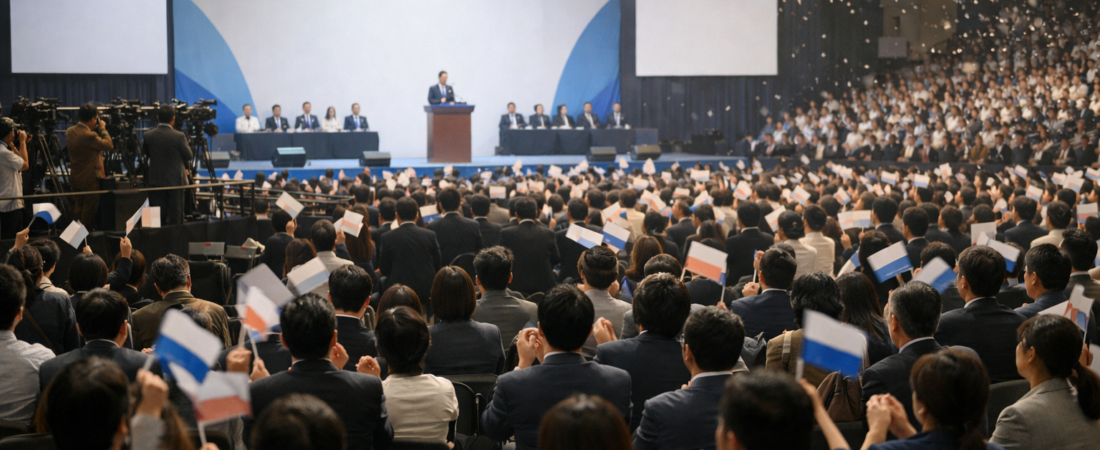
Every few years, Korea’s major parties hold a national convention to pick new leadership. This time, the Democratic Party National Convention has turned into something much bigger than a routine leadership race. Candidates aren’t just debating policy anymore.
They’re accusing each other of covering up — or exploiting — a scandal involving mass membership signups linked to the religious group Shincheonji. Sounds dramatic? It is.
The Democratic Party National Convention was supposed to focus on party direction and leadership vision. Instead, it has become a stage for public accusations, denials, and political maneuvering. Understanding why requires a closer look at the actual allegation.
The Shincheonji Controversy: What’s the Fight About?
At the heart of this controversy sits a simple but explosive claim. Critics allege that members of Shincheonji, a controversial religious organization, joined the Democratic Party in large, coordinated numbers. Why would that matter?
Mass, organized memberships can shift internal votes. If true, this could mean outside religious influence quietly shaping who leads a major national party. That’s not a small concern for Korean democracy.
Candidate Kim Min-seok has pushed this issue hard. He argues the allegation has moved beyond internal party gossip and become a matter of public concern. In his view, this is no longer something the party can quietly manage behind closed doors.
Kim insists the public has a right to know whether religious groups are manipulating internal party processes. That’s a serious charge, and it puts pressure on rival candidates to respond directly. Silence, in this situation, can look like guilt.
On the other side stands candidate Jung Chung-rae, who firmly rejects this framing. He argues that so-called “political operations” — attempts to smear rivals through unproven claims — have never actually succeeded in Korean politics. His message is clear: don’t fall for manufactured outrage.
Jung’s pushback raises its own question. Is this really a political operation designed to damage a rival candidate? Or is it a legitimate concern about outside religious influence that deserves scrutiny? Voters within the party now must decide which narrative they trust.
Kim Min-seok vs. Jung Chung-rae: Two Very Different Strategies
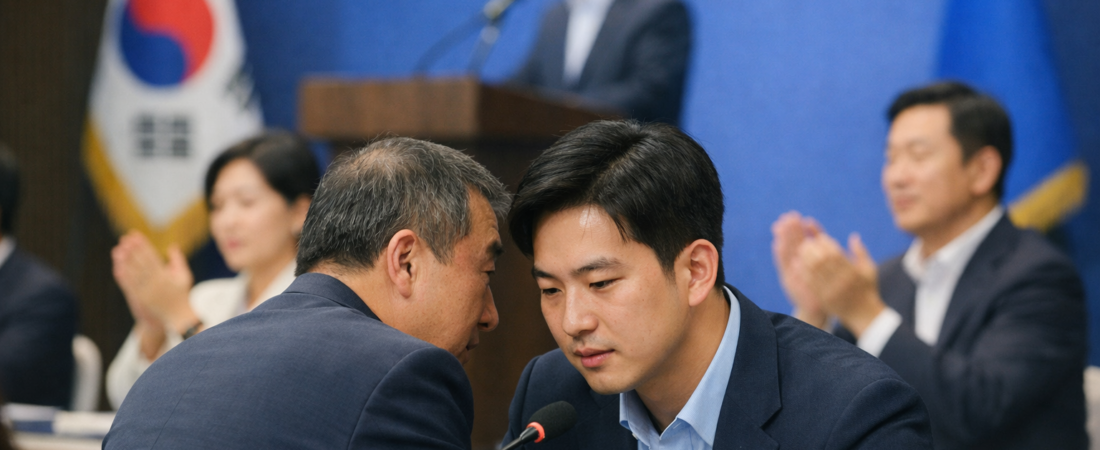
Every Democratic Party National Convention produces its own political personalities and strategies. This year, the contrast between Kim Min-seok and Jung Chung-rae could not be sharper. One candidate leans into confrontation, while the other counters with dismissal.
Kim Min-seok has chosen to escalate the Shincheonji issue publicly. By calling it a matter of public concern, he forces the conversation into the open. This is a classic offensive strategy — control the narrative before your opponent does.
Jung Chung-rae, meanwhile, is betting on a defensive playbook. By labeling the allegations as failed political tactics, he tries to drain them of credibility. History gives him some ammunition here — many past smear campaigns in Korean politics have indeed backfired on their creators.
So which strategy works better during a heated Democratic Party National Convention? That depends on what party members actually believe. If voters see legitimate concern, Kim benefits.
If voters see manufactured drama, Jung gains the upper hand instead. Either way, this clash reveals something important about Korean party politics. Personal trust and public perception often decide leadership races more than formal policy platforms do.
For readers unfamiliar with Korean party politics, this pattern isn’t new. Leadership races inside major parties often become proxy battles over trust, loyalty, and past scandals. Readers interested in deeper background can review coverage from Korean Daily Life News Desk for additional context on how these dynamics have played out historically.
Beyond the Scandal: Party Unity and the Bigger Ideological Fight
Here’s something you might not expect. The Shincheonji controversy isn’t the only major issue at this Democratic Party National Convention. Candidates are also debating something with much longer-term consequences: potential unification with the Rebuilding Korea Party, founded by former Justice Minister Cho Kuk.
Why does this matter so much? Because merging with another party reshapes the entire ideological identity of the Democratic Party. It’s not just about winning one leadership race.
It’s about deciding what the party stands for in the years ahead. Some candidates support closer ties with the Rebuilding Korea Party, seeing strategic value in a broader progressive coalition. Others worry that unification could dilute the party’s core identity or invite unwanted political baggage.
This debate adds another layer to the Democratic Party National Convention beyond personal rivalries. Candidates are essentially competing over two things at once. First, who gets to lead the party right now.
Second, what direction the party takes structurally in the near future. That’s a lot riding on a single convention, isn’t it?
For international observers, this dual competition offers a useful lesson. Korean political parties function less like fixed, permanent institutions and more like evolving coalitions. Leadership races often double as referendums on ideology, strategy, and even religious influence.
Think about how different this is from many Western party systems. In many countries, leadership contests focus narrowly on policy platforms or personal charisma. Here, the Democratic Party National Convention has become a battleground for religious controversy, personal rivalry, and coalition politics — all at once.
That complexity makes Korean politics fascinating to study, but also harder to predict from the outside. What happens next depends on how party members weigh these competing pressures. Do they prioritize decisive leadership, careful unity-building, or ideological clarity?
The answer will shape not just this convention, but the party’s trajectory heading into future elections. Whichever candidate wins, they inherit a party mid-transformation, not a stable, settled organization. That’s a demanding position for any incoming leader.
Historically, Korean political parties have used national conventions to reset direction after major setbacks or before crucial elections. This pattern isn’t unique to the Democratic Party. Rival parties across Korea’s political spectrum have faced similar internal battles over religious influence, factional loyalty, and coalition strategy.
What makes this year’s Democratic Party National Convention distinct is the combination of factors converging at once. A religious controversy, a fierce leadership rivalry, and a coalition debate rarely align so tightly within a single event. That convergence is exactly why this convention deserves close attention, both inside Korea and beyond.
Looking ahead, the outcome of this Democratic Party National Convention will send signals far beyond party headquarters. Investors, diplomats, and everyday citizens alike watch these leadership shifts closely. Why?
Because party direction often predicts future policy, especially on issues like inter-Korean relations, economic reform, and social policy. A party leaning toward broader coalition-building might govern differently than one prioritizing ideological purity. That’s why global readers should care, even without deep familiarity with Korean party structures.
Understanding these internal dynamics helps you interpret future headlines about Korean governance with more nuance. Political change in Korea rarely happens through dramatic single events alone. It builds gradually through moments exactly like this convention — messy, contested, and revealing.
So as the Democratic Party National Convention moves toward its conclusion, keep watching closely. The winner won’t just hold a title. They’ll inherit unresolved questions about trust, religious influence, and party identity that this convention has brought sharply into focus.
What do you think about religious groups potentially influencing political party memberships in democracies like Korea’s?
AI-Generated Photorealistic Image — All people, scenes, and details in this image are entirely AI-generated and fictional. Not a real photograph of an actual person or event. 이 이미지는 AI로 생성된 가상 이미지입니다.


Leave a Reply