Table of Contents
Ever wondered why one company’s name lights up the entire sky over Seoul every fall? Hanwha just announced its 2026 fireworks festival will happen almost three weeks earlier than last year. That single scheduling change tells you a lot about how Korea’s biggest corporate-sponsored spectacle actually works.
This year, Hanwha is bringing the show to Yeouido Hangang Park on September 5. If you’ve ever tried to find a spot along the Han River during this event, you know the early birds don’t just get the worm—they get an actual seat.
Hanwha Moves Up Its Biggest Fireworks Show
Hanwha confirmed that the “Seoul World Fireworks Festival 2026, presented by Hanwha” will take place on September 5. Last year’s event happened in late September, so this represents a shift of roughly three weeks earlier on the calendar.
Why does the timing matter so much? Because this festival has become one of Seoul’s signature autumn events, drawing massive crowds to the Hangang riverbanks every single year.
Hanwha has not released a detailed explanation for the earlier date, according to the report from Yonhap News Agency. Weather patterns, venue availability, and coordination with city authorities likely all played a role in Hanwha’s decision.
What we do know is that the location stays the same. Yeouido Hangang Park remains the anchor point, giving visitors a familiar reference no matter when Hanwha schedules the show.
Why Hanwha Owns This Autumn Tradition
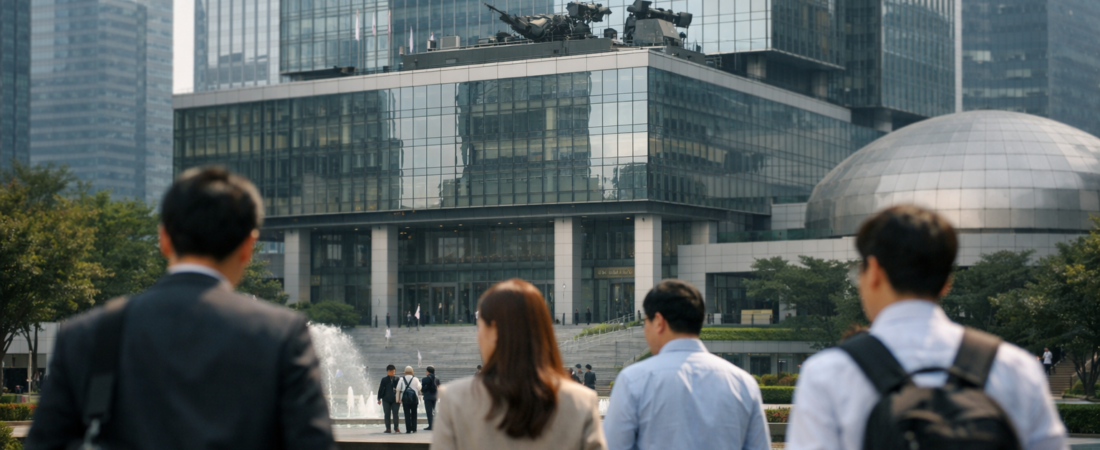
Hanwha is not a newcomer to fireworks. The company’s origins trace back to explosives and gunpowder manufacturing, so pyrotechnics sit close to its industrial roots.
That history gives Hanwha a unique claim on this kind of public spectacle. Few corporations anywhere in the world can say fireworks are part of their founding business.
Over the years, Hanwha turned this technical expertise into a branded cultural gift to the city of Seoul. The festival costs nothing for spectators to attend, which sets it apart from many corporate-sponsored events you might see elsewhere.
Think about it this way: how many companies host a free, world-class show for millions of strangers just to build goodwill? Hanwha’s fireworks festival functions almost like a civic holiday, even though no government agency runs it.
The event typically features fireworks teams from multiple countries, each performing a themed segment set to music. This international lineup gives the festival a competitive, showcase-style feel rather than a single continuous burst of light.
Seoul’s skyline becomes a canvas for a few unforgettable hours. And if you have ever watched thousands of strangers gasp in unison at the same moment, you understand why Hanwha keeps investing in this tradition year after year.
What the Earlier Date Means for Seoul
An earlier festival date changes more than just your calendar reminder. September weather in Seoul tends to be warmer and less predictable than late September, so Hanwha’s shift could affect everything from crowd comfort to visibility conditions for the fireworks themselves.
Transportation planning also shifts. Seoul’s subway system and nearby bridges typically see heavy congestion on festival night, and moving the date earlier means different holiday overlaps and different weekday-versus-weekend dynamics for commuters.
Will an earlier date mean smaller crowds, or will curiosity about the new schedule actually draw more people out? It’s hard to say for certain, but Hanwha’s decision suggests confidence that timing tweaks won’t hurt turnout.
Local businesses near Yeouido also adjust their own calendars around this event. Restaurants, convenience stores, and river-side vendors all see a predictable sales spike whenever Hanwha’s festival rolls around, so an earlier date simply moves that economic bump up on their books.
For international visitors planning a Korea trip around this spectacle, the shift matters even more. If you were mentally filing this away as a “late September” event, you’ll want to update your travel dates now that Hanwha has locked in September 5.
Hanwha’s Bigger Role in Seoul’s Cultural Calendar
Corporate-sponsored public events like this one raise an honest question worth sitting with. Does a private company’s name attached to a beloved civic tradition dilute the sense that this belongs to everyone, or does it simply reflect how modern cities fund large-scale culture?
There’s a real tension here, and it deserves an honest look rather than easy applause. A free festival funded by one conglomerate means Hanwha’s brand gets stamped onto a shared public memory, and that blending of commerce and community can feel uncomfortable if you think about it too long.
Yet the counterpoint matters just as much. Because Hanwha absorbs the cost, millions of people who could never afford a ticketed spectacle get to stand shoulder to shoulder with strangers and share something genuinely joyful, free of charge.
The same crowded riverbank that creates unforgettable collective wonder also creates real strain—crushed subway platforms, hours of waiting, and the quiet exhaustion that comes with any mass gathering. That tension between shared joy and shared discomfort is not unique to Hanwha’s festival; it shows up anywhere humans gather in huge numbers for something beautiful.
What gives me hope is watching how organizers keep refining the experience each year. Better crowd routing, expanded safety staffing, and clearer public announcements all suggest that Hanwha and city planners are listening to the friction points from previous festivals rather than ignoring them.
Bringing a date forward by three weeks might look like a small logistical choice on paper. But it also signals that Hanwha treats this festival as a living tradition, one that gets adjusted and improved rather than repeated on autopilot.
Seoul’s fireworks night has become something bigger than a marketing campaign at this point. Whether Hanwha intended it or not, the festival now functions as a shared seasonal marker for an entire city, the kind of event people plan family visits and long-distance reunions around.
So here’s the question worth asking yourself: does it matter who pays for a moment of shared wonder, as long as the wonder itself is real? What do you think about Hanwha’s growing role in shaping Seoul’s cultural calendar?
AI-Generated Photorealistic Image — All people, scenes, and details in this image are entirely AI-generated and fictional. Not a real photograph of an actual person or event. 이 이미지는 AI로 생성된 가상 이미지입니다.
Leave a Reply