
Table of Contents
Taeyeon’s “Mansiran-ga” and Lee Su-hyun’s “Blue Coral Reef” now sit near the top of Korean streaming charts. Both songs are J-pop remakes, and J-pop streaming in Korea jumped 29.5 percent over the past year. What was once a niche hobby is now mainstream listening for Korea’s youngest generation.
Does that surprise you? It shouldn’t, really.
Korean pop culture has always borrowed and blended influences from Japan, the United States, and beyond. But something feels different this time. J-pop is not just being covered quietly in dorm rooms anymore — it’s charting, trending, and filling concert halls.
J-Pop Climbs Korea’s Music Charts
Taeyeon, one of Korea’s most established solo artists, chose a Japanese song for her “J-pop Remake Project” in Gangnam. Lee Su-hyun followed with her own version of a Japanese classic. Both tracks landed high on domestic music charts, a feat that would have seemed unlikely just a few years ago.
This is not an isolated case. J-pop streaming numbers climbed nearly 30 percent within a single year, according to industry data. That kind of growth signals more than passing curiosity — it points to a real shift in listening habits.
Japanese artists are also showing up in person. Fujii Kaze, one of Japan’s biggest names, has performed in Korea to strong turnout. Festivals like Wonderrebbit, dedicated to Japanese music, have sold out venues and drawn crowds that skew young.
Add in short-form video hits — the kind that spread through TikTok and Instagram Reels overnight — and you get a genre no longer confined to a subculture. J-pop songs are appearing on Korean music broadcast shows too. That crossover used to be rare.
Why Zalpha Listeners Are Driving This Shift
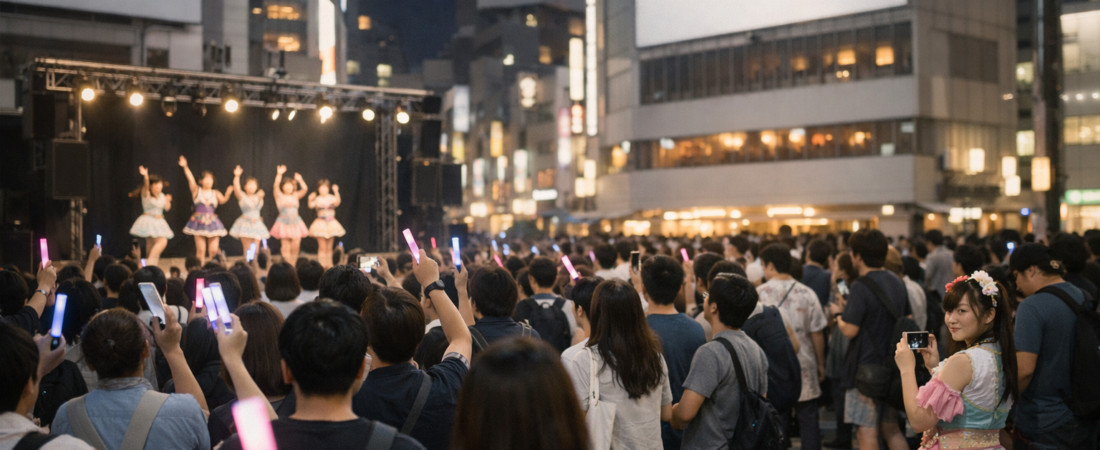
The term “Zalpha” combines Generation Z and Generation Alpha — Korea’s youngest music consumers. For them, national borders in music mean less than they did for their parents. Streaming platforms show them whatever performs well, regardless of language.
Think about how you discover music yourself. Chances are, an algorithm recommended it, not a radio station bound by national playlists. Korean teens today build their taste the same way, and J-pop simply keeps showing up in their feed.
There’s also a generational memory gap worth noting. Older Koreans grew up with stricter cultural import rules on Japanese media, a legacy of complicated Korea-Japan history. Younger listeners never experienced those restrictions directly, so J-pop carries less political weight for them.
That doesn’t mean history disappeared — it just means the emotional charge softened for listeners born after the 2000s. Japanese music once carried the label of “otaku music” in Korea, a term implying niche, insider appeal. That label is fading fast, and Korean listeners now treat J-pop the way they’d treat any other genre worth adding to a playlist.
From Underground Fandom to Mainstream Stages

Fan communities used to trade J-pop tracks quietly online, often translating lyrics themselves for smaller audiences. Now those same songs land on official broadcast stages. That’s a significant leap in visibility and legitimacy.
Festivals like Wonderrebbit show how far this has traveled. These are not small gatherings tucked away in niche venues anymore — they’re full-scale events with lineups, ticket sales, and media coverage. You could compare it to how K-pop itself once grew from cult following to global stage, just moving in the opposite direction this time.
Korean broadcasters inviting Japanese acts onto mainstream music shows marks another turning point. It signals industry recognition, not just fan enthusiasm. When a genre moves from streaming charts to television screens, that’s when you know it has crossed into the mainstream.
You can read more coverage of this cultural shift through The Kyunghyang Shinmun, which has tracked the rising J-pop presence in Korean charts closely.
What This Means for Korea’s Music Future
Where does this leave Korea’s own music industry? Some see competition. Others see collaboration, given how many Korean and Japanese artists already tour together or cover each other’s songs.
Cultural exchange like this rarely moves in just one direction, and it rarely stays simple either. Korean pop’s global rise depended partly on absorbing outside influences quickly and confidently, so this J-pop wave might reflect the same openness turned inward. But easy cultural blending can also blur what makes a national music scene distinct, and that tension deserves honest attention rather than quiet dismissal.
Still, there’s something hopeful here too. Young listeners choosing songs based on feeling rather than nationality suggests a quieter kind of reconciliation between two countries with a heavy shared history. It won’t erase old wounds, and it shouldn’t be mistaken for that, but a shared music chart is still a small, real step toward mutual understanding built by ordinary people, not policy.
Korea’s relationship with Japanese pop culture has shifted from cautious distance to open curiosity within a single generation. J-pop’s climb up Korean charts may just be the most visible sign of that change. Where do you think this cultural exchange goes next — deeper collaboration, or a passing trend?
AI-Generated Photorealistic Image — All people, scenes, and details in this image are entirely AI-generated and fictional. Not a real photograph of an actual person or event. 이 이미지는 AI로 생성된 가상 이미지입니다.




Leave a Reply