Table of Contents
What happens when a child skips lunch, and no one notices? In Jongno-gu, a district right in the heart of Seoul, local officials decided that question deserved a real answer.
Jongno-gu is now rolling out a new meal support program called “Ttabap-ttabap,” designed to feed children who might otherwise go hungry. The name itself is playful, but the mission behind it is serious.
What’s Happening in Jongno-gu
Jongno-gu, led by district mayor Yu Chan-jong, announced a partnership with local restaurants across the area. The goal is simple: give children at risk of missing meals access to free or discounted food.
This isn’t a one-time charity event. Jongno-gu plans to make this a structured, ongoing part of its child welfare system.
Why does a wealthy, historic district like Jongno-gu need a program like this? Because food insecurity doesn’t always look like poverty from the outside — it often hides behind closed doors, in single-parent households, or families juggling multiple jobs.
According to Yonhap News Agency, Jongno-gu intends to expand the number of participating restaurants over time. The district is also reviewing how to widen eligibility so more children can benefit.
How the Ttabap-ttabap Meal Program Works

The mechanics are refreshingly straightforward. Jongno-gu partners with neighborhood restaurants, and those restaurants agree to serve meals to eligible children for free or at a reduced price.
Instead of building new cafeterias or shipping in packaged food, Jongno-gu uses what already exists — the local restaurant scene. Kids walk into a real restaurant, sit at a real table, and eat a real meal alongside everyone else.
Think about that for a second. There’s no cafeteria line, no stigma-inducing voucher waved in front of classmates.
A child eating at a normal restaurant just looks like… a child eating at a restaurant. That quiet dignity might be the smartest part of the whole design (and yes, someone at Jongno-gu clearly thought hard about how kids actually feel).
Jongno-gu covers the cost gap through district funding, working directly with restaurant owners willing to participate. The district frames this as a community-wide effort, not just a government handout.
Local business owners become partners in child welfare, not just food vendors. Isn’t that a more sustainable model than a top-down feeding program run entirely by bureaucrats?
Why Child Food Insecurity Matters in Korea

Korea often gets praised abroad for its rapid economic rise and its education-obsessed culture. But beneath that success story, gaps remain — and one of the most overlooked gaps is childhood hunger.
Government data has long shown that thousands of children across Korea qualify for “meal cards,” a support system meant to cover food costs during school breaks and after school hours. Yet usage rates often lag behind eligibility, partly because families don’t know about the program, and partly because kids feel embarrassed to use it.
Jongno-gu’s approach tries to solve both problems at once. By working through everyday restaurants instead of a separate welfare bureaucracy, the district lowers the visibility barrier that keeps some families from asking for help.
Historically, Korean society has leaned heavily on family networks and neighborhood ties to catch people who fall through cracks. Confucian-influenced values placed enormous weight on family responsibility for feeding and raising children.
But modern Korea looks different now. Single-parent households have grown, work hours remain among the longest in the OECD, and extended family support networks have thinned out in dense urban districts like Jongno-gu.
So who steps in when family alone isn’t enough? That’s exactly the question local governments like Jongno-gu are now being forced to answer directly, rather than assuming tradition will handle it.
What This Means for Korea’s Care Safety Net
Jongno-gu’s meal initiative is small in scale but large in symbolism. It signals that local governments, not just the central government in Seoul, are stepping up to close gaps in the child welfare system.
Other districts across Korea are watching closely. If Jongno-gu can show measurable results — more children fed, fewer meals skipped, restaurants willing to stay involved long-term — this model could spread nationwide.
It’s worth being honest about the limits here too. A restaurant partnership program depends on continued government funding, willing business owners, and public trust — none of which is guaranteed forever, and budget priorities shift with every election cycle.
Community-based solutions like this one reveal something true about human nature: people generally want to help a hungry child right in front of them, restaurant owners included. But that same reliance on goodwill and local generosity can quietly mask a deeper structural problem, letting policymakers under-invest in permanent, guaranteed support because voluntary programs seem to be “handling it” for now.
The hopeful sign is that Jongno-gu isn’t treating this as charity alone — it’s building it into district policy, with plans to expand participating restaurants and widen who qualifies. That’s the difference between a feel-good gesture and an actual safety net.
Programs like this succeed only when communities keep showing up, year after year, not just during a news cycle. Jongno-gu has set a promising precedent, but the real test comes in twelve months, when the initial goodwill has to turn into lasting infrastructure.
Will other districts follow Jongno-gu’s lead, or will this remain a single, isolated success story? What do you think — should feeding hungry children rely on local restaurant partnerships, or does this responsibility belong squarely with national policy?
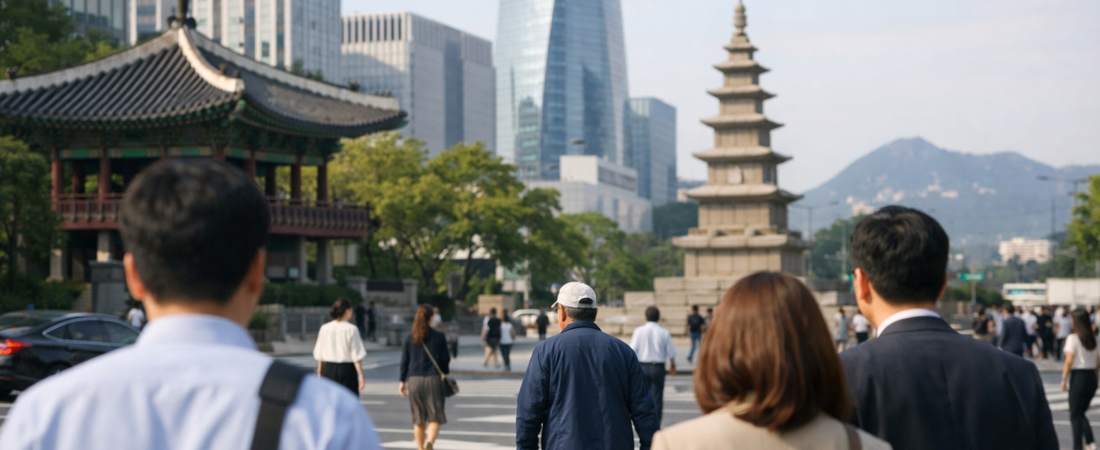
AI-Generated Photorealistic Image — All people, scenes, and details in this image are entirely AI-generated and fictional. Not a real photograph of an actual person or event. 이 이미지는 AI로 생성된 가상 이미지입니다.




Leave a Reply