Table of Contents
What happens when a country’s top law enforcement official suddenly hints at quitting mid-crisis? That is the exact question facing Korea today. Justice Minister Jeong Sung-ho has signaled he may step down, and the political world is scrambling to respond.
His comment was simple but loaded with meaning. “New wine should be put in new wineskins,” he said. Anyone familiar with Korean political speech knows that phrase rarely comes without a deeper message underneath.
What Happened: Justice Minister Jeong Sung-ho’s Resignation Signal
Justice Minister Jeong Sung-ho made his remark during heated debate over prosecutorial reform. He suggested that new leadership might be needed for the next phase of Korea’s justice system overhaul. That single sentence sparked immediate speculation across Seoul’s political circles.
Was he really offering to resign? Or was this a strategic signal meant to pressure his critics? The presidential office moved fast to control the narrative.
Officials from the presidential office stated that Justice Minister Jeong Sung-ho’s resignation had not been officially confirmed. They called the reports inaccurate, at least in their current form. This kind of denial is common in Korean politics, but it rarely settles the matter completely.
You have probably noticed how Korean cabinet reshuffles often unfold this way. A minister hints at leaving, the presidential office denies confirmation, and lawmakers scramble to interpret the real intent. Justice Minister Jeong Sung-ho’s situation fits this familiar pattern almost perfectly.
His position sits at the center of one of Korea’s most sensitive legal debates in years. The timing of his comment, right as prosecutorial authority reform reaches a critical stage, adds real weight to his words. Nothing about this moment feels accidental.
The Prosecutorial Reform Fight Behind the Scenes
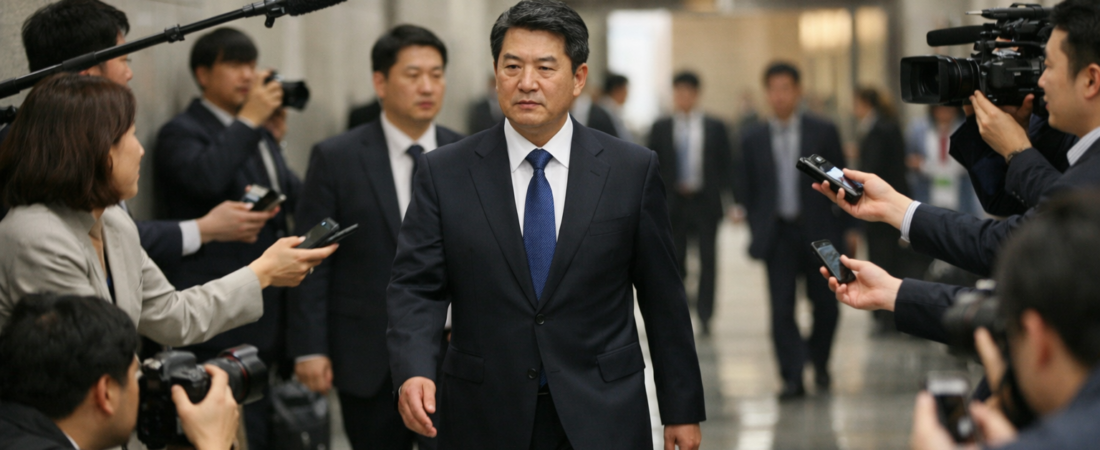
To understand why Justice Minister Jeong Sung-ho’s words matter, you need context on Korea’s prosecution debate. The controversy centers on abolishing prosecutors’ supplementary investigation authority. This power lets prosecutors reopen or expand police investigations under certain conditions.
Reformers argue this authority gives prosecutors too much control over ordinary criminal cases. Critics counter that removing it weakens accountability and creates gaps in serious crime investigations. Justice Minister Jeong Sung-ho has found himself caught directly between these competing visions.
This debate is not new to Korean politics. Since 2020, Korea has gone through repeated rounds of prosecutorial reform, each one reshaping the balance of power between police, prosecutors, and now a newly planned Serious Crimes Investigation Agency. Justice Minister Jeong Sung-ho has overseen this transition during one of its most contentious phases.
Think about what it means to lead legal reform while facing pressure from every direction. Prosecutors resist losing authority. Police want clearer jurisdiction. Lawmakers want political credit without political blame.
Justice Minister Jeong Sung-ho’s “new wine, new wineskins” comment can be read as frustration with this three-way tension. He may be suggesting that finishing this reform requires someone without his current baggage. Whether that reading is accurate remains an open question, but it fits the political mood surrounding him.
Readers interested in deeper background on Korea’s judicial restructuring can check ongoing coverage from Yonhap News Agency for additional detail.
Why Political Rivals Both Want Him to Stay
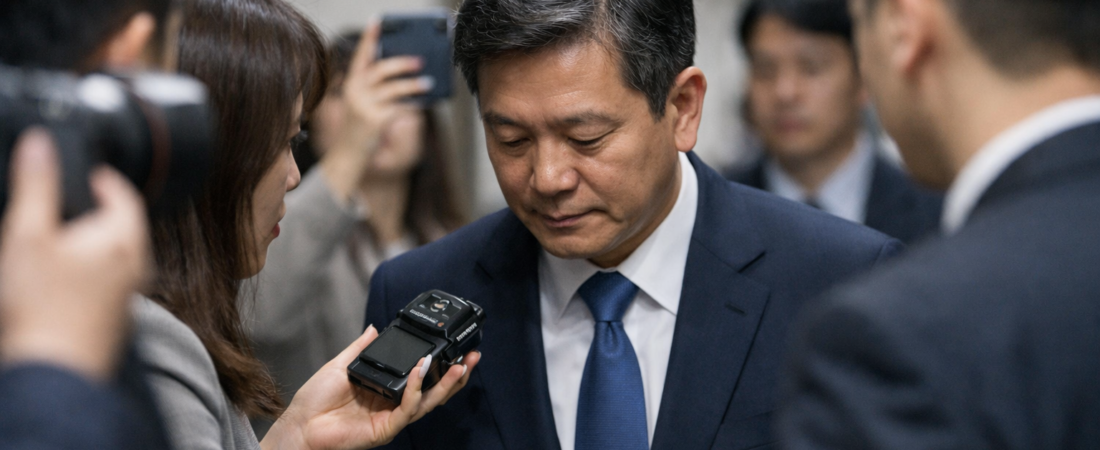
Here is where the story gets genuinely interesting. Lawmakers from the Democratic Party of Korea and opposition members both asked Justice Minister Jeong Sung-ho to withdraw his resignation. But they want him to stay for completely different reasons.
Democratic Party lawmakers worry that losing Justice Minister Jeong Sung-ho now would stall reform momentum they have spent years building. They see him as a steady hand who understands the reform’s technical details. Replacing him mid-process could delay the entire legislative timeline.
Opposition lawmakers, meanwhile, may prefer a known figure over an unpredictable replacement. A new justice minister brought in during this delicate stage could take reform in an even more aggressive direction. From their perspective, an experienced minister is easier to negotiate with than an unknown successor.
Isn’t it striking how rivals can agree on an outcome while disagreeing completely on the reasoning? This happens more often in Korean politics than most outside observers realize. Consensus on process, not principle, keeps many reform efforts alive during periods of instability.
The president has also weighed in directly on this situation. He emphasized the importance of preparing the Serious Crimes Investigation Agency properly before any leadership change occurs. He also stressed a traditional principle known as “seon-gong-hu-sa,” meaning public duty must come before private interest.
This phrase carries deep cultural weight in Korea. It traces back to Confucian governance traditions that shaped centuries of Korean bureaucratic conduct. By invoking it, the president reminded Justice Minister Jeong Sung-ho, and every public official watching, that personal frustration should not derail national reform priorities.
What Comes Next for Korea’s Justice System
So where does this leave Justice Minister Jeong Sung-ho and Korea’s broader reform agenda? For now, he remains in his post, and the presidential office has not confirmed any resignation. But the underlying tension he revealed will not disappear simply because the headline faded.
The Serious Crimes Investigation Agency remains under active preparation. This new body is designed to handle major criminal cases that once fell under prosecutors’ expanded authority. Its success or failure will likely define how history judges this entire reform cycle.
Justice Minister Jeong Sung-ho’s leadership during this transition carries real stakes for ordinary citizens too. Changes to investigative authority affect how quickly cases move, how thoroughly they get examined, and who holds power when mistakes happen. This is not just an insider political story.
What should global readers take away from all this? Korea’s justice reform mirrors debates happening in many democracies right now. How much power should prosecutors hold versus police versus independent agencies?
Justice Minister Jeong Sung-ho’s hesitation offers a small window into how personally difficult these institutional questions become for the people tasked with solving them. Reform is never just paperwork. It involves careers, reputations, and sometimes a minister’s own willingness to keep fighting.
Watch how this situation develops over the coming weeks. If Justice Minister Jeong Sung-ho does step down eventually, his successor will inherit an unfinished, high-stakes project. If he stays, expect continued pressure from all sides as the Serious Crimes Investigation Agency moves closer to full operation.
What do you think about Korea’s approach to balancing prosecutorial power with police authority?
AI-Generated Photorealistic Image — All people, scenes, and details in this image are entirely AI-generated and fictional. Not a real photograph of an actual person or event. 이 이미지는 AI로 생성된 가상 이미지입니다.

Leave a Reply