Table of Contents
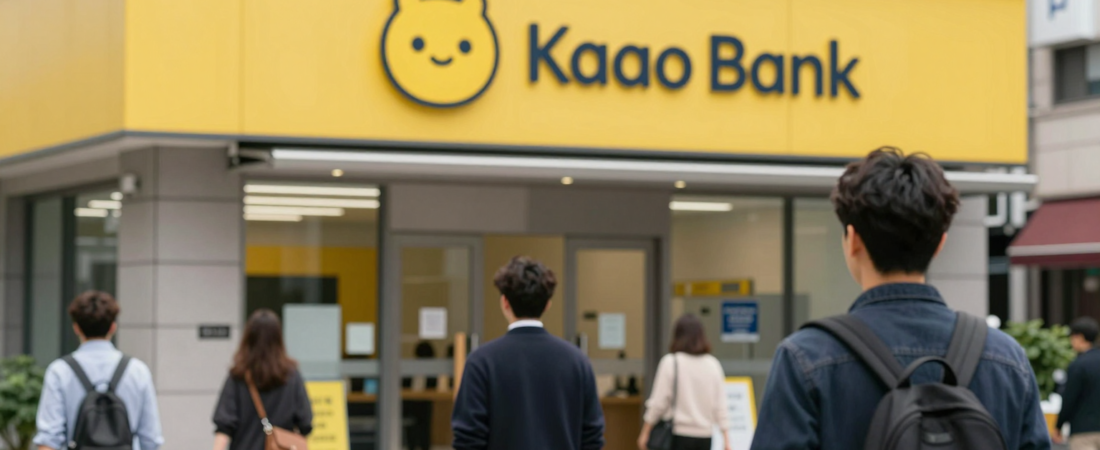
Kakao Bank Strike Called Off
Kakao Bank’s labor union has canceled a general strike that was set to begin on August 31. The union said talks with management produced real “mutual understanding,” ending weeks of tension. As of this week, the strike threat that dominated Korean financial news has simply disappeared.
Right now, workers across Korea’s banking sector are watching this case closely. The Kakao brand, known for everything from ride-hailing to messaging apps, carries huge weight in daily Korean life. So when its banking arm faces labor trouble, people pay attention.
Why does a single canceled strike matter so much? Because Kakao Bank is not just any bank. It represents Korea’s internet-only banking model, and its labor relations often set a tone for the broader fintech industry.
Why the Standoff Happened in the First Place
The union had planned the walkout after negotiations with management stalled over several rounds of talks. Details on the exact demands remain limited in early reporting, but the union framed the dispute as a normal labor-management disagreement. That framing matters, because it kept the conflict from turning into a public relations crisis.
Have you ever wondered why Korean unions announce strikes weeks in advance instead of walking out immediately? It is partly legal requirement, but also cultural. Advance notice gives both sides room to negotiate before anyone loses a paycheck.
Kakao Bank’s union used that window well. Instead of escalating, both sides kept talking, and that persistence eventually paid off. The union explicitly credited a growing “sense of common ground” for the reversal, a phrase that suggests real compromise rather than a forced retreat.
Korea’s Trade Union and Labor Relations Adjustment Act requires unions to file for mediation before striking, and that process itself often opens space for compromise. This legal structure has shaped how Kakao Bank’s leadership approached the final weeks of talks. You can read more background on Korean labor procedures through outlets like Yonhap News Agency.
What This Means for Kakao Bank Customers

For everyday users, the canceled strike is good news. A general strike at Kakao Bank could have disrupted mobile banking services that millions of Koreans rely on daily. No strike means no interruption to transfers, loan applications, or customer service.
Kakao Bank built its reputation on convenience. It has no physical branches, so everything runs through its app (imagine your entire banking relationship living inside one phone icon). Any labor disruption would have hit that convenience model directly, since there is no teller window to fall back on.
Beyond convenience, there is a trust factor. Kakao Bank has attracted younger customers partly because it feels modern and stable. A public strike, even a short one, could have shaken that image at a moment when competition from other digital banks is intensifying.
Investors were watching too. Kakao Bank trades publicly under stock code 323410, and labor unrest tends to spook markets faster than almost any other corporate news. Canceling the walkout removes that immediate risk, at least for now.
Labor Relations in Korea’s Fintech Sector
Korea’s fintech industry is still young compared to its traditional banking sector. Kakao Bank launched in 2017, and it has grown fast, but growth often outpaces workplace policy. That gap can create friction between ambitious young employees and management focused on scaling quickly.
Is this the last labor dispute we will see at a Korean digital bank? Probably not. As these companies mature, workers naturally start asking for the same protections and benefits that traditional banks have offered for decades.
There is a real tension here worth naming honestly. Fast-growing tech companies often ask employees to accept startup-style flexibility, while workers reasonably expect stability once a company becomes a major financial institution. That tension will not disappear just because one strike got canceled.
But this case also shows a path forward that deserves attention. Kakao Bank’s union and management found “common ground” through dialogue rather than confrontation, and that outcome offers a hopeful model for other digital-first companies navigating similar growing pains. Disagreement does not have to end in disruption when both sides stay willing to talk.
For readers outside Korea, this story matters beyond local headlines. It shows how a rapidly digitizing economy handles the human side of innovation, and that balance between speed and fairness is a challenge every tech-driven financial market will eventually face.
What do you think about how Kakao Bank resolved this labor dispute, and does it offer lessons for fintech companies in your own country?
AI-Generated Photorealistic Image — All people, scenes, and details in this image are entirely AI-generated and fictional. Not a real photograph of an actual person or event. 이 이미지는 AI로 생성된 가상 이미지입니다.


Leave a Reply