
Table of Contents
Have you ever watched your savings shrink in just two weeks? That is exactly what happened to comedian Kim Won-hoon, and now the whole story is streaming on Netflix.
Kim Won-hoon is at the center of a new original content piece called “Ant Kim Won-hoon: The World of Stocks.” He invested 180 million won and lost 24 million won in only two weeks.
The reason people are talking about Kim Won-hoon right now is simple. He turns a painful financial mistake into something you can actually laugh with, not just at.
Who Is Kim Won-hoon and Why Is He Trending?
Kim Won-hoon is a Korean comedian known for his self-deprecating humor. In this new Netflix content, he takes his comedic timing and points it at his own stock portfolio.
That combination is rare. Most finance content feels serious, filled with charts and jargon that leave regular viewers confused.
Kim Won-hoon does the opposite. He tells you exactly how badly things went, then makes you smile about it anyway.
This weekly recommendation corner, called “Homage,” usually highlights OTT content worth your Saturday morning. Kim Won-hoon’s segment fits perfectly because it blends real financial pain with genuine entertainment value.
Why does that matter for viewers outside Korea? Because losing money in the stock market is not a uniquely Korean experience — it is universal, and so is the awkward laugh that follows.
Inside “Ant Kim Won-hoon: The World of Stocks”

The title itself carries meaning. In Korean investing slang, “ant” (gaemi) refers to small individual retail investors, the opposite of big institutional players.
Kim Won-hoon positions himself as one of these ants, someone trying to navigate a market dominated by bigger, faster, better-informed players. That framing alone makes the content relatable.
In the show, Kim Won-hoon confesses his numbers directly. He invested 180 million won, then watched 24 million won disappear within two weeks.
His explanation involves a strategy called “mul-taki,” or buying more shares as the price drops to lower your average cost. It is a common tactic among retail investors trying to recover losses.
But Kim Won-hoon admits he overdid it. He jokes that his mul-taki became so extreme it turned into “Water Bomb,” referencing Korea’s popular summer water festival — a clever pun connecting financial “watering down” with getting soaked at a music festival.
That line alone explains why this content resonates. It takes technical jargon and turns it into a joke anyone can understand, even without a finance background.
Why “Water Bombing” Losses Hit So Close to Home
Mul-taki, or dollar-cost averaging down, sounds smart in theory. You lower your average purchase price, so when the stock eventually recovers, you break even sooner.
The problem comes when the stock keeps falling. Each additional purchase increases your total exposure, and Kim Won-hoon’s story shows exactly how that spiral works.
Have you ever kept adding to a losing position, hoping the next dip would be the last one? If so, Kim Won-hoon’s story probably feels uncomfortably familiar.
This pattern is not unique to Korea. Retail investors worldwide fall into the same trap, chasing recovery instead of cutting losses early.
What makes Kim Won-hoon’s version different is his willingness to admit it publicly, on camera, with his real numbers attached. That kind of honesty is rare in a culture where financial failure often stays private.
You can read more about how South Korea’s retail investing boom developed in recent years through outlets like Kyunghyang Shinmun, which has tracked the country’s stock market culture closely.
What Kim Won-hoon’s Story Tells Us About Korean Investing Culture
South Korea saw a massive wave of retail investors enter the stock market after 2020. Young professionals, students, and even retirees opened trading accounts, chasing gains during a period of historically low interest rates.
Many, like Kim Won-hoon, learned hard lessons when markets turned volatile. The nickname “ant investors” became a cultural shorthand for this entire generation of hopeful, sometimes reckless, participants.
Financial loss carries a certain shame in many societies, and Korea is no exception. People often hide bad investment decisions rather than discuss them openly, even with close friends.
Kim Won-hoon’s approach challenges that silence, and there is real value in that shift. When public figures speak honestly about losing money, it gives ordinary investors permission to do the same without shame.
At the same time, we should be honest about the limits of comedy as financial education. Laughing at a 24-million-won loss does not erase the real anxiety many families feel when investments go wrong, and turning hardship into content can sometimes flatten the deeper financial stress behind it.
But there is something worth holding onto here too. The willingness to speak plainly about failure, rather than hide it, is itself a small act of dignity — it treats viewers as people capable of learning from mistakes, not just consuming a punchline.
That balance between honesty and entertainment is delicate, but Kim Won-hoon seems to walk it carefully. His story does not pretend investing is easy, nor does it drown viewers in despair over a bad trade.
Korean stock forums even have a saying that fits here: every “ant” investor eventually meets their own water bomb. (Some meet several, which is its own kind of dark comedy.)
Looking forward, content like this may reshape how financial mistakes get discussed publicly in Korea. Instead of hiding losses, more public figures might follow Kim Won-hoon’s lead and turn hard lessons into shared, relatable stories.
That shift benefits everyone, especially newer investors trying to learn without repeating every costly mistake themselves. What do you think — does laughing at financial losses like Kim Won-hoon’s help people learn, or does it risk making risky investing look too casual?
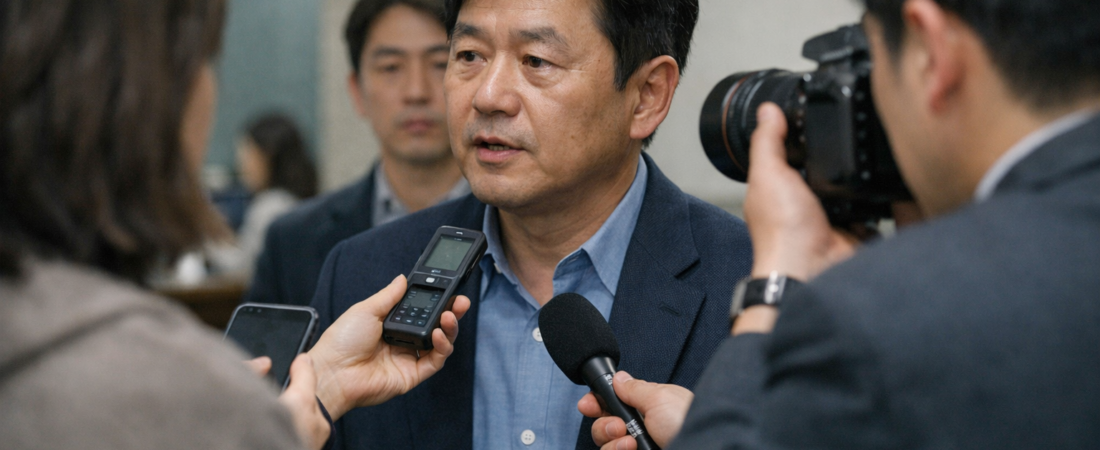
AI-Generated Photorealistic Image — All people, scenes, and details in this image are entirely AI-generated and fictional. Not a real photograph of an actual person or event. 이 이미지는 AI로 생성된 가상 이미지입니다.




Leave a Reply