Lee Joon-ik Trades the Big Screen for the Small One
Director Lee Joon-ik, the filmmaker who scored a rare 10-million-admissions hit with The King and the Clown two decades ago, has now stepped into short-form drama. His new project, Father’s Home Cooking, runs in two-minute episodes built for vertical phone screens. Lee Joon-ik explains that this vertical format forces every scene to focus on the person, not the background.
That single sentence tells you a lot about how Lee Joon-ik thinks. He is not just adapting to a new trend. He is asking what the format itself can teach filmmakers about storytelling.
Isn’t it strange to imagine a director famous for sweeping historical dramas now working in two-minute bursts? Lee Joon-ik doesn’t see it as strange at all. He sees it as a natural next step in a career built on curiosity.
Why Lee Joon-ik Says Vertical Screens Change Everything
Traditional films use wide horizontal frames. Those frames let directors show landscapes, crowds, and elaborate sets alongside the actors.
Vertical screens strip that away. Lee Joon-ik points out that a tall, narrow frame has no room for sprawling scenery, so the camera has to lock onto the human face and body instead.
This is where Lee Joon-ik’s key insight lands. He argues that vertical format makes everyone look like the main character, because the frame simply cannot hold much else.
Think about how you watch short videos on your own phone. Your eyes go straight to the person talking, not the room around them.
Lee Joon-ik is applying that everyday viewing habit to dramatic storytelling. It’s a small technical detail, but it changes how a director blocks a scene, lights a face, and times a line of dialogue.
Short-form platforms have exploded across Korea in the past few years, and traditional filmmakers are taking notice (some reluctantly, some with real enthusiasm). Lee Joon-ik clearly falls into the second group.
The Real Challenge Behind Two-Minute Storytelling
Making a feature film and making a two-minute episode sound like opposite skills. Lee Joon-ik agrees, but he insists both still need a complete story arc.
A short-form episode has to set up a situation, build tension, and deliver a payoff, all within roughly 120 seconds. That is the real test for someone with Lee Joon-ik’s background in long-form cinema.
Can a two-minute story really carry the same emotional weight as a two-hour film? Lee Joon-ik seems to think yes, if the structure is tight enough.
He treats each short episode like a compressed short story rather than a trimmed-down movie scene. That distinction matters, because compression forces every line of dialogue and every camera cut to earn its place.
You can read more background on this shift toward short-form content in Korean entertainment through Kyunghyang Shinmun, the outlet that first reported on Lee Joon-ik’s project.
For readers outside Korea, imagine trying to tell a full sitcom episode’s story in the time it takes to boil an egg. That’s roughly the creative math Lee Joon-ik is working with now.
What Lee Joon-ik’s Shift Says About Korean Culture Today
Lee Joon-ik’s move into short-form drama says something bigger about Korean media right now. Established directors are no longer staying inside one lane for their entire careers.
Younger platforms demand faster, shorter, mobile-first content, and audiences are shifting their attention with them. That shift can feel unsettling for anyone who grew up loving long, slow-building films in a dark theater.
There is a real loss worth naming here. Something is lost when stories shrink to two minutes, especially the patient pacing and quiet visual detail that made films like The King and the Clown so memorable.
But that loss comes paired with something hopeful, too. Veteran storytellers like Lee Joon-ik are proving that skilled craft can adapt without disappearing, carrying decades of narrative wisdom into a format built for a phone screen rather than a movie screen.
That balance, between what fades and what survives, may be the most honest way to describe cultural change. Older forms rarely vanish completely; they get absorbed, reshaped, and passed down through new hands.
Lee Joon-ik’s short-form experiment fits that pattern well. He isn’t abandoning the craft that built his reputation, and he isn’t pretending short-form video is somehow lesser than cinema.
He is simply asking the same old question, “how do I make you care about this person on screen,” inside a brand-new frame. That question, more than the length of the film, is what has always defined his work.
Where does this leave the future of Korean storytelling? Probably somewhere between the movie theater and the phone screen, with directors like Lee Joon-ik building bridges between the two.
His work suggests format is a tool, not a limit, and audiences may benefit from filmmakers willing to experiment across both worlds. That openness could shape how an entire generation of Korean directors approaches new platforms in the years ahead.
What do you think about a celebrated film director stepping into two-minute mobile dramas?
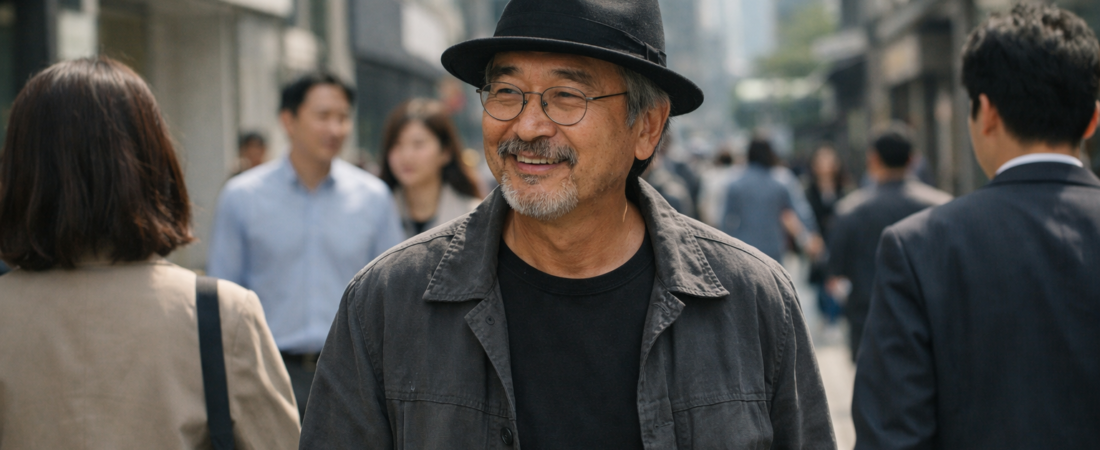
AI-Generated Photorealistic Image — All people, scenes, and details in this image are entirely AI-generated and fictional. Not a real photograph of an actual person or event. 이 이미지는 AI로 생성된 가상 이미지입니다.



Leave a Reply