Table of Contents
What if hackers sat inside a government network for ten months, and nobody noticed? That is exactly what happened to Korea’s Ministry of Foreign Affairs. An online education system, run by an agency under the Ministry of Foreign Affairs, was quietly breached for nearly a year before anyone caught it.
This is not a small story. The system held personal data on up to 10,000 people, including current and former diplomats. Let that sink in for a moment. Diplomats represent your country abroad. Their safety often depends on staying invisible to hostile actors.
What Happened at Korea’s National Diplomatic Academy
The breach hit the National Diplomatic Academy, an institution operating under the Ministry of Foreign Affairs. This academy trains diplomats and manages ongoing education for foreign service officers. Its online learning platform, it turns out, was not as secure as anyone assumed.
Hackers reportedly accessed the system for around ten months before detection. Ten months is a long time in cybersecurity terms. Attackers can map out a network, extract data slowly, and cover their tracks when they have that much time inside.
The stolen information included names, user IDs, encrypted passwords, and email addresses. Up to 10,000 individuals were affected, according to reports. These were not random citizens either — they were current and former diplomats, along with staff at Korean missions overseas.
Why does that detail matter so much? Because diplomatic staff often work in sensitive, sometimes dangerous, postings around the world. Exposed personal data can put real people at real risk, especially those stationed in high-tension regions.
Why This Breach Matters to the Ministry of Foreign Affairs
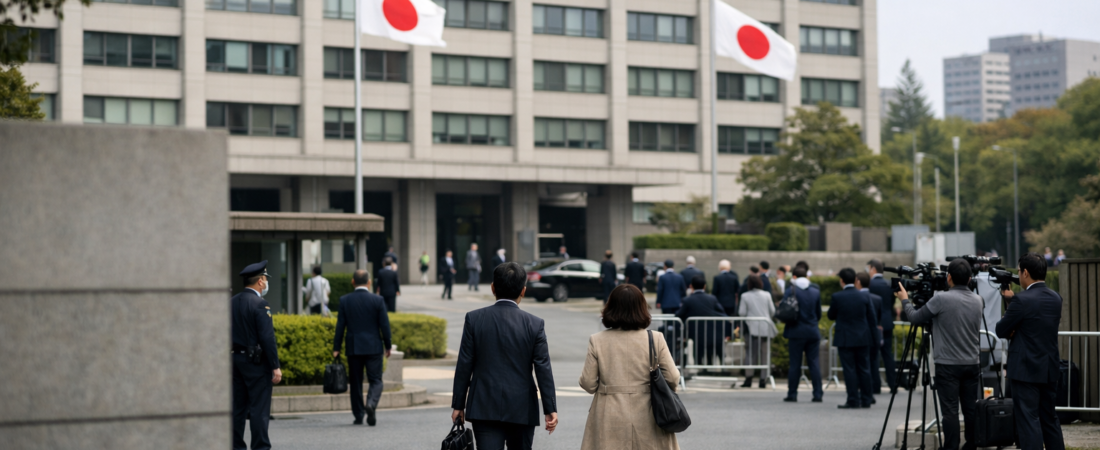
The Ministry of Foreign Affairs is not just another government department. It manages Korea’s relationships with nearly every country on earth. It also protects thousands of Korean citizens working and living abroad through its network of embassies and consulates.
A breach at any agency under the Ministry of Foreign Affairs raises serious questions. If diplomatic training data can be hacked, what does that say about other systems? Could similar vulnerabilities exist in embassy networks, visa databases, or classified communication channels?
Think about the ripple effects here. Foreign intelligence services constantly try to identify and track diplomats. A leaked roster with names, emails, and login credentials hands them a head start. That is precisely why the Ministry of Foreign Affairs cannot treat this incident lightly.
There is also a trust dimension to consider. Diplomats trust their own ministry to protect their identities. Overseas mission staff trust that their personal information stays confidential. When the Ministry of Foreign Affairs fails to catch a breach for ten months, that trust takes a real hit.
Encrypted passwords offer some protection, but encryption is not invincible. Depending on the strength of the algorithm used, determined attackers with enough time and computing power can eventually crack weaker encryption. The Ministry of Foreign Affairs has not detailed exactly which encryption standard protected this stolen data.
State-Sponsored Hacking? Inside the Investigation
Here is where things get genuinely concerning. The Ministry of Foreign Affairs says it is investigating “all possibilities,” including the chance that a foreign state was behind this attack. That is not a phrase officials use casually.
State-sponsored hacking differs from typical cybercrime in important ways. Criminal hackers usually want money — they steal data to sell it or hold it for ransom. State-backed hackers usually want intelligence, leverage, or long-term access to sensitive networks.
Korea sits in a genuinely tense neighborhood. North Korea has a well-documented history of cyber operations against South Korean institutions, and other regional players maintain sophisticated hacking programs too. Could this attack fit that broader pattern? The Ministry of Foreign Affairs has not ruled it out.
The National Intelligence Service, Korea’s top spy agency, first flagged the breach back in February. That timeline itself raises a question worth asking. If the National Intelligence Service discovered the compromise then, why is the public only learning full details now?
This kind of delay is not unique to Korea, to be fair. Governments worldwide often sit on breach disclosures while investigations continue and evidence gets secured. Still, for an agency as high-profile as the Ministry of Foreign Affairs, timing questions deserve honest answers.
Cybersecurity researchers who track state-sponsored campaigns note that education and training platforms are attractive targets precisely because they are often less protected than core diplomatic systems. For deeper technical context on how nation-state actors typically operate, readers can consult resources like Yonhap News Agency, which regularly tracks cyber incidents affecting government institutions.
What Comes Next for the Ministry of Foreign Affairs
So where does the Ministry of Foreign Affairs go from here? First, expect a full technical audit of the breached system and likely every connected network. Government agencies typically respond to incidents like this with sweeping security reviews.
Second, watch for password resets and credential changes across affected accounts. Encrypted or not, any exposed password should be treated as compromised. Diplomats and mission staff will likely need to update their login information soon, if they have not already.
Third, this incident will probably accelerate a broader push for cybersecurity reform inside Korea’s government. Similar breaches at other ministries have historically triggered new IT security budgets and stricter access controls. The Ministry of Foreign Affairs may become the next case study driving that kind of change.
There is a bigger lesson here too, beyond this single incident. Government agencies worldwide increasingly rely on digital training platforms, cloud storage, and online systems. Convenience always comes with risk attached.
Korea is hardly alone in facing this challenge. The United States, the United Kingdom, and Japan have all suffered breaches at government agencies in recent years. What sets a strong response apart is not whether a breach happens — breaches happen everywhere — but how quickly an institution detects, contains, and learns from it.
For the Ministry of Foreign Affairs specifically, rebuilding trust will take more than a technical patch. It will require transparency about what went wrong, clear communication with affected diplomats, and visible investment in stronger defenses going forward. Anything less risks leaving both current staff and the public wondering what else might be vulnerable.
This story also connects to a wider conversation happening across Korean institutions right now. Cybersecurity budgets, once treated as a low priority line item, are getting fresh scrutiny across ministries. The Ministry of Foreign Affairs breach may end up serving as a wake-up call well beyond its own walls.
Korea’s diplomatic corps operates in an increasingly complex digital environment. Every embassy, every consulate, and every training platform represents a potential entry point for adversaries. The Ministry of Foreign Affairs now faces the task of proving it can close those gaps before the next breach happens.
Looking ahead, expect closer coordination between the Ministry of Foreign Affairs and the National Intelligence Service on future threat detection. Faster information sharing between these two institutions could shorten the window attackers have to operate undetected. Ten months is far too long — and everyone involved seems to know it.
What do you think? Should governments face stricter public disclosure rules when breaches involve diplomatic personnel data?
AI-Generated Photorealistic Image — All people, scenes, and details in this image are entirely AI-generated and fictional. Not a real photograph of an actual person or event. 이 이미지는 AI로 생성된 가상 이미지입니다.


Leave a Reply