
Table of Contents
Netflix series Honeybee Side Hustle follows Hyeok-jun, a young man drowning in debt from a rental fraud scam, who takes a job paying fifty times minimum wage. The catch: the work can kill him. The show uses fantasy to expose a very real crisis facing Korean youth labor today.
Would you risk your life for fifty times your normal paycheck? That question sits at the heart of this new Netflix drama, and it refuses to let viewers look away.
Hyeok-jun’s story starts with a scam familiar to many young renters in Korea. He loses his deposit to a housing fraud scheme, and suddenly a mountain of debt appears overnight.
What Honeybee Side Hustle Is Really About
The Netflix series centers on a desperate man searching for fast money. He finds an agency called “Spider Manpower,” which promises wages fifty times above minimum wage for short-term gigs.
Sounds like a dream job, right? But the jobs come from a shadow economy where safety rules simply do not exist.
Each gig pushes Hyeok-jun closer to death. Netflix frames this as entertainment, but the underlying message hits much harder than typical workplace drama.
Actor Lee Jae-wook plays Hyeok-jun alongside a cast portraying his sister Ji-yoon, who watches helplessly as he descends into increasingly dangerous territory. The Netflix production team clearly wanted viewers uncomfortable, not entertained in the usual sense.
Fantasy as a Mirror for Real Korean Labor
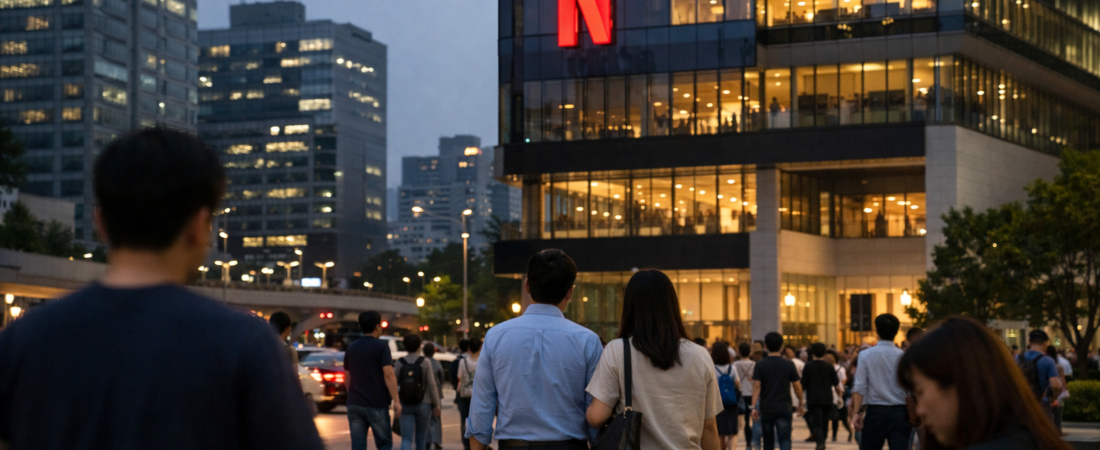
Here is where the show gets clever. Instead of a straightforward documentary tone, Netflix wraps this labor story in fantasy elements, including half-human, half-insect creatures.
Why hide something so serious behind monsters and spider imagery? Because fantasy lets the show say things realism cannot always say directly.
The spider metaphor is not random. Spiders spin webs to trap prey, and “Spider Manpower” traps desperate workers in contracts no one fully reads.
(You could call it a web worth untangling.) The insect transformations onscreen visualize something workers already feel: dehumanization at the hands of exploitative employers.
This genre-blending approach is not new to Korean content. Shows like Squid Game proved that global audiences will embrace brutal economic commentary wrapped in surreal spectacle.
Honeybee Side Hustle follows that same playbook, using Netflix’s global reach to turn a domestic labor issue into an international conversation. The platform has clearly learned that genre devices make hard truths easier to swallow.
History Hiding Inside a Netflix Thriller

The series does not stop at fantasy. It directly references the 1978 Dongil Textile incident, a landmark moment in Korean labor history.
In that real event, female factory workers organizing for fair conditions faced brutal suppression, including an infamous incident involving human waste thrown at protesting workers. It remains one of the darkest chapters in Korean industrial history.
By invoking this history, Netflix connects 1970s factory abuse to today’s gig economy exploitation. The message is clear: workplace abuse never fully disappeared, it just changed its costume.
The show also tackles modern “gapjil,” Korea’s term for abusive power dynamics between superiors and subordinates. You have likely heard this word if you follow Korean workplace news or dramas.
Gapjil scandals have repeatedly made headlines in Korea, from corporate executives abusing flight attendants to franchise owners mistreating staff. Honeybee Side Hustle folds these real patterns into its fictional plot, grounding the fantasy in uncomfortably familiar territory.
For readers wanting more background on Korean labor rights history, outlets like The Kyunghyang Shinmun have covered these connections extensively.
Why This Netflix Story Matters Beyond Korea
Netflix has built an entire catalog around Korean stories that travel well internationally. This series fits that pattern, tackling universal anxieties about debt, gig work, and economic desperation.
Young people everywhere face similar pressures, even without the half-insect creatures. Gig economy risks, from delivery driving to app-based freelance work, often hide real danger behind flexible-sounding job titles.
Isn’t it worth asking why dangerous jobs so often target people with the fewest options? That question connects Seoul to London to Los Angeles just as easily.
Korean society does carry real scars from workplace exploitation, and this show refuses to pretend otherwise. But it also exists because Korean writers, directors, and streaming platforms keep choosing to tell these stories honestly instead of staying silent.
That willingness to confront hard truths through popular entertainment is itself a quiet form of progress. Change rarely starts with new laws alone; it often starts with audiences recognizing their own reality onscreen and refusing to look away afterward.
Netflix continues expanding its Korean content lineup, and shows like this prove the platform is not just chasing entertainment value. It is also chasing cultural relevance, using fiction to ask questions societies are often too uncomfortable to ask directly.
Whether or not Honeybee Side Hustle sparks real policy conversation remains to be seen. But the fact that Netflix greenlit a show this pointed says something about shifting appetites among global audiences.
What do you think about using fantasy and genre storytelling to expose real labor abuses?
AI-Generated Photorealistic Image — All people, scenes, and details in this image are entirely AI-generated and fictional. Not a real photograph of an actual person or event. 이 이미지는 AI로 생성된 가상 이미지입니다.




Leave a Reply