Table of Contents
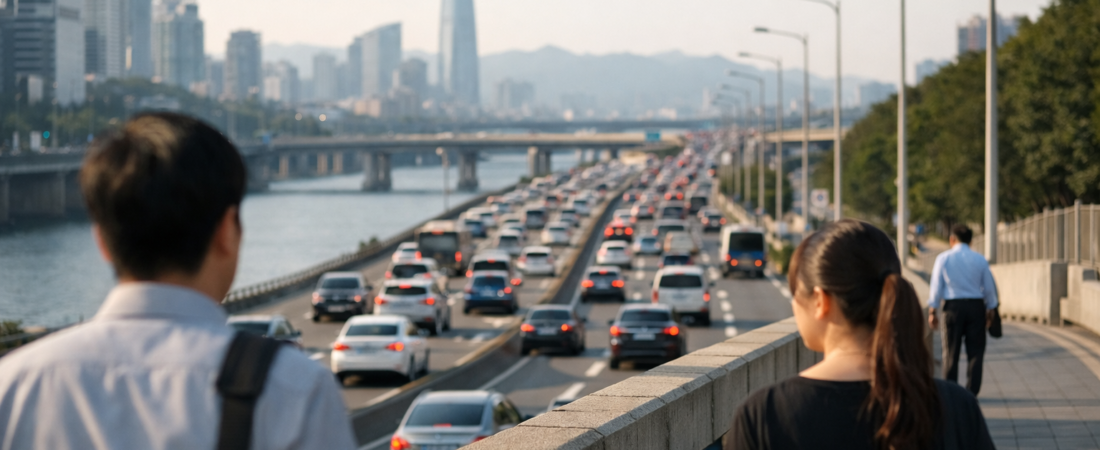
Have you ever been stuck in traffic and wondered what’s really happening up ahead? On the evening of August 8, drivers along Olympic-daero in Seoul got an unwelcome answer. An SUV caught fire near the southern end of Godeok Topyeong Bridge in Gangdong-gu, and the flames brought part of one of Korea’s busiest highways to a crawl.
This wasn’t a massive pile-up or a headline-grabbing disaster. But it’s exactly the kind of ordinary disruption that reveals how fragile — and how resilient — city life can be. Let’s look at what happened, why Olympic-daero carries so much weight in Seoul’s daily rhythm, and what this small incident says about bigger patterns in urban Korea.
A Sudden Fire Disrupts Olympic-daero Traffic
According to Yonhap News Agency, the fire broke out around 6:52 p.m. on August 8. The vehicle, an SUV, was traveling toward Gimpo on Olympic-daero when flames appeared near the southern end of Godeok Topyeong Bridge in Gangdong-gu.
Firefighters arrived quickly and began extinguishing the blaze. Traffic backed up in the affected section almost immediately, since Olympic-daero offers few easy detours once you’re already on it.
The original report does not confirm any injuries or a specific cause. That gap in information is common in breaking coverage — details about how the fire started, and whether anyone was hurt, often surface only in later updates.
For now, what we know is straightforward: a vehicle fire, a busy stretch of Olympic-daero, and a wave of frustrated commuters watching their evening plans slip away. Sound familiar? Most drivers in a major city have lived through some version of this scene.
Why Olympic-daero Matters to Seoul’s Daily Life
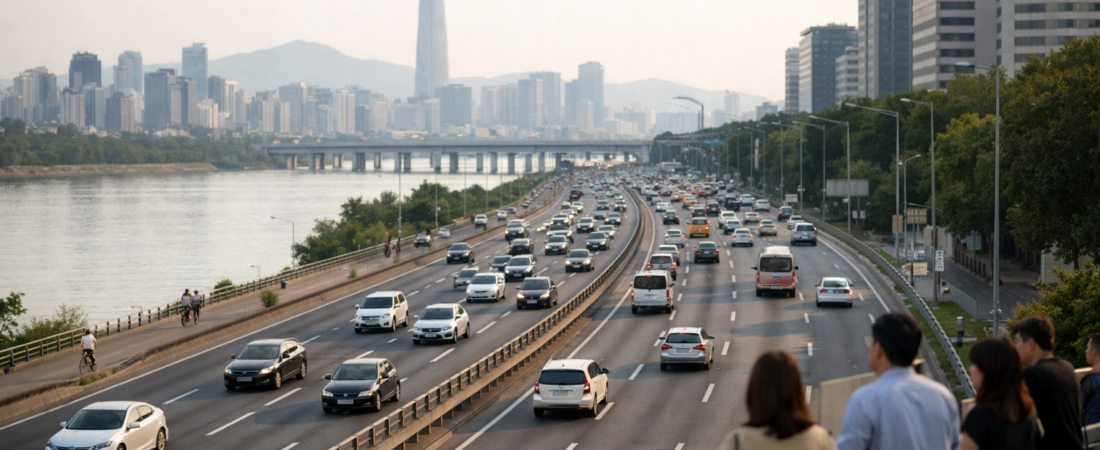
Olympic-daero isn’t just another road. It was built ahead of the 1988 Seoul Summer Olympics, designed to move people and pride through the capital during a moment when the world was watching.
The highway runs along the southern bank of the Han River, linking eastern Seoul districts like Gangdong-gu to central areas and stretching further toward Gimpo. Millions of commuters, delivery drivers, and travelers rely on it every single day.
Because Olympic-daero handles such heavy volume, even a short closure creates ripple effects far beyond the immediate scene. A ten-minute fire near Godeok Topyeong Bridge can mean an hour of lost time for drivers trying to get home to Songpa, Jamsil, or beyond.
Think of it like a major artery instead of a side street — when one section narrows, the whole system feels it. That’s the price of efficient infrastructure: it saves time brilliantly, until the one day it doesn’t.
This dynamic isn’t unique to Korea, of course. Any dense city with a handful of critical highways faces the same vulnerability, but Seoul’s traffic density and reliance on a limited number of river-crossing routes make Olympic-daero especially sensitive to disruption.
Understanding Vehicle Fires on Korea’s Highways
Why do vehicles catch fire on the road at all? Mechanical failures, overheated engines, electrical faults, and even overheated tires can all spark a blaze while a car is moving at highway speed.
Korea’s National Fire Agency responds to thousands of vehicle fire calls every year, and expressways like Olympic-daero see their fair share simply because of traffic volume. Most cases involve no serious injury, since drivers typically notice smoke or warning signs before flames spread.
Still, a fire on a highway carries unique risks that a fire on a quiet street doesn’t. There’s limited space to pull over safely, other vehicles are moving at speed nearby, and access for fire trucks can be slower on a congested route like Olympic-daero.
This is exactly why swift lane closures matter, even though they frustrate drivers stuck behind them. Emergency crews need room to work, and that room usually comes at the cost of your commute.
It’s worth asking: how prepared are ordinary drivers for a moment like this? Most of us assume a highway fire happens to someone else, until a stretch of Olympic-daero reminds us otherwise.
What This Incident Teaches Us About Urban Resilience
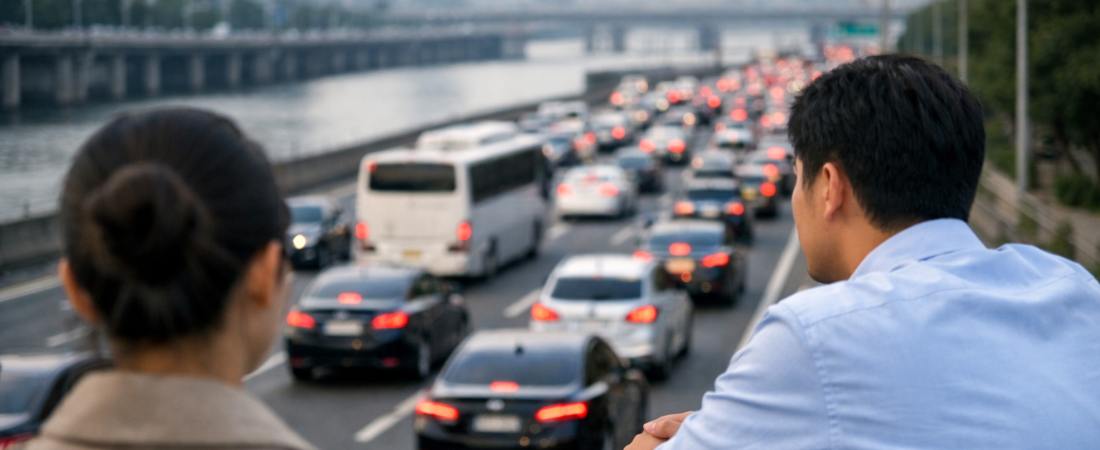
A single vehicle fire on Olympic-daero won’t make history. But it offers a small window into something larger — how a city absorbs shock, adapts, and keeps moving forward.
Seoul’s traffic system is not perfect, and honestly, it was never designed to handle every unexpected disruption gracefully. Congestion spreads fast, information trickles out slowly, and drivers are often left guessing why they’re stuck.
Yet look closer, and you’ll also see quiet cooperation working underneath the frustration. Firefighters respond within minutes, traffic authorities reroute flow where they can, and most drivers — despite their irritation — simply wait their turn rather than making things worse.
That tension is worth sitting with for a moment. The same dense infrastructure that makes Seoul vulnerable to a single point of failure is also what allows emergency services to reach almost any corner of the city within minutes.
The same commuters grumbling in their cars are the same ones who, without much thought, leave space for a fire truck to pass. Neither side of that picture cancels out the other; they simply coexist, the way most of real life does.
Maybe that’s the real lesson hiding inside a routine traffic story. Systems fail sometimes, plans get disrupted, and evenings get longer than we hoped — but the response to that failure often says more about a community than the failure itself.
Looking Ahead for Olympic-daero Commuters
Incidents like this rarely change infrastructure policy overnight, and this one likely won’t either. But each event adds to a broader conversation about how Seoul manages an aging, overloaded highway network.
Will Olympic-daero see improved emergency lanes or better real-time traffic alerts in the years ahead? That depends partly on how often moments like August 8 repeat themselves, and how loudly commuters ask for change.
For now, the fire has been extinguished, and traffic has presumably returned to its normal, imperfect flow. What’s your experience with sudden traffic disruptions in your own city — do you think infrastructure like Olympic-daero can ever be truly disruption-proof?
AI-Generated Photorealistic Image — All people, scenes, and details in this image are entirely AI-generated and fictional. Not a real photograph of an actual person or event. 이 이미지는 AI로 생성된 가상 이미지입니다.


![[청주소식] 매월 10명 구직 청년 증명사진 지원](https://koreandailylife.com/wp-content/uploads/2026/08/thumbnail-84.png)

Leave a Reply