Table of Contents
Can a mid-sized country become the backbone of the world’s AI supply chain? President Lee Jae-myung believes Korea can — and he just told a room full of tech leaders exactly why.
Speaking at an AI summit in San Francisco, President Lee Jae-myung unveiled what his office calls the “San Francisco AI Declaration.” The announcement puts Korea at the center of a global conversation about who controls the future of artificial intelligence.
This isn’t just political theater. It’s a calculated bet on Korea’s industrial strengths, and it deserves a closer look.
President Lee Jae-myung’s San Francisco AI Declaration Explained
President Lee Jae-myung chose San Francisco for a reason. The city is home to OpenAI, Google DeepMind, and countless AI startups that shape global technology trends.
By delivering his declaration there, President Lee Jae-myung sent a clear signal. Korea doesn’t want to watch the AI revolution from the sidelines — it wants a seat at the table.
The declaration outlines a bold ambition. Korea aims to become a “trusted production base” for AI semiconductors, according to statements from President Lee Jae-myung’s delegation.
What does “trusted” mean here? In today’s geopolitics, trust often matters more than price.
Countries worry about supply chain disruptions, export controls, and political instability. President Lee Jae-myung is positioning Korea as the stable, reliable alternative when other options feel risky.
This strategy echoes Korea’s post-war economic playbook. Back in the 1970s and 80s, Korea built its reputation on manufacturing reliability, not just low costs.
Companies like Samsung and SK Hynix grew because global buyers trusted Korean quality control. President Lee Jae-myung seems to be applying that same historical lesson to AI hardware today.
The declaration also emphasizes large-scale investment commitments. Details remain broad for now, but the direction is unmistakable — massive capital will flow into chip production tied directly to AI applications.
Why Memory Semiconductors Give Korea an Edge in AI Supply Chains
Here’s a fact that surprises many outside the industry. Korea produces a huge share of the world’s memory semiconductors, the chips that store data for AI systems.
Memory chips aren’t just supporting players in AI. Every large language model, every AI training run, needs massive memory bandwidth to function efficiently.
President Lee Jae-myung highlighted this exact point during his San Francisco remarks. Korea’s memory semiconductor competitiveness, he argued, makes the country uniquely suited to anchor global AI supply chains.
Think about it this way. If AI chips are the engine, memory semiconductors are the fuel tank — and Korea builds some of the best tanks in the world.
Samsung Electronics and SK Hynix dominate global high-bandwidth memory production. These are the components that power AI training centers from Silicon Valley to Beijing.
President Lee Jae-myung’s declaration leans heavily on this existing strength rather than starting from zero. That’s a smart move, honestly.
Why build a new industry when you already lead one? Korea isn’t pretending to invent AI chips overnight.
Instead, President Lee Jae-myung frames Korea’s role as the essential partner that makes other countries’ AI ambitions possible. You could call it quiet power — supplying the parts everyone else needs.
This approach also reduces geopolitical risk for Korea itself. By becoming indispensable to multiple countries’ AI strategies, Korea gains leverage without picking sides in larger tech rivalries.
President Lee Jae-myung’s team clearly understands this balancing act. Whether it holds up under future pressure remains an open question.
The Vision Behind an “AI Basic Society” for All Koreans
Here’s where the story gets more interesting. President Lee Jae-myung didn’t just talk about factories and exports.
He introduced the concept of an “AI Basic Society” — a vision where AI benefits reach ordinary citizens, not just corporations. What does that actually mean for daily life?
Think of it as AI’s version of universal basic services. Instead of AI wealth concentrating among tech giants, President Lee Jae-myung wants broader distribution of its economic gains.
This idea fits within a larger Korean policy tradition. Korea has long debated how technology gains should be shared across society, especially after decades of rapid industrialization that left some groups behind.
President Lee Jae-myung appears to be extending that debate into the AI era. Will AI create the same inequality gaps that early industrialization did?
That’s the fear driving this policy direction. An “AI Basic Society” suggests government intervention to prevent AI wealth from flowing only to a small elite.
Details on implementation remain thin at this stage. President Lee Jae-myung’s declaration mentions the concept without a full policy roadmap yet.
Still, the framing matters. It tells global observers that Korea sees AI policy as social policy, not just industrial policy.
For readers outside Korea, this raises a bigger question. Should AI-producing nations owe their own citizens a direct share of AI-driven prosperity?
President Lee Jae-myung seems to think so. Whether other governments follow this model could shape AI governance debates for years to come.
What This Means for Global AI Cooperation and Korea’s Future
Global cooperation sounds nice in speeches. But President Lee Jae-myung’s declaration pushes for something more concrete — an actual international network for AI collaboration.
This isn’t just Korea acting alone. The declaration frames Korea as a connector between AI-developing nations and countries that need reliable chip supplies.
Consider the current AI landscape. The United States and China dominate AI model development, while chip production concentrates in just a few countries.
President Lee Jae-myung wants Korea to become the neutral, trusted middle ground in this competition. Neither purely aligned with Washington nor Beijing, but essential to both.
That’s a delicate position to hold. Can Korea really stay neutral while supplying chips that power AI systems with clear military and economic implications?
President Lee Jae-myung’s declaration doesn’t fully answer that question, and perhaps no declaration could. For deeper analysis on how AI supply chains are reshaping global politics, outlets like Yonhap News Agency continue tracking these developments closely.
Looking ahead, President Lee Jae-myung’s San Francisco Declaration sets an ambitious agenda. Korea wants to be the reliable AI chip supplier, the fair distributor of AI wealth domestically, and the diplomatic bridge internationally.
That’s three difficult roles to play simultaneously. Success will depend on execution, not just declarations.
For global readers, this story matters beyond Korea’s borders. If Korea succeeds in this AI supply chain strategy, it could reshape how smaller nations compete with tech superpowers.
President Lee Jae-myung is betting that manufacturing trust and social fairness can coexist with global AI ambition. Do you think Korea can actually deliver on all three promises at once?
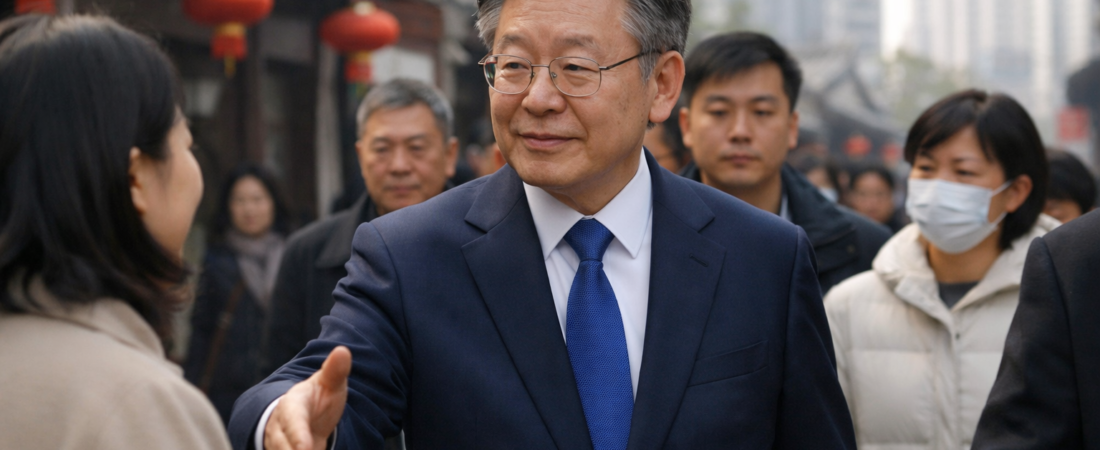
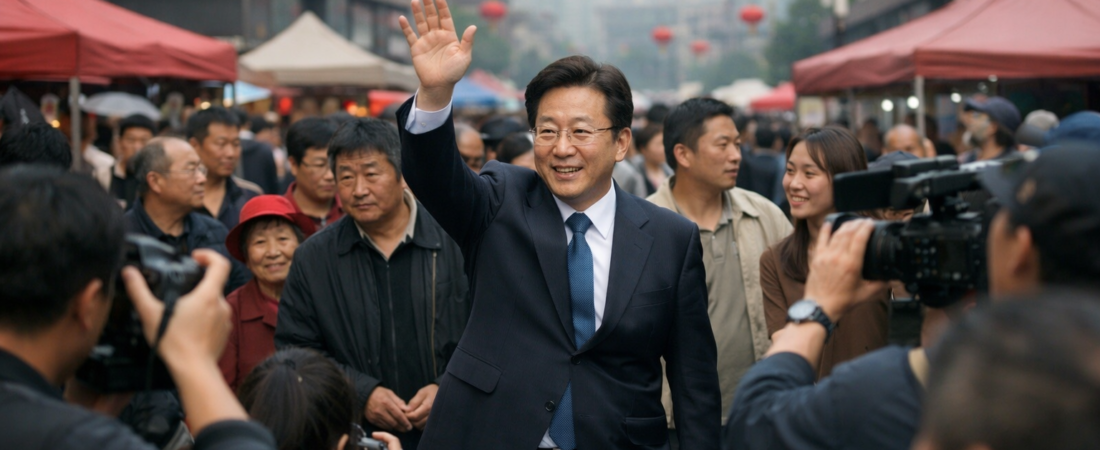
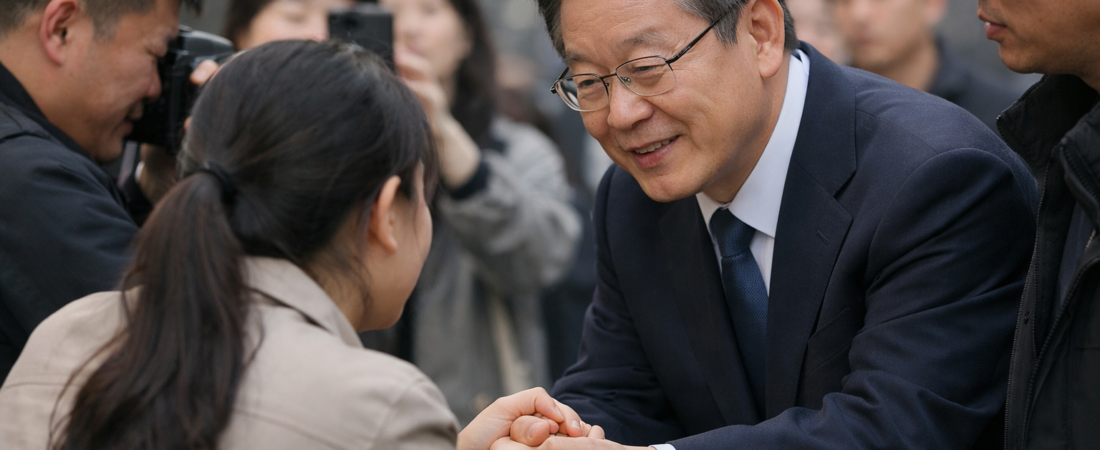
AI-Generated Photorealistic Image — All people, scenes, and details in this image are entirely AI-generated and fictional. Not a real photograph of an actual person or event. 이 이미지는 AI로 생성된 가상 이미지입니다.
Leave a Reply