Table of Contents
What does Korea want from Brazil? And why is President Lee Jae-myung flying across the world to find out in person?
President Lee Jae-myung is currently on a diplomatic tour through South America, and his stop in Brazil produced some real results. He sat down with Brazilian President Lula da Silva for a summit that went far beyond photo opportunities.
The two leaders agreed to restart stalled free trade talks between Korea and Mercosur, the South American trade bloc. That single decision could reshape how Korean companies do business in Latin America for years to come.
A New Chapter in Korea-Brazil Relations
Korea and Brazil have traded goods for decades, but the relationship has stayed mostly transactional. Ships full of Korean electronics arrive, and Brazilian soybeans and iron ore go the other way.
President Lee Jae-myung seems determined to change that pattern. His summit with President Lula signals a shift from simple trade toward strategic partnership.
Think about it this way: two middle-power nations, both eager to reduce dependence on any single superpower, now see each other as natural partners. Brazil holds massive reserves of critical minerals. Korea holds advanced manufacturing technology. That combination is hard to ignore.
President Lee Jae-myung’s visit also comes at a symbolic moment. Brazil is Latin America’s largest economy, and it carries real weight within Mercosur, which also includes Argentina, Paraguay, and Uruguay.
A stronger Korea-Brazil relationship, therefore, does not just benefit two countries. It opens a door to an entire regional market of more than 260 million people.
Why has this door stayed mostly closed until now? Negotiations between Korea and Mercosur have moved slowly for years, slowed by bureaucratic caution on both sides.
President Lee Jae-myung’s personal involvement may be exactly what was needed to push things forward. High-level diplomacy often works faster than mid-level committee talks, and this summit proves the point.
Why President Lee Jae-myung Is Pushing for a Mercosur Trade Deal
A free trade agreement with Mercosur would give Korean exporters lower tariffs across four South American economies at once. That is a significant prize, especially for automakers, electronics firms, and chemical producers.
President Lee Jae-myung understands this timing matters. Global trade patterns are shifting, and countries that lock in favorable agreements early tend to win long-term market share.
Consider the competitive landscape. The European Union already signed its own trade deal with Mercosur in 2024. Japan and China have both expanded their economic footprint in South America over the past decade.
If Korea stays on the sidelines, its companies risk losing ground to rivals who already secured better access. President Lee Jae-myung’s push to restart these negotiations, then, is not just about Brazil. It is about keeping pace with global competitors.
There is also a domestic angle worth noting. Korea’s export-driven economy depends heavily on diversifying markets beyond China and the United States.
Both of those relationships have grown more complicated in recent years due to shifting geopolitics and tariff disputes. A Mercosur deal offers something valuable: a fresh market less tangled in existing trade tensions.
You might ask, how realistic is a quick agreement? Trade deals of this size usually take years to finalize, and Mercosur negotiations have a long history of delays.
Still, restarting talks under direct presidential attention often accelerates the process. President Lee Jae-myung’s willingness to engage personally sends a signal to negotiators on both sides that this deal carries real political priority now.
Beyond Trade: Minerals, Energy, and Defense Cooperation
The summit produced more than trade talk. President Lee Jae-myung and President Lula agreed to expand cooperation across five additional areas: critical mineral supply chains, energy, the defense industry, space launch site access, and sports exchange.
Let’s start with critical minerals, because this one matters enormously right now. Korea’s battery and semiconductor industries depend on materials like lithium, nickel, and rare earth elements.
Brazil sits on some of the world’s largest untapped mineral reserves. A supply chain partnership here could reduce Korea’s reliance on China, which currently dominates global processing of many of these materials.
Energy cooperation follows a similar logic. Brazil has invested heavily in renewable energy, particularly hydropower and biofuels.
Korea, meanwhile, brings strong engineering and infrastructure expertise to the table. Combining these strengths could accelerate both countries’ green energy transitions.
Defense industry cooperation stands out as perhaps the most surprising element of this agreement. Korea has become one of the world’s fastest-growing arms exporters, and Brazil represents a large, underdeveloped market for that industry.
Space launch site access adds another layer entirely. Brazil operates the Alcântara Launch Center, located near the equator, which offers efficient rocket launch conditions.
Korea’s growing space program could benefit significantly from access to this facility. Sports exchange rounds out the agreement, reflecting the cultural bond both nations share, particularly through their mutual love of soccer.
To formalize all of this cooperation, the two governments signed memorandums of understanding covering seven distinct fields during President Lee Jae-myung’s visit. Seven MOUs in a single summit is no small achievement.
It shows both governments came prepared with concrete plans, not just friendly rhetoric. For more background on Mercosur’s broader trade strategy, readers can check Yonhap News Agency for ongoing regional coverage.
What This Means for Korea’s Global Strategy
Why does a summit in Brazil matter to readers outside Korea? Because it reveals how Korea is repositioning itself on the world stage.
President Lee Jae-myung’s South America trip fits a larger pattern. Korea has spent the past several years diversifying its diplomatic and economic relationships beyond its traditional partners.
This strategy makes sense given today’s uncertain global environment. Trade tensions between major powers keep rising, and supply chains built around single-country dependence look increasingly risky.
By strengthening ties with Brazil and pursuing a Mercosur agreement, President Lee Jae-myung is hedging against that risk. Diversification is not just an economic buzzword here.
It is becoming a survival strategy for mid-sized economies like Korea.
President Lee Jae-myung’s schedule in São Paulo included a business event connecting Korean and Brazilian entrepreneurs. That detail matters more than it might seem at first glance.
Government-to-government agreements only go so far without private sector engagement following behind them. By showing up at that business event personally, President Lee Jae-myung signaled that this partnership needs to move beyond diplomatic paperwork into real commercial activity.
What should global observers watch for next? The real test will be whether Mercosur negotiations actually produce a finished agreement, rather than stalling again after this initial momentum fades.
Trade deals involving multiple countries often hit unexpected obstacles, from agricultural protections to regulatory disagreements. President Lee Jae-myung will need sustained diplomatic effort, not just one successful summit, to see this through to completion.
Still, the direction is clear. Korea is betting that closer ties with South America will pay off, both economically and strategically, in a world where old alliances no longer guarantee stability.
President Lee Jae-myung’s Brazil summit may be remembered as a turning point, or it may fade into just another diplomatic photo op. That outcome depends entirely on what happens next.
What do you think about Korea’s growing outreach toward South America under President Lee Jae-myung’s leadership?
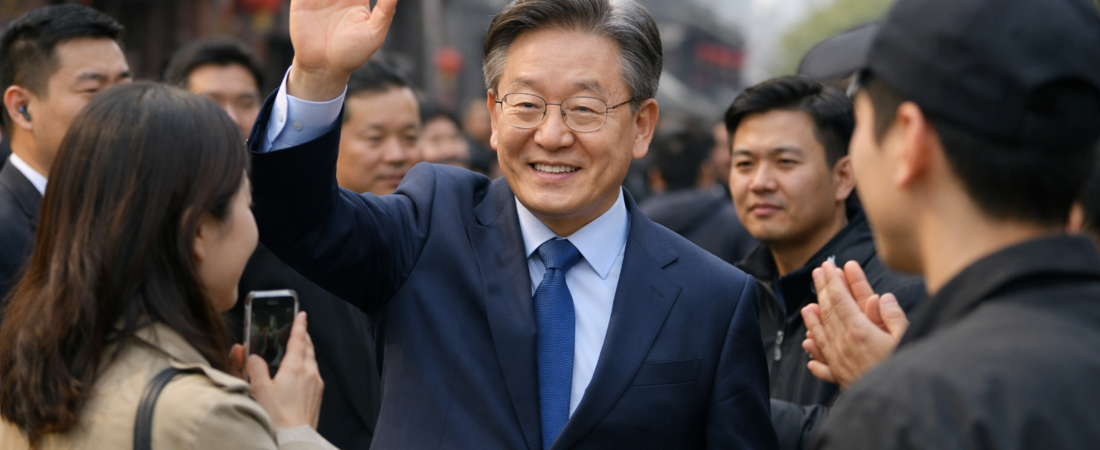
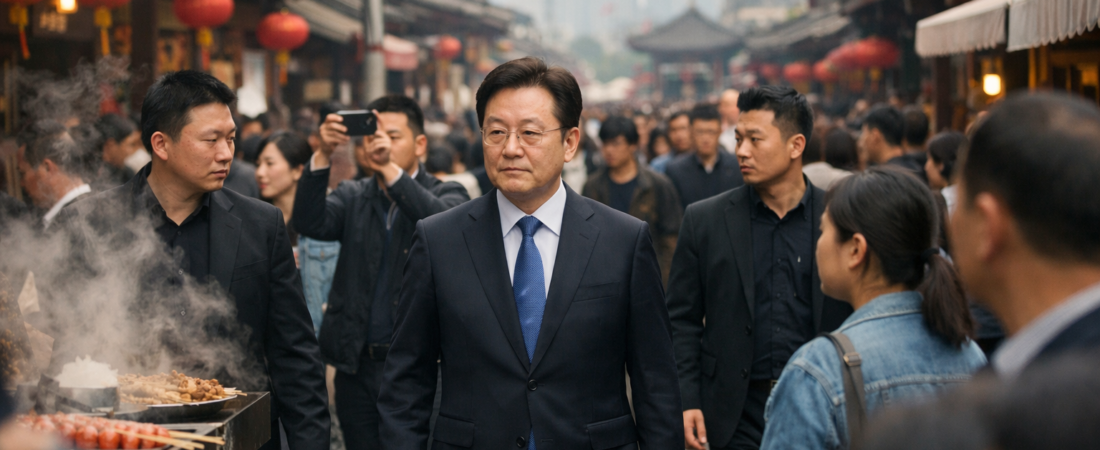
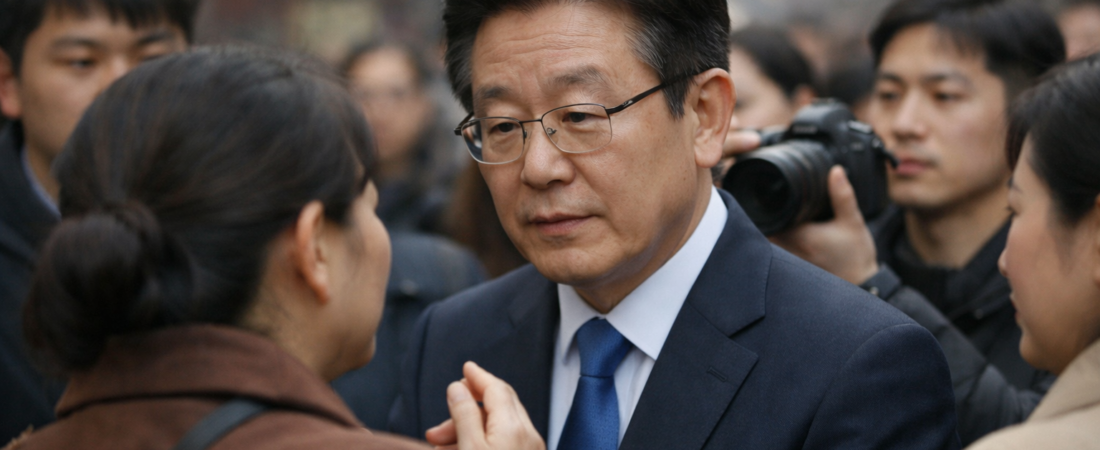
AI-Generated Photorealistic Image — All people, scenes, and details in this image are entirely AI-generated and fictional. Not a real photograph of an actual person or event. 이 이미지는 AI로 생성된 가상 이미지입니다.

Leave a Reply