A New Film Makes Revenge Personal Again
Table of Contents
A new Korean film called “Gyeongju Trip” puts four mothers and daughters face to face with the man who killed their family member. The story blends comedy and thriller, and it asks whether revenge is really about punishment at all. Critic Lee Jin-song argues it might actually be the first step toward mourning.
Why does this old story still grab us so hard? Revenge has fascinated audiences across every culture and every century. There’s something in it that feels almost universal.
Why Revenge Stories Never Go Out of Style
Modern societies built courts and laws to replace personal vengeance. Once you have a justice system, in theory, you don’t need to settle scores yourself. But do you actually trust that system to get it right every time?
Korean audiences have a phrase for their doubt: “yujeon mujoe, mujeon yujoe,” meaning “guilty if poor, innocent if rich.” That distrust of a legal system swayed by money and power isn’t just cynicism. It’s a real, documented frustration that shows up again and again in Korean film and drama.
Revenge narratives fill the gap that formal justice leaves behind. When people feel the courts can’t be trusted, stories give them a version of justice that feels emotionally complete. “Gyeongju Trip” leans directly into that gap, and that’s exactly why the premise feels so timely.
Four Women, One Killer, Four Different Truths
The film features actors Park So-dam, Yeon and Gong Hyo-jin playing family members bound by the same tragedy. Yet each woman reacts differently when she finally meets the killer. One wants to look him in the eye, another wants an apology, and another wants something the story never quite names.
This is where the film gets clever. Instead of one clean revenge plot, you get four overlapping emotional agendas colliding in the same room.
Isn’t that closer to how real families actually grieve? Grief rarely moves in one direction, even within the same household. Some family members want confrontation, some want closure, and some just want the pain to stop being talked about — and that friction is where the film finds both its comedy and its tension.
The mix of thriller tension with dark comedy might sound like an odd pairing (think a funeral that somehow turns into a family reunion nobody asked for). But Korean cinema has long used humor to survive unbearable subjects, not to trivialize them.
You can read more background on the film’s release and reception via The Kyunghyang Shinmun, which covers the broader context of Korean revenge cinema this year.
What Revenge Really Teaches Us About Grief
Here’s the insight the film seems to reach for: revenge, structurally, resembles mourning more than it resembles punishment. Both demand that you face the person or the event that broke your world. Both force you to sit with pain instead of pushing it away.
Maybe that’s the real appeal of the revenge story. It isn’t really about hurting someone back. It’s about finally being allowed to look at what happened, out loud, without flinching.
A story built entirely around distrust in institutions can feel bleak, and honestly, that distrust is often justified — courts do get swayed by money and status, and victims do get failed. But the same culture that produces this cynicism also produces something quieter and more hopeful: victim support networks, legal reform movements, and storytellers who keep insisting that ordinary people’s pain deserves to be witnessed, even when the system fails to witness it fully.
The same closeness that lets these four women grieve together also creates friction, because shared trauma doesn’t automatically create shared answers. That tension is uncomfortable, but it’s also honest — and honesty, more than tidy resolution, is usually where real healing quietly begins.
“Gyeongju Trip” won’t hand you easy comfort, and it isn’t trying to. Instead, it offers something more useful: a mirror for anyone who has ever wanted vengeance and found grief waiting on the other side. Korean cinema keeps returning to revenge because the wound behind it — mistrust, loss, injustice — hasn’t healed yet, in fiction or in life.
What do you think — is revenge really just another word for unfinished grief?
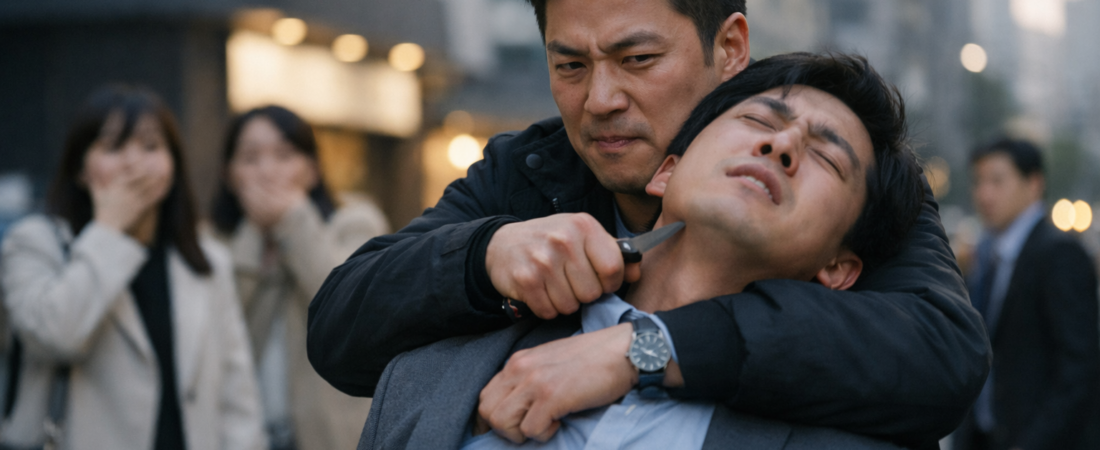
AI-Generated Photorealistic Image — All people, scenes, and details in this image are entirely AI-generated and fictional. Not a real photograph of an actual person or event. 이 이미지는 AI로 생성된 가상 이미지입니다.




Leave a Reply