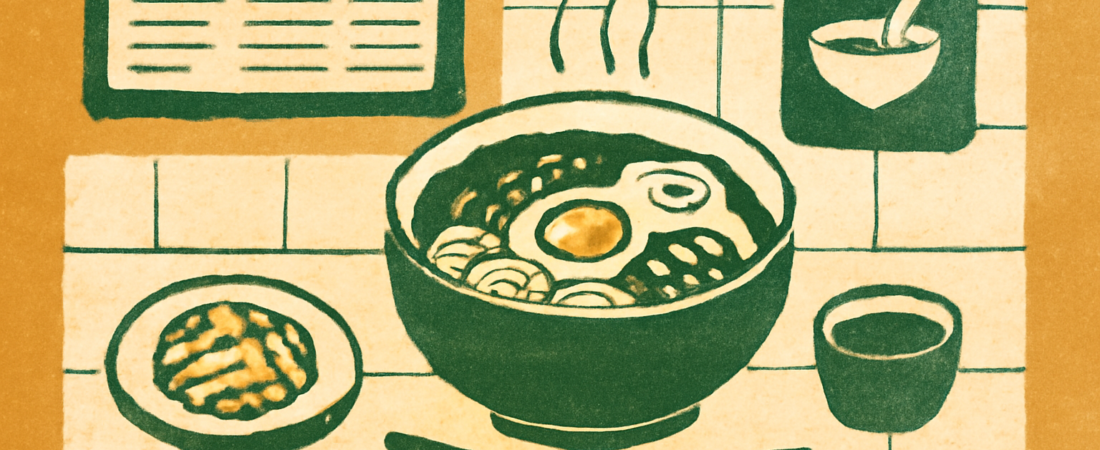
Many Korean restaurants welcome solo diners, especially kimbap shops, noodle counters, gukbap (soup and rice) spots and convenience-style eateries. Grilled meat and stew places built for groups may ask for two portions. Learn “han myeong” (one person), order at a kiosk if there is one, and check current solo-dining trends in official Korean data.
Last checked: 2026-11-13
- Why solo dining is common in Korea now
- Where a single diner fits in easily
- How to order: words, kiosks and tablets
- Comparison: restaurant types for one person
- Group-style food and how to handle it
- Where to check current numbers yourself
Why solo dining is common in Korea now
Eating alone has become a normal part of daily life in Korea. You may hear the word “honbap.” It combines “hon” (alone) and “bap” (rice, or a meal). It simply means eating by yourself.
This is not just a trend in cafes and social media. Korea’s national statistics office publishes household data. That data has shown one-person households growing as a share of all households for years. I cannot give you a reliable current figure from memory, so please check the latest release yourself.
The type of source to look for is the household or census-based release from Statistics Korea. It publishes under the name KOSTAT. Its English portal is called KOSIS, the Korean Statistical Information Service. Search there for “single-person households” to see the newest numbers.
Why does this matter for you as a traveler? Restaurants have adapted to people who eat alone. You will see counter seats, small portions, kiosks and set meals sized for one. A solo diner is rarely treated as unusual.
That said, not every place is the same. Some restaurants are designed around sharing. We cover those later so you are not caught off guard.
Where a single diner fits in easily
Start with places built for speed and single orders. These are the easiest for a first solo meal in Korea.
Kimbap shops and snack-style eateries
Kimbap shops sell rice rolls, noodles, stews and rice bowls. Many are casual and open for long hours. Menus often list single servings. You can usually order one item and eat quickly.
Gukbap and soup restaurants
Gukbap means soup with rice. Each bowl comes as a full meal with side dishes. Because it arrives as one bowl, it suits one person well. Pork soup, beef bone soup and similar dishes are common examples.
Noodle counters
Many noodle shops serve cold or hot noodles in individual bowls. Some have bar-style seating facing the kitchen. These counters are friendly to solo diners and move fast.
Rice-bowl and set-meal restaurants
Lunch set meals, often called “jeongsik” or “baekban” in different forms, come with rice, soup and sides. Some places sell them per person. Prices vary by city and neighborhood, so treat any number you see online as a rough guide only.
Convenience stores and food halls
If you feel shy, convenience stores sell ready meals, triangle kimbap and instant noodles. Many have a small eating counter. Department store food halls and subway-station food courts also work well for one.
How to order: words, kiosks and tablets
You do not need fluent Korean. A few phrases and some patience go a long way. Here are the most useful ones.
- Han myeong (one person): hold up one finger as well.
- Juseyo (please give me): add it after an item name.
- Igeo juseyo (this one, please): point to the menu or a photo.
- Pojang (takeout): useful if no seat feels right.
- Gamsahamnida (thank you): always welcome.
Say “han myeong” when you enter if staff look at you. They will usually guide you to a seat. If it is busy, you may be pointed to a counter or a small table.
Kiosks
Many casual restaurants use a kiosk at the entrance. You pick your meal, pay by card, and hand the receipt or number to staff. Many kiosks offer an English button. Some do not, so a translation app can help.
Table tablets and call buttons
Some places use a tablet on the table. Others have a small call button. Press it when you are ready to order. Calling out “yeogiyo” (excuse me, over here) is also normal and not rude.
Payment
Many restaurants accept foreign credit cards. Small or older places may prefer cash or local cards. Keep a little cash with you. Rules and terminals change, so do not assume every shop takes your card.
Water, sides and tableware
Water is often self-serve. Side dishes, called “banchan,” are usually included and can often be refilled in many places. Ask politely if you are unsure. Utensils may sit in a drawer on the table.
Comparison: restaurant types for one person
This table gives general guidance only. The prices are rough illustrations, not official figures. Real prices change by city, location and year. Always check the menu or the shop’s listing.
| Restaurant type | Solo-friendly? | Typical ordering style | Rough price per person (illustrative) |
|---|---|---|---|
| Kimbap or snack shop | Very easy | Counter or table, single items | About $4-8 / 5,500-11,000 KRW |
| Gukbap or soup restaurant | Very easy | One bowl per person | About $7-11 / 9,500-15,000 KRW |
| Noodle counter | Very easy | Kiosk or counter, one bowl | About $6-10 / 8,000-14,000 KRW |
| Set-meal (baekban) restaurant | Usually easy | Set per person | About $8-13 / 11,000-18,000 KRW |
| Korean BBQ restaurant | Sometimes hard | Often a two-portion minimum | Varies widely; check the menu |
| Shared stew or hot pot | Often hard | Large pot for two or more | Varies widely; check the menu |
The dollar amounts use a loose rate of about 1,370 KRW per USD. Exchange rates move daily. Check a current rate before you budget.
Group-style food and how to handle it
Korean barbecue and large stews are the classic examples. They are often priced and served for two or more people. A restaurant may say it has a “two-portion minimum.” This is a business choice, not a judgment about you.
What you can try
- Look for solo-friendly BBQ. Some shops now offer single-person grill sets or small counters. Search for terms like “solo BBQ” or “honbap BBQ” on a Korean map app.
- Ask politely. Say “han myeong, doemnikka?” meaning “is one person okay?” Some places will say yes, and some will not.
- Order the minimum if you want the dish. You can eat what you can and pack the rest, if the shop allows takeout.
- Choose a lunch set. Many restaurants offer a cheaper single-person lunch menu, even if dinner is group-only.
- Join a food tour. A small group tour can give you BBQ without ordering for several people.
A note on peak hours
At busy lunch or dinner times, staff may prefer to give larger tables to groups. A solo diner might be offered a counter seat or asked to wait. Eating a little earlier or later can help. This is a general pattern, and individual restaurants differ.
Safety and comfort
Korea is widely seen as a safe country to travel in, but use normal care. Keep your bag close, know your route, and trust your instincts. If a place feels uncomfortable, you are free to leave and try another.
Where to check current numbers yourself
This article is built around how people in Korea actually eat now. I cannot give you live numbers, and I do not want to guess at them. Here is the type of source to check, and what to look for.
- National statistics on households. Search KOSIS or the Statistics Korea site for single-person household data. This shows how large the solo-living population is.
- Consumer and food-spending surveys. Government and public research bodies publish eating-out and household-spending data. Look for the latest release and its date.
- Official tourism information. The Korea Tourism Organization publishes visitor guidance and food information in English.
- Restaurant listings and menus. For a specific shop, check the official page or a current map listing for hours, prices and solo policy.
When you read any number, note the year and the survey method. Figures from several years ago may not reflect today. If a source is unclear, treat the figure with caution.
FAQ
Is it rude to eat alone in a Korean restaurant?
No. Eating alone is common and widely accepted, especially at casual restaurants. Many places have counter seats or single-serving menus. Some group-style restaurants may ask for a minimum order, but that is a business rule and not a social judgment.
What do I say to show I am dining alone?
Say “han myeong” and hold up one finger. This means one person. Staff will usually show you to a seat. If you want to confirm, you can ask “han myeong, doemnikka?” which means “is one person okay?”
Can I eat Korean BBQ by myself?
Sometimes. Many BBQ restaurants require two portions, but some offer single-person sets or counter grills. Searching a Korean map app for solo BBQ can help. Lunch menus are also often easier. Always check the menu or ask before sitting down.
Do restaurants in Korea accept foreign credit cards?
Many do, but not all. Small or older shops may prefer cash or local cards. Carry a little cash as a backup. Payment systems change, so check at the counter or kiosk before you order.
Where can I find current data on how many people live alone in Korea?
Check Statistics Korea (KOSTAT) and its English portal KOSIS. Search for single-person households. Always note the release year, since figures change over time and this article does not quote a specific number.
Sources
- Statistics Korea (KOSTAT): https://kostat.go.kr
- Korean Statistical Information Service (KOSIS): https://kosis.kr
- Korea Tourism Organization (Visit Korea): https://english.visitkorea.or.kr
Leave a Reply