Table of Contents
Can a dance move a nation’s cultural standing forward? This week, Korea got its answer.
For the first time ever, the UNESCO World Heritage Committee opened its annual session on Korean soil. The location? Busan, a port city with centuries of history behind it. This is not a small event — it is a milestone for Korea’s place in global heritage conversations.
A Historic First: UNESCO Comes to Busan
Korea has waited a long time for this moment. The UNESCO World Heritage Committee has met in cities around the world for decades, but never before in Korea. That changed this week when the committee gathered in Busan to open its session.
Why does this matter? Hosting UNESCO signals trust. It tells the international community that Korea can manage complex heritage discussions, welcome global delegates, and represent Asia’s cultural voice on a world stage.
Busan itself carries deep historical weight. The city survived war, rebuilt itself, and grew into a major hub for trade and culture. Choosing Busan as the host was not random — it reflects a city that embodies resilience, something UNESCO’s heritage mission often celebrates in the sites it protects.
Delegates from dozens of countries arrived this week to take part. For many, this was their first visit to Korea. That alone creates soft power — visitors leave with impressions that shape how they see the country long after the session ends.
President Lee’s Vision for UNESCO Heritage Protection
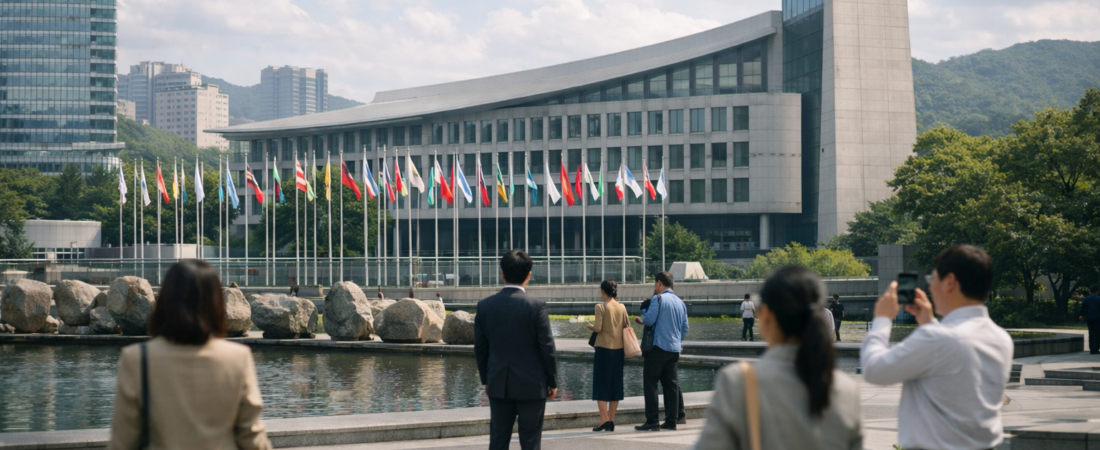
President Lee Jae-myung took the stage at the opening ceremony with a clear message. Korea, he said, will contribute to global efforts around UNESCO heritage protection and peace. This was not just diplomatic language — it was a statement of intent.
Think about it this way. Heritage protection is rarely just about old buildings or ancient traditions. It is about peace, identity, and shared human memory across borders.
President Lee connected these dots directly in his speech. He framed UNESCO’s mission as bigger than preservation alone. For him, protecting heritage sites is also a form of peacebuilding — a way nations can cooperate even when politics divides them elsewhere.
This message resonates especially now. Conflicts around the world have damaged historic sites in recent years, from ancient cities to religious monuments. Korea’s pledge to support UNESCO’s protection mission fits into a larger global conversation about safeguarding shared human history during unstable times.
You might wonder — does a president’s speech actually change how heritage gets protected? Words alone do not save a monument. But political commitment from a head of state often unlocks funding, staffing, and long-term policy support that heritage sites desperately need.
Ganggangsullae and Kim Gu’s Cultural Nation Dream
The opening ceremony did not stay purely formal. Performers brought Ganggangsullae to the stage — a traditional Korean circle dance usually performed under a full moon. Dancers moved in a rotating circle, singing as they went, a tradition that dates back centuries among Korean farming and coastal communities.
Why include a folk dance at a formal UNESCO gathering? Because heritage is not only about buildings. Ganggangsullae itself is recognized as part of Korea’s intangible cultural heritage, making its performance a fitting symbol for the entire session.
The ceremony also referenced Kim Gu, known by his pen name Baekbeom, a key independence leader in Korean history. Kim Gu once dreamed of Korea becoming a “cultural nation” — a country whose greatest strength lies not in military power, but in culture and creativity.
That vision feels especially relevant today. Korea now exports films, music, and design worldwide, arguably fulfilling part of Kim Gu’s original hope decades after his death.
Connecting Kim Gu’s philosophy to a UNESCO gathering was a deliberate choice by organizers. It reminded attendees that Korea’s cultural ambitions are not new — they trace back to the independence movement itself. History and modern diplomacy met on the same stage in Busan this week.
What UNESCO Will Decide by the 29th

The ceremony was only the beginning. Over the coming days, the UNESCO committee will tackle serious business — reviewing 33 new nomination cases for the World Heritage list. Each case requires careful evaluation of historical, cultural, or natural significance.
That is not all on the agenda. The committee will also assess the conservation status of 147 existing UNESCO-listed sites. Maintaining World Heritage status is not automatic — sites can lose recognition if they are poorly managed or damaged over time.
One case drawing particular attention involves Korea itself. The country hopes to expand its existing UNESCO-listed tidal flats, known locally as getbol, adding more coastal wetland areas to the protected designation. These tidal flats support rare migratory birds and unique coastal ecosystems found nowhere else in this exact form.
Will the expansion succeed? That depends on how the committee weighs environmental value against development pressures along Korea’s coastline. Readers who want deeper background on the review process can check coverage from Yonhap News Agency for additional details on how UNESCO handles these evaluations.
All decisions must be finalized by the 29th, giving the committee a tight window. For Korea, hosting this session while also having its own heritage nomination reviewed adds an extra layer of significance. It is rare for a host nation to also be a stakeholder in the very decisions being made.
Looking Ahead: Korea’s Growing Role in UNESCO Heritage
Step back and look at the bigger picture. Korea hosting UNESCO for the first time is not just symbolic — it reflects growing international trust in Korea’s cultural diplomacy.
From Ganggangsullae dancers to Kim Gu’s century-old cultural nation dream, this week’s ceremony wove Korean identity into a global institution’s work. That blend of old and new captures something important about how Korea presents itself abroad today.
As the committee reviews 33 nominations and 147 conservation reports through the 29th, the world will watch how Korea balances hosting duties with its own heritage ambitions. What do you think — should more countries follow Korea’s approach of pairing cultural performance with formal UNESCO diplomacy?
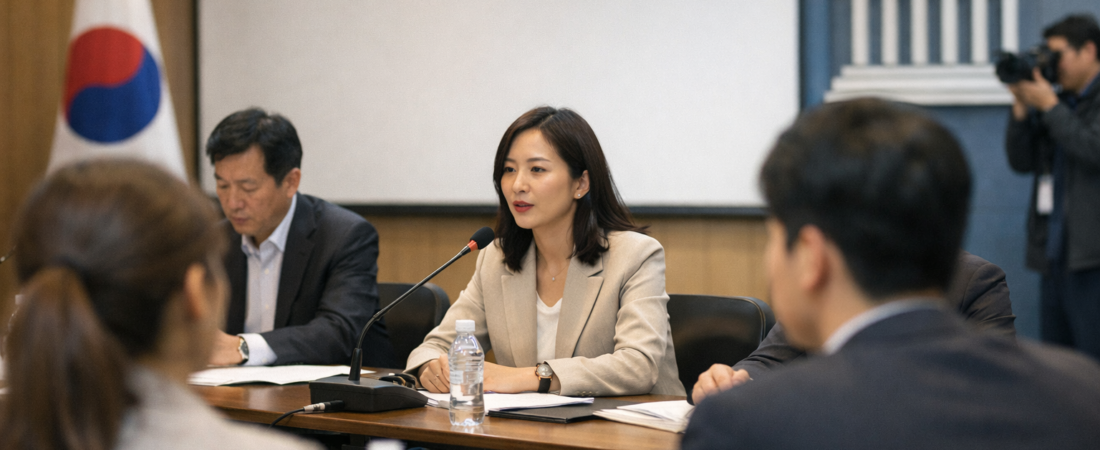
AI-Generated Photorealistic Image — All people, scenes, and details in this image are entirely AI-generated and fictional. Not a real photograph of an actual person or event. 이 이미지는 AI로 생성된 가상 이미지입니다.


Leave a Reply