Table of Contents
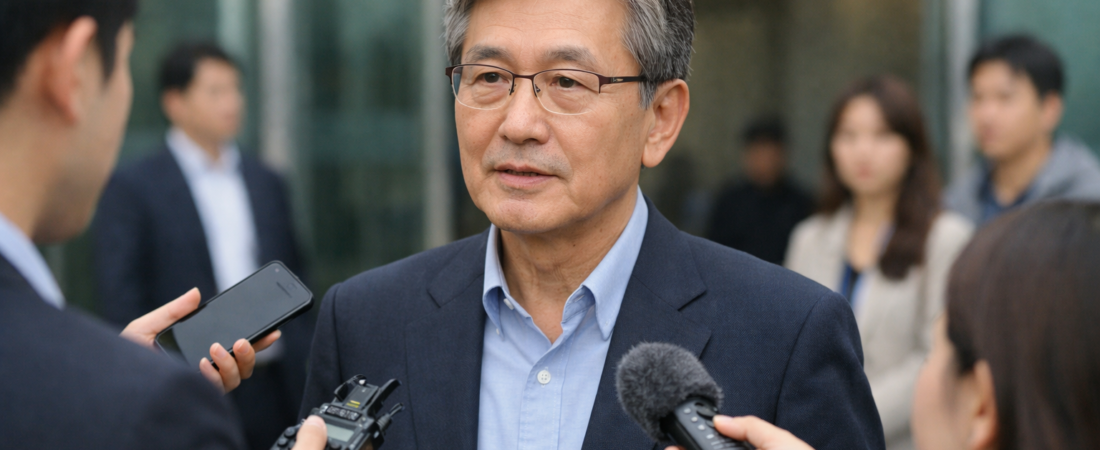
Is South Korea’s ruling party quietly steering a movement it claims not to control? That is the uncomfortable question author and political commentator Yoo Si-min just put on the table.
Yoo Si-min, one of Korea’s most recognized progressive intellectuals, suggested this week that the so-called “New Lee Jae-myung faction” is not a spontaneous grassroots outburst. Instead, he argued, it may be a calculated move orchestrated by President Lee Jae-myung and his inner circle.
That is a serious accusation. And it strikes right at the heart of an ongoing debate over prosecutorial reform in Korea.
Yoo Si-min’s Bold Claim: What Did He Actually Say?
Let’s break down what Yoo Si-min actually claimed. He said the recent activity from pro-Lee Jae-myung supporters inside the Democratic Party of Korea does not look like ordinary party member unrest.
Instead, Yoo Si-min believes the pattern points to something more deliberate. Why would he make such a bold statement?
Because timing matters. This movement has emerged right as the National Assembly debates major changes to how prosecutors investigate and charge criminal suspects.
Yoo Si-min has built his public career on speaking bluntly, even about his own political camp. He was once a member of the Roh Moo-hyun administration and has remained a prominent voice within Korea’s progressive movement for decades.
So when Yoo Si-min turns his criticism toward President Lee Jae-myung’s own team, people take notice. His credibility inside progressive circles gives his warning extra weight.
You have to ask yourself: why would a longtime progressive ally risk backlash by making this claim publicly? The answer, according to Yoo Si-min himself, ties directly to principle. He has repeatedly said that criticizing power holders should never be off-limits, no matter which party holds that power.
The Prosecution Reform Fight Behind Yoo Si-min’s Warning
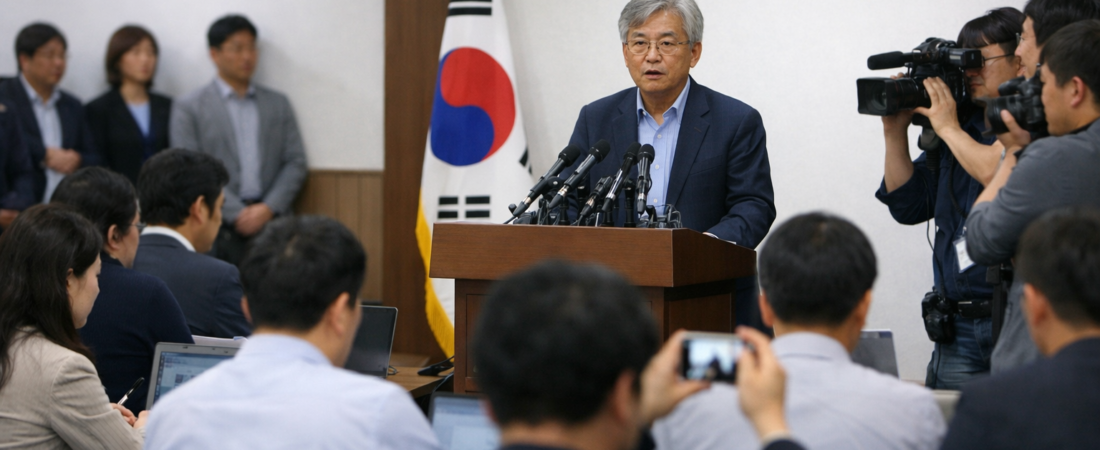
To understand Yoo Si-min’s suspicion, you need context on Korea’s prosecution reform debate. For years, reformers have pushed to separate investigation powers from indictment powers.
Currently, prosecutors in Korea can both investigate a case and decide whether to formally charge a suspect. Critics call this a dangerous concentration of power.
Progressive lawmakers have long argued that this dual authority allows prosecutors to act almost like judges before a case even reaches court. Separating these two functions has been a signature goal of Korea’s reform movement since the Moon Jae-in era.
Here is where Yoo Si-min’s concern becomes specific. He suspects President Lee Jae-myung may actually oppose a complete separation of these two powers.
Instead, Yoo Si-min believes the president wants to preserve some investigative authority for prosecutors. That would be a notable shift from the reform movement’s original, more sweeping vision.
Why would that matter so much? Because it would mean the ruling party’s public rhetoric on reform does not fully match its private strategy.
If Yoo Si-min is right, President Lee Jae-myung’s administration may be quietly protecting certain prosecutorial tools rather than eliminating them entirely. That creates a real tension between campaign promises and governing choices.
For readers unfamiliar with Korean politics, this might sound like a technical legal dispute. But in Korea, prosecution reform touches something much bigger: trust in state power itself.
Every recent Korean president, from Moon Jae-in to Yoon Suk-yeol, has clashed with the prosecution service in some form. Yoo Si-min’s comments suggest this pattern may not be finished, even under a progressive administration many assumed would fully complete the reform agenda.
Yoo Si-min Takes on the Democratic Party’s Internal Politics
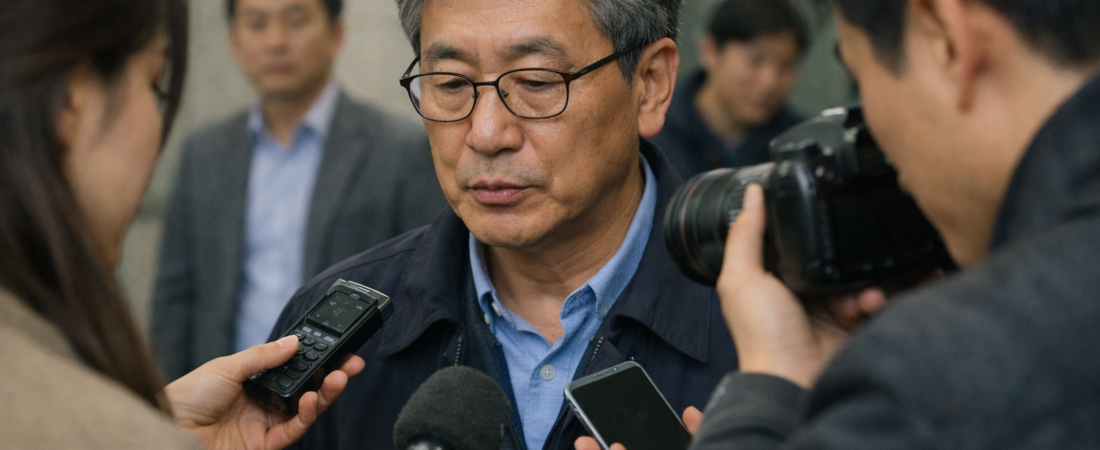
Yoo Si-min did not stop at questioning the president’s motives. He also directly challenged an internal culture within the Democratic Party of Korea.
Specifically, he criticized how some party members respond to internal criticism. According to Yoo Si-min, silencing dissent within the party sets a troubling precedent.
This is a familiar tension in Korean party politics. Strong factional loyalty often makes internal criticism feel like betrayal to some members.
But Yoo Si-min pushed back hard against that mindset. He argued that Korea now lives in an era where citizens can openly criticize even the most powerful leaders.
Given that reality, Yoo Si-min asked a pointed question: why should a political party be any different? Shouldn’t debate inside a ruling party reflect the same open standards Korean democracy applies to its president?
This is not the first time Yoo Si-min has clashed with hardline elements of his own political camp. He has previously warned against blind loyalty culture, sometimes called “fandom politics,” where criticism of a favored leader triggers coordinated online backlash.
For readers outside Korea, this dynamic might sound familiar. Many democracies now struggle with similar tension between party loyalty and open internal debate.
Yoo Si-min’s willingness to name this problem directly, rather than staying quiet for the sake of unity, is itself notable. Coverage of these remarks appeared through Yonhap News Agency, sparking wider discussion online.
Many commentators noted that Yoo Si-min’s willingness to criticize his own political camp adds unusual credibility to the debate. After all, it is easier to dismiss criticism from political opponents than from a respected voice within the same movement.
Why Yoo Si-min’s Warning Matters for Korean Democracy
So why should you care about one commentator’s theory regarding party strategy? Because Yoo Si-min’s argument touches something bigger than daily political drama.
It raises a fundamental question about accountability. If a ruling party organizes grassroots pressure while publicly claiming it is spontaneous, that blurs the line between genuine civic participation and top-down political engineering.
Korean democracy has matured significantly since the direct election era began in 1987. Citizens now expect transparency about who really drives political movements, not just polished talking points from party headquarters.
Yoo Si-min’s comments essentially ask: does the current administration meet that standard? His skepticism forces both supporters and critics of President Lee Jae-myung to look more closely at the gap between reform promises and reform reality.
There is also a broader lesson here about political maturity. A healthy democracy needs voices like Yoo Si-min, people willing to criticize their own side, not just the opposition.
Without that kind of internal accountability, ruling parties risk becoming echo chambers. And echo chambers rarely produce good policy, especially on something as consequential as prosecution reform.
Looking ahead, expect this debate to intensify as prosecution reform legislation moves through the National Assembly. Yoo Si-min’s warning may not settle the argument, but it has clearly reframed it.
Instead of a simple story about grassroots enthusiasm for President Lee Jae-myung, Korean voters now face a more complicated question about strategy, power, and transparency. That is a healthier debate for Korean democracy, even if it feels uncomfortable in the moment.
What do you think about Yoo Si-min’s claim that political movements inside Korea’s ruling party might be more coordinated than they appear?
AI-Generated Photorealistic Image — All people, scenes, and details in this image are entirely AI-generated and fictional. Not a real photograph of an actual person or event. 이 이미지는 AI로 생성된 가상 이미지입니다.


Leave a Reply