Table of Contents
Can a graphic novel really explain something as complicated as brain science? That question sits at the heart of a new book making waves in Korea’s publishing world this month. “People Who Want to Change the Brain” tackles centuries of brain science history, and it does so with pictures instead of dense academic prose.
You might expect a topic like brain science to feel cold or overly technical. This book proves otherwise, turning 300 years of electrical experiments and medical breakthroughs into a story you can actually follow.
A New Book Puts Brain Science in Pictures
The book comes from authors Kim Myung-ho and Ryu Young-jun, published by Across Publishing. It carries a price tag of 22,000 won, which is fairly standard for illustrated nonfiction in Korea.
What makes this release stand out isn’t just its subject matter. It’s the format.
Graphic novels have become a serious tool for explaining science to general readers, and Korea’s publishing scene has embraced this trend enthusiastically. Complex brain science topics, once locked inside academic journals, now reach readers through panels and illustrations that make abstract ideas feel concrete.
Think about how hard it is to picture neurons firing or electrical currents moving through tissue. A graphic novel format solves that problem visually, letting readers see what words alone struggle to describe.
This approach isn’t new globally, but its application to brain science feels timely. As public interest in mental health and cognitive enhancement grows worldwide, accessible science books fill a real gap.
From Electric Shock Therapy to Modern Neuroscience
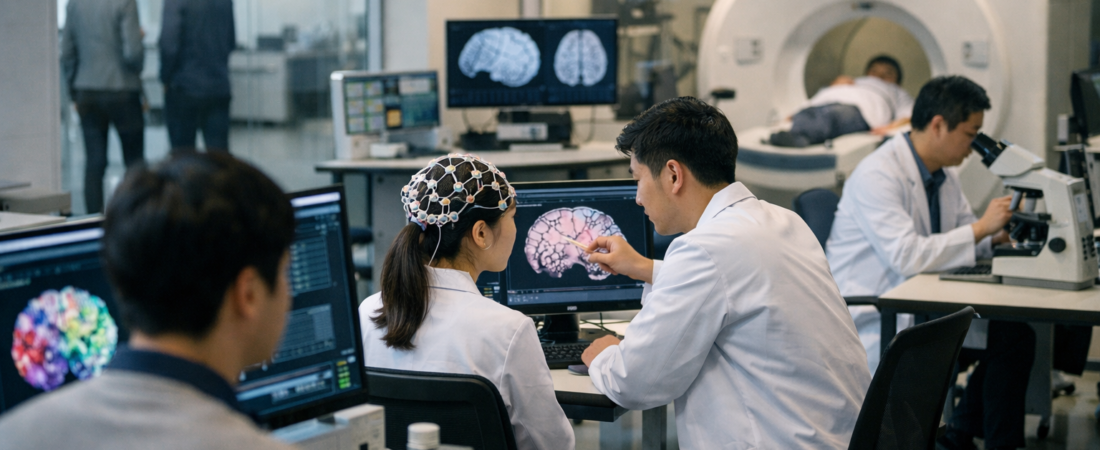
The book’s historical scope starts in the 18th century, when doctors first experimented with electric shock treatments for mental illness. These early methods sound brutal by today’s standards, and honestly, they often were.
But that history matters. Understanding where brain science began helps you appreciate how far the field has traveled.
From those crude beginnings, the narrative moves through major milestones: the discovery of neuroplasticity, the rise of assistive technologies, and the development of drugs targeting brain function. Neuroplasticity alone deserves attention here — it’s the discovery that the brain can reorganize itself, forming new neural connections throughout a person’s life.
This idea reshaped how scientists think about recovery from injury, learning in old age, and even trauma treatment. Before this discovery, many believed the adult brain was essentially fixed, incapable of meaningful change after childhood.
That assumption turned out to be wrong, and the correction opened doors for entirely new treatment approaches. The book also covers brain stimulation technology, a field advancing quickly with applications ranging from depression treatment to performance enhancement.
Modern brain stimulation devices, some no bigger than a headband, can influence mood and focus. It sounds almost like science fiction, yet these tools exist in clinics today.
Why Neuroplasticity Changes How We See Ourselves
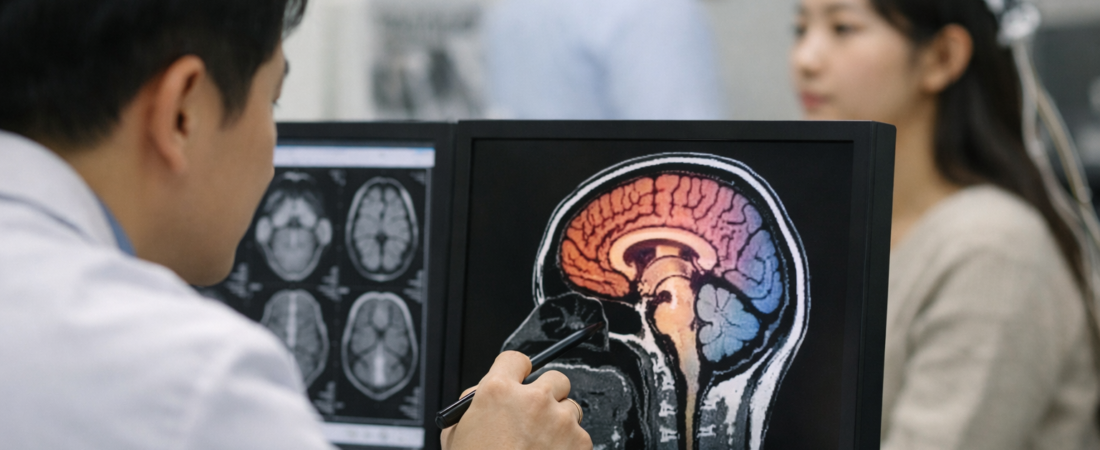
Why should you care about neuroplasticity if you’re not a scientist? Because it changes how you think about your own potential.
If your brain can rewire itself, then habits, skills, and even emotional patterns aren’t permanently locked in. That’s a hopeful message wrapped inside serious brain science.
Korean readers have shown growing interest in books that connect hard science to everyday self-improvement. This trend reflects a broader cultural shift toward viewing the mind as something workable, not fixed. You could call it a rewiring of expectations to match the rewiring of neurons — a small joke, but not far from the book’s actual message.
Of course, this optimism needs a grounded counterpart. Neuroplasticity has limits, and popular science sometimes oversells the brain’s flexibility as an easy fix for deep struggles like addiction or trauma.
The book seems aware of this tension, presenting brain science advances alongside their real-world complications rather than pure celebration. For readers interested in deeper coverage of these scientific developments, outlets like The Kyunghyang Shinmun continue to track new research in this space.
The Ethics of Rewiring the Human Mind
Should we be allowed to change the brain just because we can? That’s the uncomfortable question this book refuses to avoid.
As brain stimulation and cognitive-enhancing drugs become more accessible, ethical questions multiply. Who decides which brain states count as “normal”? Who gets access to enhancement technology, and who gets left behind?
These aren’t abstract worries. Wealthier patients already have better access to advanced neurological treatments, while others wait years for basic mental health care.
That gap deserves honest attention rather than quiet avoidance. At the same time, the same brain science advances driving these ethical debates are also producing real breakthroughs — helping stroke survivors regain speech, giving paralyzed patients new mobility, and offering depression patients options beyond medication alone.
Progress and inequality often travel together in medical history, and brain science is no exception. The encouraging part is that awareness of this gap is growing, with researchers and policymakers increasingly discussing equitable access alongside technical innovation.
There’s something deeply human about our drive to understand and improve the mind, even when that drive raises hard questions. People have always sought ways to heal suffering and expand human capability, and that impulse reflects a genuine care for human dignity, not just curiosity.
Yet the same ambition that drives medical breakthroughs can slide into treating the brain as a machine to be optimized rather than a person to be respected. Holding both truths together — celebrating what brain science can heal while staying humble about what it cannot fully explain — feels like the wiser path forward.
Books like this one matter because they invite ordinary readers into conversations once reserved for specialists. Brain science will keep advancing whether or not the public understands it, but informed readers make better choices about their own health and their communities’ policies.
Graphic novels won’t replace textbooks, but they might replace apathy with curiosity, and that’s no small thing. What do you think — should society move faster on brain enhancement technology, or slow down and ask more questions first?
AI-Generated Photorealistic Image — All people, scenes, and details in this image are entirely AI-generated and fictional. Not a real photograph of an actual person or event. 이 이미지는 AI로 생성된 가상 이미지입니다.




Leave a Reply