Table of Contents
Can a design fair change how a whole city sees itself? That is exactly the question Seoul is asking with Design Miami Seoul 2026. The Seoul Design Foundation just revealed the event’s major exhibits and program details, and design lovers everywhere should take notice.
This is not just another art show. Design Miami has built a global reputation for turning furniture and objects into cultural statements. Now, that same energy is heading to Seoul.
What Is Design Miami Seoul 2026?
Design Miami started years ago as a companion event to Art Basel Miami Beach. Over time, it grew into its own international brand, known for collectible design, limited editions, and boundary-pushing craftsmanship. Bringing that brand to Seoul signals something bigger than a single exhibition.
It suggests Seoul wants a permanent seat at the table of global design capitals. You might already know Seoul for K-pop, film, or street fashion. But design? That’s a newer story, and it’s one worth watching.
The Seoul Design Foundation organized this event with exactly that ambition in mind. They want visitors to see design not as decoration, but as a serious cultural language. Think of it as Seoul writing its own chapter in a conversation that Miami, Basel, and Paris have led for decades.
The Highlights Just Revealed
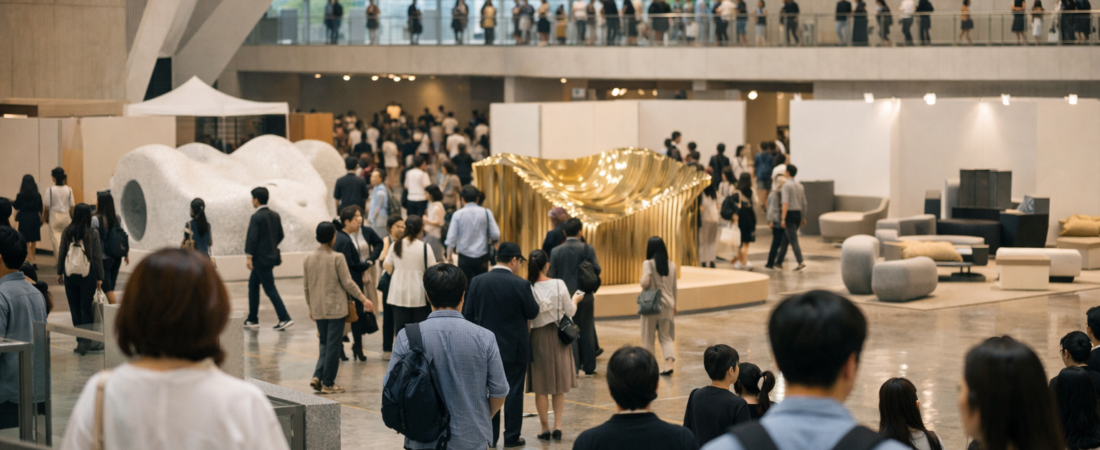
On August 16, the foundation announced key exhibition pieces and detailed programming ahead of Design Miami Seoul 2026. While full details continue to roll out, the early reveal already shows a clear direction. Organizers want broader public participation, not just gallery-style viewing.
That means more interactive elements, more accessible programming, and more chances for everyday visitors to engage directly with the works. Why does this matter? Because design fairs can sometimes feel exclusive, reserved for collectors and industry insiders.
Design Miami Seoul 2026 seems intent on avoiding that trap. The foundation is pairing headline artworks with side programs meant to pull in wider audiences. You can read more background on the original announcement through Yonhap News Agency, which first reported these details.
This early transparency also builds anticipation. By revealing highlights months ahead, organizers are inviting international attention long before opening day. It’s a smart move — and honestly, a little suspenseful, like getting movie trailers before you’ve bought the ticket.
Why Seoul Is the Right Stage

So why Seoul, and why now? Korea has spent the last decade building serious cultural infrastructure — museums, biennales, and design districts across the city. Seoul already hosts Seoul Design Festival and other creative events that draw international crowds.
Design Miami Seoul 2026 fits naturally into that momentum. The city offers something Miami cannot: a direct bridge between traditional Korean craftsmanship and hyper-modern design sensibility. Think hanok architecture meeting minimalist furniture, or centuries-old ceramic techniques reimagined for contemporary interiors.
That contrast is part of what makes Korean design distinct on the world stage. Global collectors are increasingly curious about Asian design perspectives, not just Western ones. Seoul, with its mix of tradition and innovation, offers exactly that fresh viewpoint.
Hosting Design Miami here also benefits local designers directly. Emerging Korean creators gain visibility next to established international names. That kind of exposure can be career-changing, opening doors that domestic markets alone cannot offer.
What This Means for Design Culture in Korea
Events like Design Miami Seoul 2026 raise a deeper question about culture itself. Do prestigious international fairs actually lift up local communities, or do they mostly serve wealthy collectors passing through? It’s fair to ask that, and organizers know it too.
The truth sits somewhere in the middle. Big design fairs can feel distant from ordinary people’s daily lives, and ticket prices or gallery settings sometimes reinforce that distance. Yet the same events also create real opportunities — local artisans reaching global buyers, young designers finding mentors, and cities gaining lasting cultural infrastructure long after the tents come down.
Seoul’s approach, with its emphasis on public programs and wider participation, seems aimed at closing that gap rather than widening it. Whether that promise holds will depend on execution, not just intention. Still, the direction itself offers a hopeful signal about where global-facing culture can go.
Looking ahead, Design Miami Seoul 2026 could become a yearly fixture on the international design calendar. If it succeeds, Seoul joins a small circle of cities recognized as true design capitals. That’s a meaningful shift for a city already reshaping global culture through film, music, and food.
What do you think — can a single design fair really change how the world sees a city’s creative identity?
AI-Generated Photorealistic Image — All people, scenes, and details in this image are entirely AI-generated and fictional. Not a real photograph of an actual person or event. 이 이미지는 AI로 생성된 가상 이미지입니다.


Leave a Reply