Table of Contents
Netflix’s new ten-part series Deuljwi follows a novelist named Munjae as he hunts down an impostor wearing his own face. Actor Ryu Jun-yeol plays both roles, changing costume and makeup up to four times a day. The show blends a Korean folktale motif with modern anxieties about identity theft.
What would you do if someone else started living your life better than you do? That question sits at the heart of Deuljwi, and it refuses to let go. The title itself borrows from an old Korean story about a field mouse that steals a man’s fingernail clippings and transforms into his exact double.
This isn’t just clever plotting. It’s a very old fear, dressed in very new clothes.
What Is Deuljwi About?
Deuljwi centers on Munjae, a novelist who suddenly finds a stranger living his exact life. This stranger, the “deuljwi” of the title, has copied his face, his relationships, and even his career. Munjae must prove he is himself, while everyone around him seems increasingly unsure whom to trust.
The source folktale is well known in Korean households. A field mouse eats a man’s clipped fingernails and turns into an identical copy, then tries to replace him entirely. Generations of Korean children grew up hearing this story as a caution about carelessness and self-protection.
Deuljwi updates that warning for an age of digital identity theft, deepfakes, and stolen personal data. Munjae’s job as a novelist matters here too. Writers build entire worlds from imagination, so when his own reality starts slipping, the show asks whether fiction and fact were ever fully separate for him.
His diagnosed panic disorder adds another layer of instability. Is Munjae unraveling because of the impostor, or was he already unraveling before the deuljwi arrived? The series keeps that ambiguity alive for most of its runtime, and that tension is exactly what has kept viewers hooked.
Ryu Jun-yeol’s Double Role Challenge

Playing two versions of the same character sounds simple on paper. In practice, it demands enormous physical and emotional discipline. Ryu Jun-yeol has spoken about needing full makeup changes as many as four times per single shooting day.
Each version of his character needed distinct posture, vocal tone, and micro-expressions. Audiences had to believe these were two separate people, even though one actor’s body was doing all the work. Small choices, like how each version holds a coffee cup, become the only clues viewers get.
This kind of dual performance has a long history in film and television, from classic doppelganger thrillers to more recent psychological dramas. What makes Ryu’s case notable is the daily grind behind the scenes. Four makeup sessions a day is not a small commitment (imagine getting ready for four different job interviews before lunch).
That physical toll mirrors the show’s larger theme. Just as Munjae struggles to hold onto a stable sense of self, Ryu had to physically inhabit two selves without losing his own footing as a performer. The production reportedly praised his consistency, since even tiny slips could break the illusion for viewers.
Deuljwi and the Question of Identity Theft
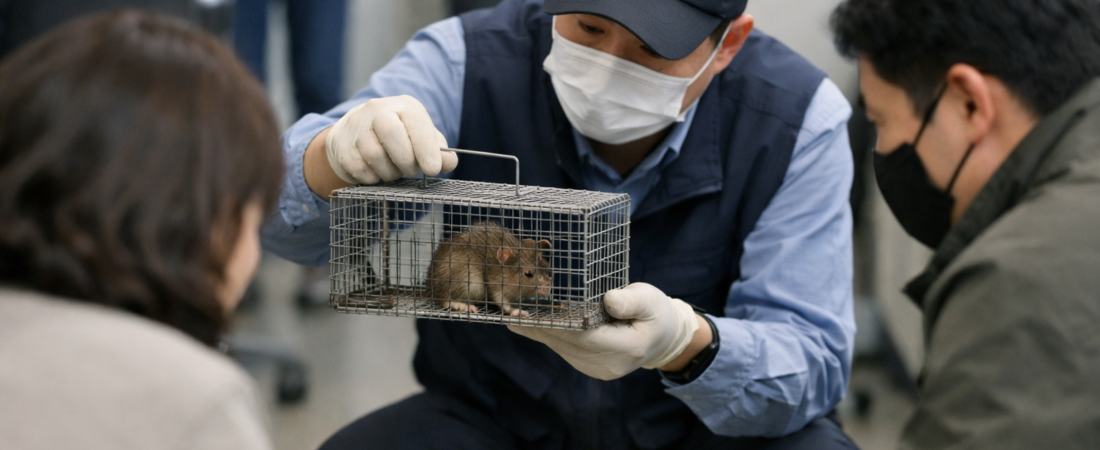
At its core, Deuljwi asks a question that feels more urgent every year: what actually proves you are you? Is it your face? Your memories? The people who vouch for you?
Modern identity theft rarely involves a mythical field mouse, but it creates the same panic. Stolen bank accounts, cloned social media profiles, and AI-generated deepfakes all raise the same fear that drove the original folktale. Someone else can now wear your digital face convincingly enough to fool your own family.
South Korea has seen a rise in sophisticated voice-phishing and identity fraud cases in recent years, a trend widely reported by outlets like Yonhap News Agency. Deuljwi taps directly into that anxiety, using a centuries-old story structure to talk about a very present-day problem. That’s a clever move for a drama trying to feel both timeless and urgent.
The show also plays with reader trust in a clever way. Because Munjae is a novelist, other characters begin wondering if this “impostor” story is simply his latest work of fiction bleeding into real life. That narrative trick forces viewers to keep questioning what is real, which is exactly the discomfort identity theft victims describe feeling in real life.
Why Deuljwi Resonates Beyond Korea
Doppelganger stories are not unique to Korea, but Deuljwi’s folktale roots give it a distinct cultural texture. Western audiences know similar tales, from evil twins in classic literature to modern clone thrillers. What Deuljwi offers is a specifically Korean lens on a universal fear.
Traditional Korean folktales often carried practical warnings disguised as entertainment, teaching lessons about carelessness, greed, or vanity. The deuljwi folktale warned people to dispose of their nail clippings properly, since carelessness could literally cost you your identity. Turning that old caution into a psychological thriller shows how flexible traditional stories can be.
There’s something worth sitting with here, beyond the plot twists and makeup changes. Our need to prove who we are has never disappeared, it has only changed shape, moving from folk superstition to biometric scans and password resets. That shift can feel cold and impersonal, stripping identity down to data points a machine can verify or reject.
Yet the same technology that threatens to steal our identities also gives us new tools to protect what makes us who we are, from encrypted verification to communities that vouch for each other online and offline. Deuljwi doesn’t pretend this tension has an easy answer, and neither should we. The comfort isn’t that identity theft will disappear, but that the human instinct to hold onto ourselves, and to help others do the same, seems just as persistent as the threat.
Global streaming has made it easier than ever for a Korean folktale to reach living rooms in Toronto, Lagos, or Berlin. Deuljwi proves that a story about a field mouse from centuries ago can still say something true about deepfakes and stolen passwords today. What does that tell us about the stories we keep retelling, generation after generation?
As Deuljwi continues its run on Netflix, it invites viewers everywhere to ask an uncomfortable but necessary question about their own digital lives. If someone copied your face, your voice, and your habits tomorrow, what would actually prove you are still you? What do you think truly makes you, you?
AI-Generated Photorealistic Image — All people, scenes, and details in this image are entirely AI-generated and fictional. Not a real photograph of an actual person or event. 이 이미지는 AI로 생성된 가상 이미지입니다.



Leave a Reply