Table of Contents
A Dessert That Feels Strangely Sacred
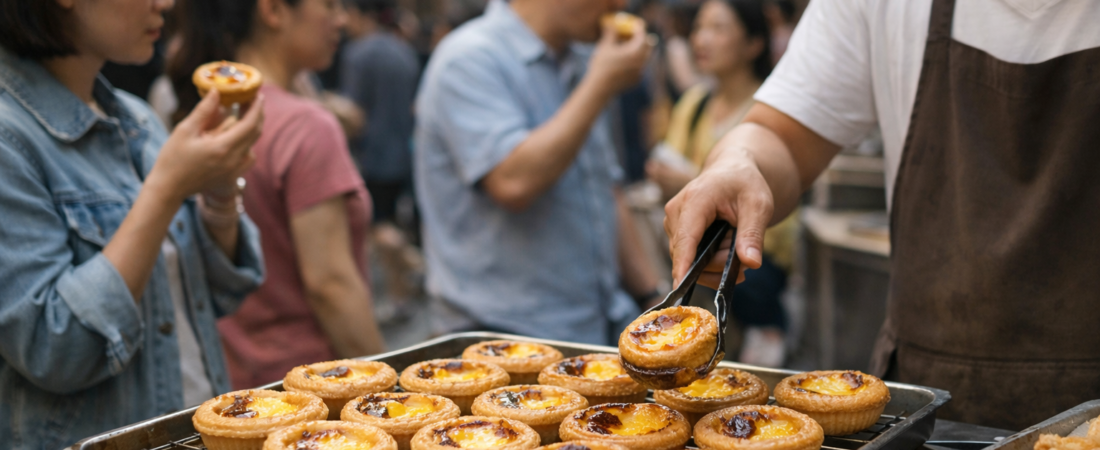
Have you ever eaten something so simple, yet felt strangely calm afterward? That’s the quiet power of the egg tart. One bite of its crisp shell and warm custard center, and the noise of your day seems to fade.
You’ve probably seen this dessert in nearly every Korean cafe display case. Its golden top and flaky crust feel almost too familiar to question. But few people ever ask where the egg tart actually came from.
The pastry shatters the moment you bite it, crumbs scattering everywhere — a small, delicious act of devotion. Behind this everyday treat lies a much older story. That story begins inside quiet monastery walls, long before cafes ever existed.
Today, the egg tart sits on menus from Seoul to Sydney. Yet its roots trace back to a specific place, a specific practice, and a specific kind of stillness. Understanding that history changes how the dessert tastes, doesn’t it?
The Egg Tart’s Monastery Origins
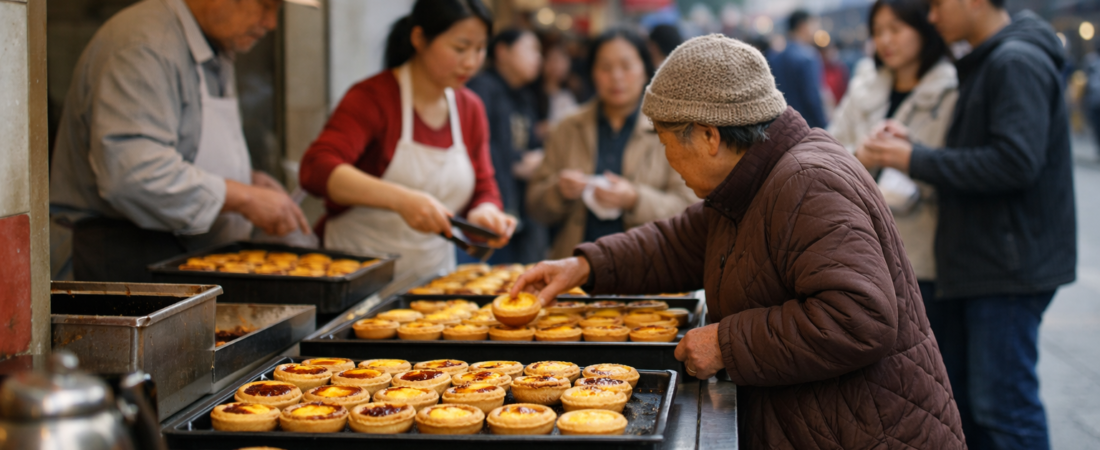
Long before bakeries existed, Portuguese monasteries produced their own sweets. Nuns and monks used egg whites to starch their habits and stiffen linens. That left behind an unusual surplus: dozens of unused egg yolks every single week.
Rather than waste them, religious communities turned yolks into custard. They folded that custard into thin, buttery pastry shells. The result became an early ancestor of what we now call the egg tart.
This wasn’t fine dining. It was practical, resourceful cooking born from convent kitchens. Monastic life valued simplicity, but it also valued not wasting what God’s creation provided.
The town of Tentugal, in central Portugal, became especially known for this tradition. Its convent bakers refined the custard tart recipe over generations. Even today, Tentugal remains tied to this pastry’s identity, almost like a hometown you never knew you had.
Isn’t it striking how something so sweet started with such quiet, disciplined labor? The egg tart wasn’t invented to impress anyone. It was invented to use every part of what was given, without excess and without waste.
That mindset feels almost countercultural now. We live in an age of abundance, where extra ingredients simply get thrown away. The nuns who first shaped this custard had no such luxury, and their limitation became the dessert’s very foundation.
From Tentugal to Macau: How the Egg Tart Traveled
Portuguese sailors and colonizers carried more than goods across the ocean. They carried recipes, habits, and tastes. When Portugal established its trading post in Macau, this custard pastry eventually traveled with them.
Centuries later, in 1989, a British pharmacist named Andrew Stow opened a small bakery in Macau. He adapted the Portuguese custard tart, adding his own British-style touch to the filling. That bakery, often credited with the modern egg tart’s popularity, helped the dessert spread across Hong Kong and mainland China.
From there, the egg tart moved through Asia like a quiet traveler, showing up in bakery windows from Taipei to Bangkok. Korea welcomed it warmly, especially as cafe culture expanded through the 2000s and 2010s. You can read more about this culinary migration through Kyunghyang Shinmun, which traced the dessert’s monastery-to-cafe journey in detail.
What’s remarkable isn’t just the geography. It’s how the egg tart kept its essential shape through every border it crossed. The custard stayed soft. The crust stayed flaky. Only the surrounding culture changed.
Doesn’t it feel a little strange that a monastery recipe from rural Portugal now sits inside Korean convenience stores? Global trade, colonial history, and one entrepreneur’s bakery all had to align. The egg tart you eat today carries all of that inside a single bite.
What the Egg Tart Reveals About Everyday Sacredness
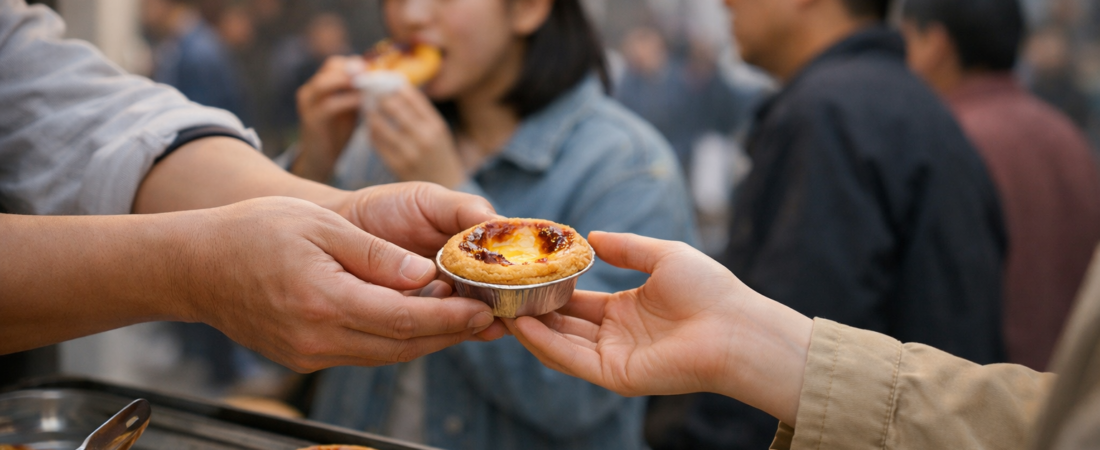
You don’t need religious belief to notice something quiet happening when you eat well. A good egg tart slows you down for a moment. It asks for nothing except your attention, and somehow, that feels like enough.
This kind of stillness isn’t unique to monasteries or ancient recipes. It shows up anywhere people slow down long enough to actually taste what’s in front of them. Maybe that’s the real inheritance the egg tart carries — not doctrine, but a habit of paying attention.
At the same time, it’s worth being honest about what gets lost along the way. Mass production has turned many egg tarts into rushed, forgettable snacks, stripped of the patience that once shaped them in convent kitchens. Yet even now, small bakeries in Seoul and beyond still slow the process down, proofing dough by hand and treating the custard with real care.
That tension feels true to most traditions worth keeping. Something gets simplified when it scales, but something also survives when people choose to care anyway. The egg tart’s story isn’t one of pure loss or pure preservation — it’s both, held together in the same pastry shell.
Why This Humble Egg Tart Still Matters Today
Food carries memory whether we notice it or not. Every egg tart on a Korean cafe counter quietly holds Portuguese convent kitchens, Macau bakeries, and centuries of trade routes. That’s a lot of history for something you can finish in three bites.
Should we care about where our food comes from? Maybe not every single time. But understanding the egg tart’s monastery roots adds something real to an ordinary afternoon coffee break.
Korea has always been skilled at adopting outside flavors and making them its own. The egg tart is no exception, sitting comfortably now beside injeolmi and hotteok on dessert menus nationwide. That blending of old and new says something hopeful about how culture actually grows.
Next time you order an egg tart, take a slower bite than usual. Notice the crust, the custard, the quiet history sitting inside. Isn’t it worth remembering where your favorite comfort food actually began?
What everyday food in your own life carries a history you’ve never fully explored?
AI-Generated Photorealistic Image — All people, scenes, and details in this image are entirely AI-generated and fictional. Not a real photograph of an actual person or event. 이 이미지는 AI로 생성된 가상 이미지입니다.

Leave a Reply