
Table of Contents
- Has Hallyu Really Peaked?
- From “What is Love” to Global Domination
- Signs of Slowdown, Signs of Strength
- What Comes Next for Hallyu
Has Korean culture already hit its ceiling? That question sounds strange after three decades of unstoppable growth. But industry watchers are now asking it seriously, and the answer matters for anyone who loves K-dramas, K-pop, or Korean food.
Hallyu, the Korean Wave, didn’t start as a plan. It started almost by accident, and that origin story still shapes how we understand its current moment.
Has Hallyu Really Peaked?
Nearly 30 years ago, nobody predicted Korean pop culture would become a global export machine. Yet here we are, with Hallyu touching everything from beauty routines in Brazil to language classes in Nigeria. So why is everyone suddenly talking about a “reckoning”?
Growth this fast rarely lasts forever. Every wave eventually meets the shore, and some analysts believe Hallyu is approaching that point. Streaming numbers for certain dramas have softened. Some K-pop comebacks haven’t hit the chart heights fans expected just a few years back.
But slower growth isn’t the same as decline. Think of it less like a wave crashing and more like a tide reaching high water. That’s a very different story, and it’s one worth examining carefully.
From “What is Love” to Global Domination

The story usually begins in 1997. Chinese state broadcaster CCTV aired the Korean drama “What is Love,” a domestic hit nobody expected to travel well. It became an unlikely sensation in China, and historians now mark that broadcast as the true starting point of Hallyu.
What followed was almost three decades of expansion nobody could have scripted. Korean dramas conquered Asian television markets first, then found audiences in Latin America, the Middle East, and eventually the entire world through streaming platforms.
K-pop groups turned language barriers into marketing advantages rather than obstacles. Webtoons and Korean games joined the export lineup, adding entirely new revenue streams. And Hallyu never stayed contained to entertainment alone.
Tourism boomed as fans traveled to Seoul to visit filming locations. Korean beauty products became bathroom staples worldwide. Korean fashion, food, and even skincare routines rode the same cultural momentum. (Somewhere, a factory in Korea is still working overtime just to keep up with global demand for sheet masks.)
Signs of Slowdown, Signs of Strength
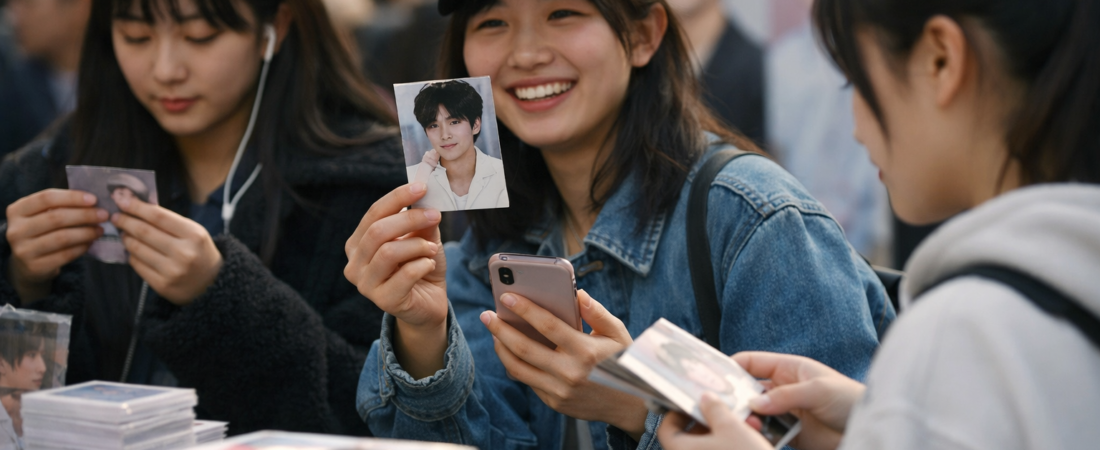
So what does a Hallyu slowdown actually look like in practice? It’s not empty theaters or canceled world tours. It’s subtler than that, showing up in market saturation and shifting competition.
Global streaming platforms now produce their own local-language hits in other countries, competing directly with Korean content for the same viewers. Japanese, Chinese, and Southeast Asian entertainment industries have studied Hallyu’s playbook closely. Some are applying it with real success.
That’s genuine competition, and Korean producers know it. Yet Hallyu still holds structural advantages few rivals can match. Korea’s entertainment companies built vertically integrated systems, training idols for years before debut and controlling production, marketing, and distribution in-house.
That infrastructure took decades to build. It won’t disappear because of one slower quarter or one underperforming drama season. Government support has also mattered here, with cultural exports treated as a genuine national economic priority rather than an afterthought.
For deeper reporting on this shift, the Korea Herald has been tracking industry data closely. Their coverage suggests plateau rather than collapse, at least for now.
What Comes Next for Hallyu
Where does Hallyu go from here? Maybe the better question is: what should “success” even mean for a cultural export at this stage? Maturity, not just growth, might be the real marker of a lasting movement.
A cultural wave that plateaus after 30 years isn’t a failure story. It’s a maturity story. Consider how American cinema didn’t dominate every single decade of the last century, yet Hollywood remains a global reference point precisely because it evolved instead of repeating itself.
Korean content faces a similar fork in the road right now. It can chase the exact formulas that worked before, or it can risk new genres, new formats, and new voices. History suggests risk usually wins out over repetition.
There’s something honest in admitting a wave might be settling rather than pretending it will rise forever. Korea’s cultural industry has real pressures right now — younger creators facing burnout, smaller studios squeezed by rising production costs, and audiences growing pickier by the year. Those are hard truths, and pretending otherwise helps no one.
But alongside that pressure sits real reinvention. Independent webtoon creators are reaching global audiences without major studio backing. Smaller K-pop labels are experimenting with formats that big companies won’t risk. Hope in this story doesn’t come from denying the difficulty; it comes from watching people build new paths through it.
Where Hallyu goes next may depend less on any single hit drama and more on whether this culture of quiet reinvention keeps finding room to breathe. That’s not a guarantee of eternal growth. It’s something more durable: a track record of adapting when the easy path stops working.
Thirty years is a long run for any cultural export to stay this relevant. Whatever comes next for Hallyu, it likely won’t look identical to what made it famous in the first place. What do you think — has Hallyu peaked, or is this simply the industry catching its breath before the next big leap?
AI-Generated Photorealistic Image — All people, scenes, and details in this image are entirely AI-generated and fictional. Not a real photograph of an actual person or event. 이 이미지는 AI로 생성된 가상 이미지입니다.



Leave a Reply