Table of Contents
The K-Music Festival returns to London this fall for its 13th edition, spreading across nine venues over two months. Organized by the Korean Cultural Centre UK, it runs from September 28 to November 23. The lineup mixes Korean folk, hip-hop, jazz, and even video game soundtracks.
Why would a festival built on traditional Korean sound bother with gaming music at all? That question actually gets at something important. Korea’s musical identity has quietly outgrown the K-pop label many people still use to describe it.
London Welcomes Korean Sound Again
For thirteen years, the K-Music Festival has planted itself in London every autumn. That kind of consistency is not accidental. It reflects a deliberate, patient effort by the Korean Cultural Centre UK to build long-term cultural relationships, not one-off spectacles.
This year’s expansion to nine stages is notable. Most cultural festivals shrink over time as funding tightens or interest fades. This one is growing, which tells you something about audience demand in the UK.
London itself makes sense as a host city. It already has deep roots in global music curation, from jazz clubs to experimental venues. Placing Korean folk and hip-hop side by side there is not just convenient — it is a statement about where Korean music now belongs.
What the K-Music Festival Actually Offers
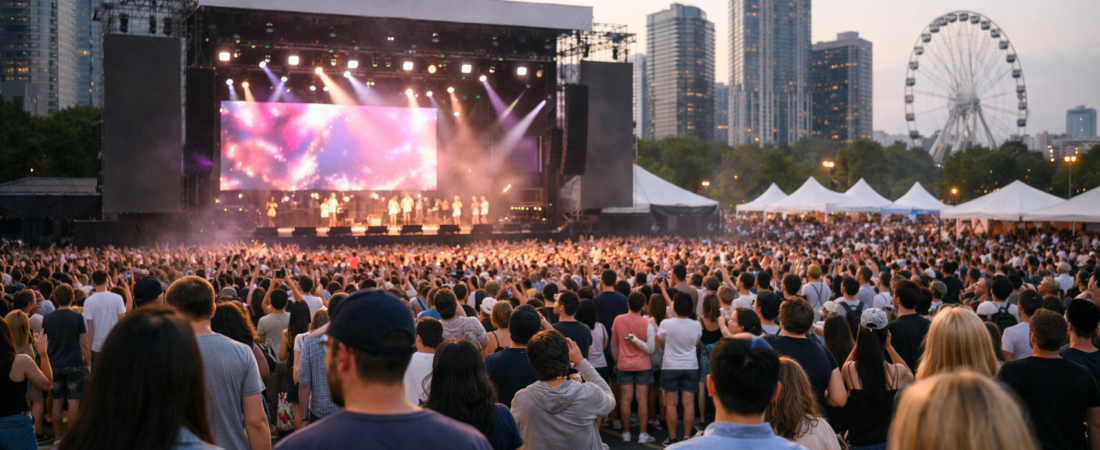
The centerpiece this year is a National Gugak Center orchestra performance. It features newly arranged music from two video games, “Black Desert” and “Lies of P”. Yes, someone actually sat down and rescored gaming soundtracks for a full traditional orchestra.
Think about what that pairing actually means. Gugak refers to traditional Korean court and folk music, built on instruments like the gayageum and daegeum. Putting that instrumentation behind modern game scores bridges centuries of tradition with something entirely contemporary.
Beyond that flagship show, the K-Music Festival spreads across genres that rarely share a stage back home. Folk musicians perform near hip-hop acts. Jazz ensembles follow gaming-score orchestras. Have you ever seen a festival lineup that stretches that wide under one cultural banner?
That range is intentional. Organizers want London audiences to see Korean music as a spectrum, not a single genre. You can read more about the festival’s full program through the Korea Herald, which first reported on this year’s lineup.
Beyond K-pop: Korea’s Broader Musical Identity

K-pop opened the door for global interest in Korean culture. But the K-Music Festival makes a quieter, arguably bolder claim. Korea’s musical output has always been layered, and K-pop is just the most visible layer.
Folk music carries centuries of oral tradition, passed through pansori singers and village performers. Hip-hop in Korea has its own underground scene, shaped by local slang and social commentary rarely seen in mainstream exports. Jazz has quietly thrived in Seoul’s small clubs for decades, influenced by both American roots and Korean phrasing.
Gaming soundtracks might seem like the odd addition here. But Korea is one of the world’s largest gaming markets, and its composers have become skilled at building emotional, cinematic scores. Featuring “Black Desert” and “Lies of P” music alongside gugak orchestration shows organizers taking that art form seriously, not treating it as a novelty.
This kind of programming choice matters for how Korea gets understood abroad. A single genre can only carry a culture’s reputation so far. The K-Music Festival seems built on the belief that variety, not repetition, is what keeps international curiosity alive.
Why This Matters for Global Audiences
Cultural festivals like this one do more than entertain visiting audiences for an evening. They quietly shape how outsiders imagine an entire country. When London audiences hear gugak next to hip-hop, their mental picture of Korea gets more complicated, and more accurate.
There is something worth naming honestly here too. Cross-cultural showcases like the K-Music Festival can sometimes flatten complexity into a tidy, exportable package, trimming away the messier local debates about tradition, funding, and who gets a stage. Yet the same event also creates real space for younger Korean composers and traditional musicians to reach audiences they would never otherwise meet, turning a two-month festival into years of collaboration and cross-border learning.
That tension is not a flaw to be solved. It is simply part of what it means to share a living culture with the world, imperfect but genuinely generous in its reach.
Looking ahead, expect more Korean institutions to follow this blended model. Pure genre showcases feel increasingly outdated. Audiences want texture, contrast, and surprise, and the K-Music Festival seems to understand that better than most.
What do you think — should more cultural festivals mix traditional and contemporary genres this boldly?
AI-Generated Photorealistic Image — All people, scenes, and details in this image are entirely AI-generated and fictional. Not a real photograph of an actual person or event. 이 이미지는 AI로 생성된 가상 이미지입니다.



Leave a Reply