Table of Contents
Can a cooking contest actually strengthen ties between two countries? In Türkiye, that question got answered on July 25. The Korean Cultural Center in Türkiye hosted its 15th Korean Food Cooking Competition, and the results say a lot about how far Korean food has traveled.
Ten contestants gathered at the center’s outdoor performance venue. They weren’t professional chefs. They were everyday people who wanted to prove something about their love for Korean food.
A Taste of Korea Takes Center Stage in Türkiye
Picture an outdoor stage, sizzling pans, and nervous hands chopping vegetables under the summer sun. That was the scene at the Korean Cultural Center in Türkiye last month. Ten contestants stepped up to compete, each hoping to capture the spirit of Korean food in a single dish.
This wasn’t a one-time event. It was the 15th edition of a competition that has run for years, quietly building a following among Turkish food lovers.
Think about that for a second. Fifteen years of steady growth means this isn’t a passing trend anymore. It’s become a genuine tradition, one plate at a time.
The Korean Cultural Center organizes these competitions as part of its broader cultural outreach. Music, dance, language classes, and food events all serve one goal: helping Turkish audiences connect with Korean culture directly. Food, though, tends to work faster than almost anything else.
Why does that happen? Because taste bypasses language barriers in a way conversation never can. You don’t need fluent Korean to understand why gochujang makes your mouth water.
Inside the 15th Korean Food Cooking Competition
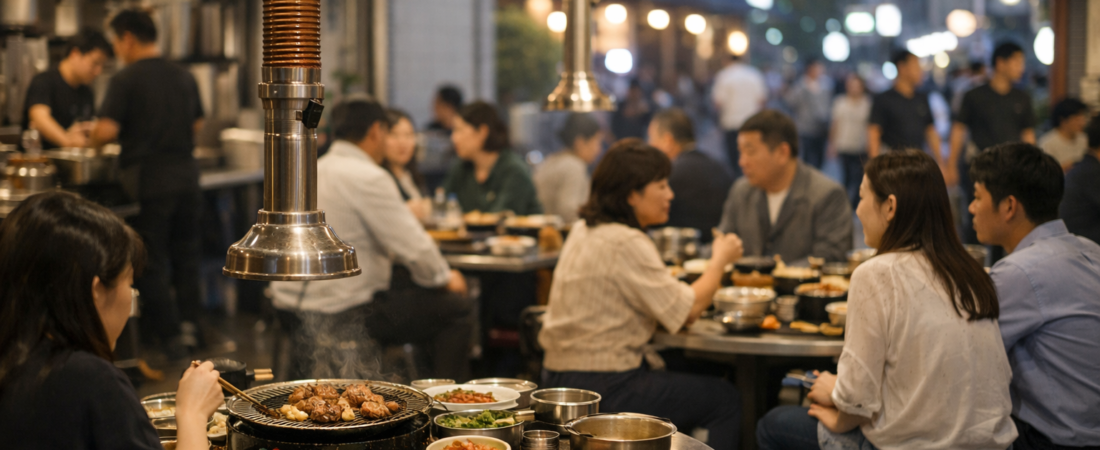
So what actually happened at this event? Ten contestants prepared Korean dishes in front of judges and an audience at the center’s outdoor venue. The setting itself mattered — an open stage instead of a closed kitchen turned cooking into a public performance.
That choice was smart. It let onlookers see the entire process, from chopping to plating, not just the finished dish.
Cooking competitions built around Korean food often highlight dishes like bibimbap, japchae, or kimchi jjigae because they balance visual appeal with approachable techniques. Fermentation takes patience, and stir-frying takes timing — clearly, Istanbul’s home cooks brought plenty of both this July.
Contestants likely faced real challenges. Sourcing authentic Korean ingredients outside Korea isn’t always simple.
Gochugaru, doenjang, and sesame oil aren’t sitting on every Turkish grocery shelf. That scarcity makes each dish feel more like an achievement than a routine cook-off.
The event also served a bigger purpose beyond the competition itself. It functioned as a cultural exchange activity, giving Turkish participants a hands-on way to engage with Korean food rather than just watching a cooking show online. That distinction matters more than people realize.
Reading about Korean food is one thing. Standing at a stove, sweating over a pan of tteokbokki, is something else entirely.
Readers curious about the broader coverage of this event can find additional details through Korea.net, which reported on the competition’s outcome.
Why Korean Food Resonates with Turkish Audiences
Here’s a question worth asking: why Türkiye specifically? The answer traces back further than K-dramas or K-pop. Korea and Türkiye share a historical bond dating to the Korean War, when Turkish troops fought alongside South Korean and United Nations forces.
Koreans still refer to Turks as “blood brothers” because of that shared sacrifice. That history didn’t fade — it evolved into modern cultural curiosity, including a growing appetite for Korean food.
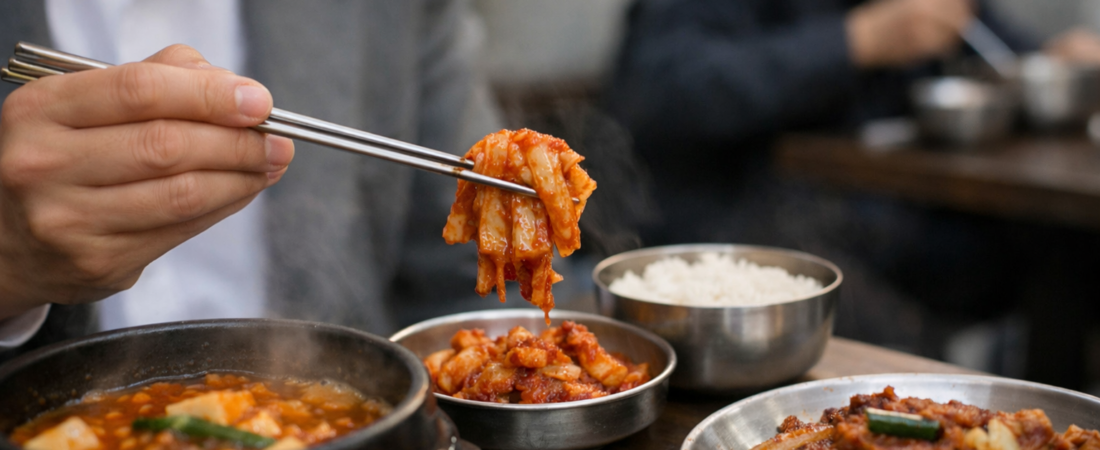
Turkish cuisine and Korean food actually share some surprising overlaps. Both cultures value fermentation, whether it’s Turkish yogurt culture or Korean kimchi. Both favor communal eating, where dishes get shared rather than individually plated.
These similarities give Turkish participants an easier entry point into Korean food than audiences from more distant culinary traditions might have.
Social media has amplified this interest too. Korean dramas often feature elaborate meal scenes, turning dishes like ramyeon or fried chicken into recognizable cultural symbols.
Viewers see the food on screen, then want to taste it themselves. A cooking competition gives them exactly that chance, transforming passive viewing into active participation.
The Korean Cultural Center clearly understands this pattern. By hosting the event annually, it turns fleeting interest into lasting engagement.
Ten contestants this year represent more than a headcount — they represent a community that keeps returning, year after year, to explore Korean food more deeply.
What This Cultural Exchange Means for Korean Food Worldwide
Zoom out for a moment. What does one cooking competition in Ankara or Istanbul really tell us about Korean food’s global future? Quite a lot, actually.
Government-backed cultural centers now operate Korean food programs across dozens of countries. Türkiye’s competition is one thread in a much larger fabric.
Cultural exchange like this carries real weight, but it also carries real limits worth naming honestly. Events like this one can sometimes flatten a complex cuisine into a handful of familiar dishes, repeating bibimbap and kimchi while overlooking regional specialties or the labor behind traditional fermentation.
That simplification isn’t malicious, but it is a genuine risk of packaging culture for quick consumption.
Yet the same competitions also open real doors. A Turkish home cook who struggles to find doenjang today might open a small import shop tomorrow, or teach a neighbor a technique passed down from a Korean grandmother she met online.
Small, imperfect exchanges like this one often grow into something sturdier over time. Fifteen years of steady competitions is proof that patience, not perfection, builds lasting cultural bridges.
For everyday readers, this matters beyond nostalgia or novelty. Korean food is no longer confined to Korean restaurants in major cities.
It’s showing up in home kitchens from Istanbul to wherever you’re reading this right now. That shift didn’t happen through marketing campaigns alone — it happened through people cooking, tasting, and sharing, one competition at a time.
The next chapter of Korean food’s global story likely won’t be written in five-star restaurants. It will be written in outdoor venues, community kitchens, and cultural centers where ordinary people decide a new dish is worth learning.
What does that tell you about where global interest in Korean food is headed next?
AI-Generated Photorealistic Image — All people, scenes, and details in this image are entirely AI-generated and fictional. Not a real photograph of an actual person or event. 이 이미지는 AI로 생성된 가상 이미지입니다.

Leave a Reply