Table of Contents
Have you ever seen a rice field turn into a painting? That’s exactly what happens with rice paddy art, a growing trend across rural Korea. At Cheolli-po Arboretum in Taean, South Chungcheong Province, a giant piano keyboard now stretches across a green field, and tourists can’t stop staring.
This isn’t a photoshopped image or a drone trick. It’s real rice, planted with real intention, growing into real art. And it raises a fun question: how do farmers turn ordinary paddies into massive outdoor murals?
What Is Rice Paddy Art, Explained
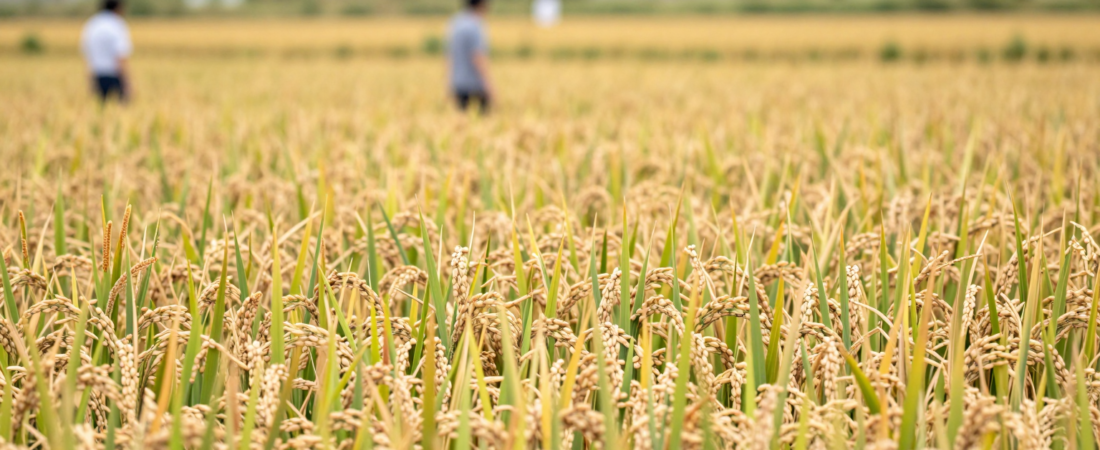
Rice paddy art starts with a simple idea. Instead of growing one type of rice, farmers plant several colored rice varieties in the same field. Each variety naturally produces different leaf colors, from deep purple to golden yellow to standard green.
By arranging these varieties like puzzle pieces, farmers create images visible from above. Think of the field as a giant canvas, and colored rice as the paint. This technique has roots in Japan, where it began decades ago, but Korean farming communities have adopted and adapted it enthusiastically.
The rice itself does double duty. It grows as a working crop while also functioning as a seasonal art installation, which is honestly a pretty efficient use of farmland.
You don’t need a museum ticket to see it, either. Most rice paddy art sites are open fields, viewable from nearby observation towers or hiking paths. That accessibility is part of the appeal for visitors planning a Korea countryside trip.
Inside Cheolli-po Arboretum’s Giant Piano Field
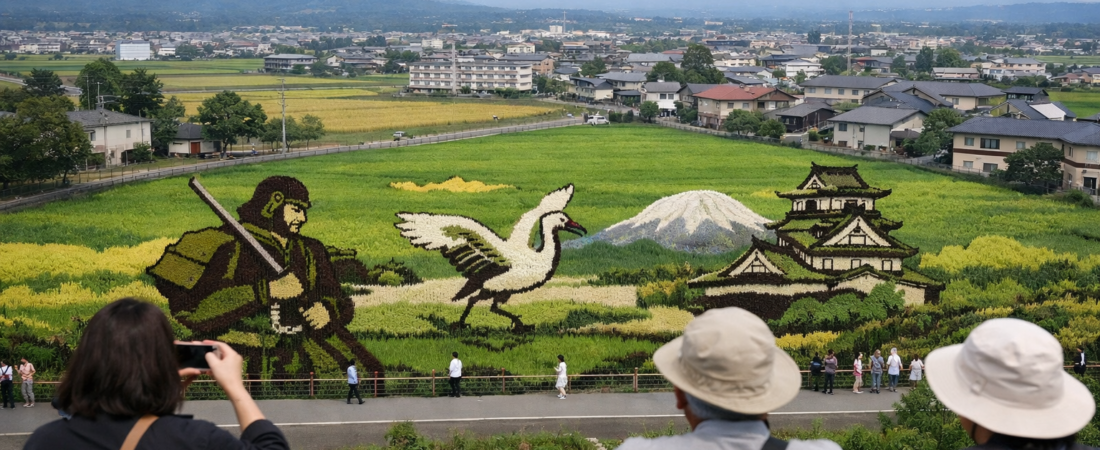
Cheolli-po Arboretum sits along Korea’s western coast in Taean, an area already known for its gardens and coastal scenery. Within this lush setting, one field has been transformed into a massive piano keyboard design using colored rice.
From ground level, the design looks abstract, just rows of slightly different green shades. But climb an observation deck, and the black-and-white keys snap into focus. It’s a striking reminder that perspective changes everything, in farming and in life.
Visitors describe the moment of recognition as almost magical. One second you see a field, the next second you see a piano waiting to be played by giants.
This design choice also connects to Cheolli-po’s identity as a garden and arts destination. Combining agriculture with visual creativity fits naturally into a place already built around cultivated beauty. For readers planning a visit, checking seasonal timing matters most, since the art only appears during the rice growing months.
How Farmers Turn Fields Into Living Canvases
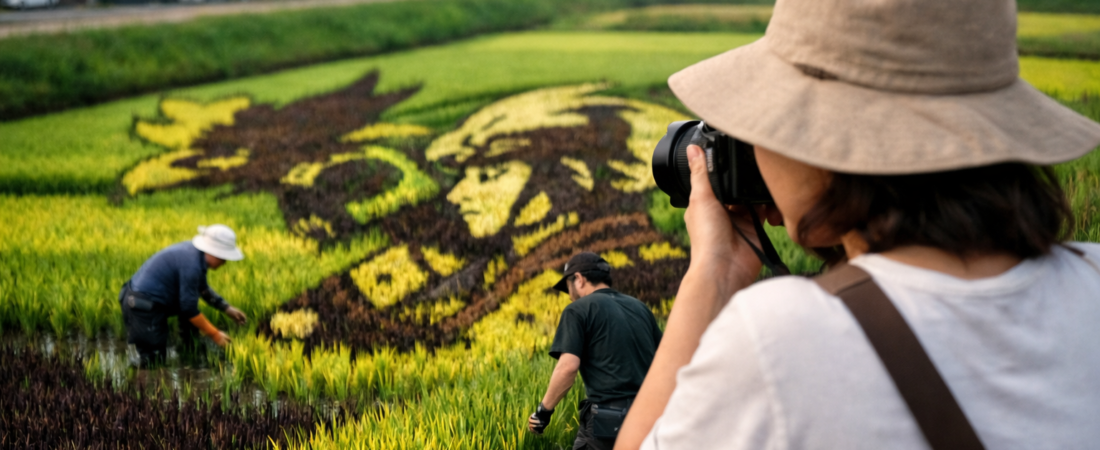
Creating rice paddy art takes serious planning, not just creative flair. Farmers first design the image on paper or computer software, mapping out exactly where each color needs to appear. Then they translate that design into a real-world planting grid, often using ropes or markers to keep rows precise.
Timing matters enormously here. All rice varieties must be planted around the same time, so colors emerge and mature together. If one variety grows faster than another, the image blurs instead of staying sharp.
Farmers also choose rice varieties specifically bred for leaf color rather than maximum yield. This means the art comes with a tradeoff, since decorative rice often produces less usable grain than standard crops. Many farms accept this smaller harvest because tourism revenue and community pride make up the difference.
Weather adds another layer of unpredictability. Rain, wind, and temperature all affect how vividly colors develop as summer progresses. So when you see a perfect rice paddy art photo, remember dozens of small decisions and a bit of luck made it possible.
Why Rice Paddy Art Matters for Rural Korea
Rice paddy art isn’t just decoration. For many rural towns facing shrinking populations and aging farm communities, it has become a genuine economic tool. Tourists travel specifically to see these seasonal installations, bringing revenue to local restaurants, guesthouses, and transportation services.
Is this a perfect solution to rural decline? Not entirely, and it’s worth being honest about that. Farming communities across Korea still struggle with fewer young workers, and one striking field of colored rice won’t reverse decades of demographic shift on its own.
But rice paddy art does show something meaningful: farmers finding creative ways to keep their land relevant and valued. It connects old agricultural knowledge with new tourism demand, and that kind of adaptation deserves real respect. Communities that could have simply given up instead found a way to invite the world back into their fields, one colorful harvest at a time.
There’s something quietly hopeful in watching people transform necessity into beauty. The same fields that once measured only in bushels now also measure in wonder, and that shift reflects a broader human instinct to make meaning out of ordinary labor. It doesn’t erase the real economic pressures facing Korean farm towns, but it does suggest that dignity and creativity can grow side by side with rice.
You can read more coverage of this story from Yonhap News Agency, which first reported on the piano-shaped field in Taean.
Rice paddy art will likely keep spreading to new regions as more farming communities look for creative ways to attract visitors. If you’re planning a trip to Korea’s countryside, timing a visit around late summer could reward you with a view you won’t forget. Would you make a special trip just to see a field shaped like a piano?
AI-Generated Photorealistic Image — All people, scenes, and details in this image are entirely AI-generated and fictional. Not a real photograph of an actual person or event. 이 이미지는 AI로 생성된 가상 이미지입니다.
Leave a Reply