Table of Contents
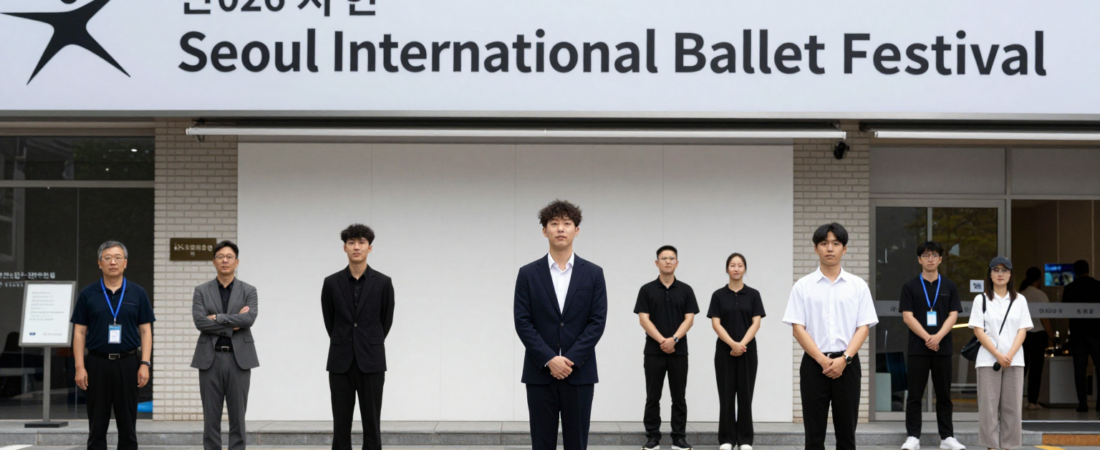
The Seoul International Ballet Festival opens its 19th edition on August 25, bringing together some of the world’s biggest ballet names. Mariinsky Ballet’s Maria Khoreva, star dancer Makar Mikhalkin, and Korean principal Lee Myung-hyun headline the two-day opening program. Organized by the Korea Ballet Association, the festival positions Seoul as a serious stop on the global dance circuit.
Can a silent art form move you as deeply as a hit television drama? That question sat at the center of a press conference held this week in Gangnam.
Khoreva herself made the case directly, calling ballet a form of soul-to-soul connection that can rival the emotional pull of K-dramas. Bold words, coming from a dancer trained in one of the world’s most storied companies. But she may have a point worth exploring.
What’s Happening at the Seoul International Ballet Festival
The Seoul International Ballet Festival, known internationally as K-Ballet World, has run for nearly two decades now. This year’s opening performance takes place on August 25 and 26 at a major Seoul venue. The lineup reads like a wish list for any serious dance fan.
Maria Khoreva, a first soloist with Russia’s Mariinsky Ballet, leads the international contingent. Makar Mikhalkin joins her, along with Korea’s own Lee Myung-hyun, a dancer who has built a strong reputation on domestic and international stages. Together, they represent a bridge between Korea’s growing ballet scene and the world’s most established companies.
What makes this festival different from a typical touring show? It is curated specifically to showcase dialogue between cultures through movement. The Seoul International Ballet Festival was never meant to be a one-off spectacle. It functions as an annual meeting point, where technique, tradition, and emotion get to speak a shared physical language.
The press conference held at the Grand Mercure Ambassador Seoul Gangnam this week gave journalists a preview of what audiences can expect. Khoreva fielded questions about her craft, her feelings toward Korean audiences, and her thoughts on ballet’s emotional power. Her answers hinted at something bigger than a single performance — a belief that dance can say what words sometimes cannot.
Why Global Ballet Stars Are Choosing Seoul
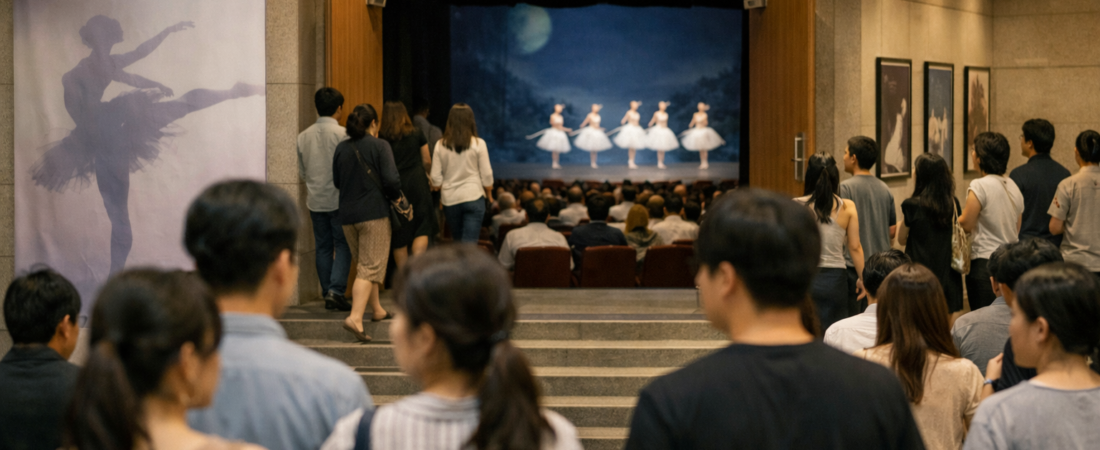
Why would a Mariinsky first soloist travel across continents for a festival in Seoul? The answer says a lot about how Korea’s cultural standing has shifted. Seoul is no longer just a stop for K-pop tours or drama location scouting.
It has become a legitimate destination for classical arts, too. The Korea Ballet Association has spent years building relationships with major companies in Russia, Europe, and beyond. That groundwork is now paying off, visible in rosters like this year’s, packed with recognizable international names.
There is also a practical draw. Korean audiences have a reputation for being deeply engaged and knowledgeable — the kind of crowd that fills seats and stays for curtain calls. (Ask any touring performer, and they will tell you Korean fans do their homework before a show.)
That enthusiasm creates a feedback loop, pulling more world-class talent toward the Seoul International Ballet Festival each year. Lee Myung-hyun’s presence on the same bill matters too. Having a Korean dancer perform alongside Mariinsky-trained stars signals that domestic talent has reached a comparable level.
This is not a festival where local artists play a supporting role to foreign guests. It is a shared stage, built on mutual respect between traditions.
Ballet vs. K-Drama: Two Languages of Korean Emotion
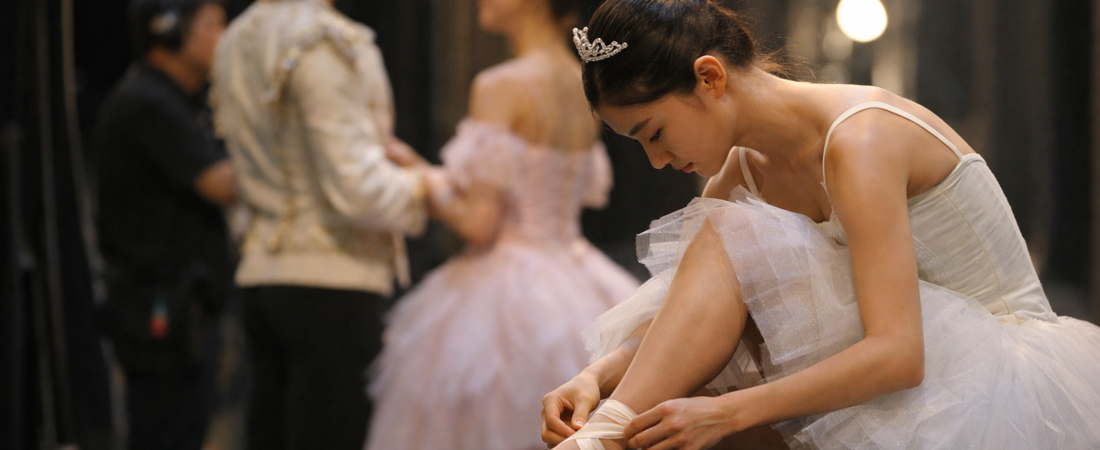
Can wordless movement really compete with a binge-worthy Korean drama for emotional impact? It sounds like an unfair comparison at first. K-dramas have scripts, actors, plot twists, and hours of screen time to build a connection with viewers.
Ballet has none of that. It has bodies, music, and silence. Yet Khoreva’s comment about soul-to-soul connection points to something real.
Ballet strips away language entirely, forcing emotion to travel through gesture and expression alone. That can feel more direct, even more vulnerable, than dialogue ever could. A single lift, a hesitation, a collapse to the floor — these moments carry weight without needing translation.
You do not need Korean subtitles to understand grief, longing, or joy expressed through movement. This universality is part of why ballet has survived for centuries across so many cultures. Korea’s own relationship with ballet is relatively young compared to Russia or France, but it has grown quickly.
Korean dancers now compete and win at major international competitions, and companies like the Korean National Ballet have built strong global reputations. Readers curious about the broader context of Korea’s classical arts scene can find more detail through outlets like Kyunghyang Shinmun. The Seoul International Ballet Festival sits at the meeting point of this history — young enough to feel fresh, established enough to attract legends like Khoreva.
What This Means for Korea’s Cultural Future
Where does an event like this leave Korea’s broader cultural identity? It is easy to focus only on K-pop and K-drama when discussing Korea’s global cultural reach. But classical arts like ballet deserve a place in that conversation too.
The Korea Ballet Association’s decade-long investment in this festival shows a long view — one that values slow-building institutions over quick viral moments. That patience is not always rewarded quickly, and funding for classical arts often struggles compared to the resources poured into pop culture exports. Still, moments like this festival prove that steady investment eventually draws world-class attention, and that quieter art forms can find their own devoted audience without needing to compete directly with mainstream entertainment.
There is something worth sitting with in Khoreva’s claim that dance offers a kind of soul-to-soul connection. Human beings crave forms of expression that bypass language, especially in a world saturated with words, screens, and constant noise. But that same hunger for wordless connection can also expose a kind of loneliness — the sense that verbal communication alone often fails to reach what we really feel.
Ballet does not solve that loneliness completely, and no single performance can carry the full weight of human longing. What it offers instead is a brief, honest attempt at connection, imperfect but sincere, danced out in front of strangers who came looking for the same thing. That effort, repeated night after night on stages around the world, feels like its own quiet form of hope.
The Seoul International Ballet Festival will likely keep growing in scale and ambition in the years ahead. More international stars, more cross-cultural collaborations, and more chances for Korean dancers to share the spotlight all seem probable. What do you think — can a wordless art form like ballet really move you as deeply as your favorite K-drama?
AI-Generated Photorealistic Image — All people, scenes, and details in this image are entirely AI-generated and fictional. Not a real photograph of an actual person or event. 이 이미지는 AI로 생성된 가상 이미지입니다.
Leave a Reply