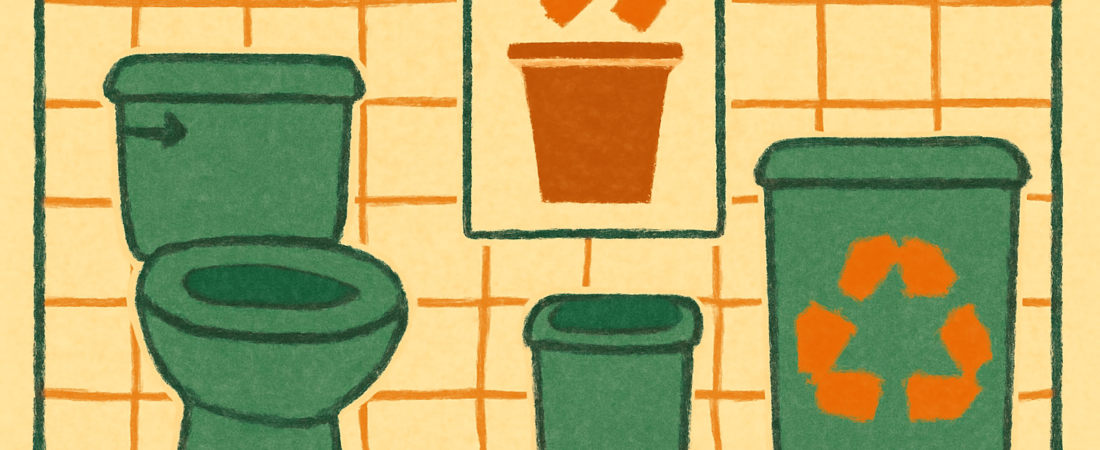
Korean public restrooms are usually clean and free, but toilet paper may go in the bin in older buildings. Trash is sorted into general waste, food waste and recyclables, and streets have few public bins. Carry a small bag, follow local signs, and check your city’s official rules, since details vary by district.
Last checked: 2026-11-11
- Public restrooms: what to expect
- How Korea’s trash system works
- Recycling: sorting rules for visitors
- What the data sources can tell you
- Comparison: waste types at a glance
- FAQ
- Sources
- Related guides
Many first-time visitors notice two things in Korea. Restrooms are easy to find, and public trash bins are not. Both facts connect to a waste system built around the household and the building, not the street corner.
This guide explains what you will meet in public restrooms and how Korea handles trash and recycling. It also shows where to find current official data. We do not quote statistics here, because numbers change. We tell you which sources publish them so you can check the latest figures yourself.
Public restrooms: what to expect
Public restrooms are common in Korea. You will find them in subway stations, department stores, large parks, bus terminals and many cafes. Most are free to use.
Where to find them
Subway stations are the most reliable option for travelers. Many stations have restrooms inside or just outside the fare gates. Signs usually show symbols and English, but not always.
Department stores and shopping malls have restrooms on most floors. These are often the cleanest and best stocked. Large parks and tourist areas also have public facilities, though quality varies.
Cafes and restaurants sometimes keep restrooms for customers only. Some have a code on the door, printed on the receipt. If you see a keypad, ask staff politely.
The toilet paper question
This surprises many visitors. In some older buildings and a few public facilities, a sign asks you to put used toilet paper in the bin, not the toilet. The reason is narrow pipes that can clog.
This practice has been fading in newer buildings, and many modern restrooms now allow flushing. Do not assume, though. Look for a sign or a small covered bin beside the toilet. If you see one, follow the sign. If you are unsure, check the wall or ask staff.
What is usually available
- Soap at the sink, often a pump or foam dispenser.
- Toilet paper in the stall, though some facilities keep a shared roll outside the stalls.
- Hand dryers or paper towels, which can run out in busy places.
- Bidet seats in many newer buildings, with simple button controls.
Carrying a small packet of tissues is a smart habit. Supply can run low in busy spots, especially in older facilities or at festivals.
Safety and etiquette
Public restrooms are generally considered safe, but use normal caution. Keep your bag with you, not on the floor. Queue lines can be informal, so watch how others wait.
Some facilities mark accessible stalls and baby-changing areas. Signs vary, so look for pictograms. If you need a specific feature, check the facility’s official page or ask at a nearby information desk.
How Korea’s trash system works
Korea separates household waste at the source. Residents sort into several streams, and local governments run collection. This explains why you see few bins on the street.
The volume-based fee system
Korea uses a volume-based waste fee for general household trash. Residents buy official trash bags from local shops, and the bag price pays for collection. Rules and bag prices differ by city and district.
As a visitor, you will rarely buy these bags. But if you rent an apartment or a short-stay home, your host should explain which bags to use. Using the wrong bag can lead to a refused pickup or a fine.
Why street bins are scarce
Many visitors search for a bin and find none. Public bins on streets are limited in many cities. Some areas have bins near subway exits, convenience stores or tourist spots, but not consistently.
The practical advice is simple. Carry a small bag for your own trash. Take it back to your hotel, or use a bin inside a station, mall or convenience store. Ask politely before using a shop’s bin.
At your accommodation
Hotels handle waste for guests, so you can usually use the room bin. If you stay in an apartment-style rental, ask the host for the sorting rules. These often include a shared outdoor area with separate containers.
Keep food waste, recyclables and general trash apart from the start. It makes the next step much easier.
Recycling: sorting rules for visitors
Korea has a detailed recycling culture. Even short-stay visitors may need to sort if they stay in a rental home.
The main streams
Most local systems separate waste into these broad groups:
- General waste: items that cannot be recycled or composted, placed in the official bag.
- Food waste: leftover food, collected separately and handled in dedicated containers or bags.
- Recyclables: paper, plastic, glass, cans and similar items, usually sorted by material.
Exact categories differ by city and building. A rule in Seoul may not match one in a smaller city. Always check with your host, building manager or the local district office.
Clean and empty
A common rule is to rinse and empty containers before recycling. Remove food residue, drain liquids, and take off labels where asked. Plastic bottles and cans are generally easier to recycle when they are clean.
Many buildings also ask you to separate lids and caps from bottles. Some ask you to flatten boxes. Follow the signs posted at the collection point.
Food waste details
Food waste is handled separately in much of Korea. The aim is to keep it free of items that do not belong. Bones, shells and some other items may be treated as general waste in some places, but rules vary. Do not guess. Ask your host or check the local guidance.
Large items and special cases
Large items, such as furniture, usually need a special pickup and often a fee or sticker. Visitors rarely deal with this. If you break something in a rental, tell your host rather than leaving it by the bins.
Drink containers and deposits
Korea has deposit and return programs for some containers, and rules have been changing in recent years. Because policy can shift, check the Ministry of Environment for the current list of covered items and locations. Do not assume any particular deposit amount.
What the data sources can tell you
This guide is meant to be a data explainer. That means pointing you to the kinds of sources that track how waste and recycling work in Korea, not repeating numbers that may be out of date.
Types of official data
- National environment statistics. The Ministry of Environment publishes waste generation and recycling data, usually as annual reports. These cover household waste, food waste and recycling rates at a national level.
- Local government data. City and district offices publish collection schedules, bag types and local rules. These are the most useful for visitors staying in one place.
- National statistics portals. Korea’s national statistics office hosts datasets that include environmental indicators. Search by topic and year.
- Public facility information. Transit operators and city governments publish information about station facilities, including restrooms.
How to read the numbers
When you open a report, check three things. First, the year of the data. Second, whether the figure is national or local. Third, how the source defines each category, since definitions can differ between reports.
Recycling rates, for example, can be calculated in different ways. A figure from one agency may not match a figure from another. Compare like with like, and read the notes.
Check current numbers
We do not publish specific rates, totals or bag prices here. They change by year and by region. If you need a figure for study, writing or planning, open the source directly. Note the publication date and cite it.
Comparison: waste types at a glance
The table below gives a general overview of the main waste streams. It is a simplified guide, not a legal rule. Cost notes reflect that bag prices vary by city, so check your local office for current prices.
| Waste type | Typical examples | How it is usually handled | Cost for visitors |
|---|---|---|---|
| General waste | Items that cannot be recycled or composted | Placed in an official local bag at the collection point | Bag price varies by city; check your district office. Typically small, often a few cents to under $1 per bag (roughly a few hundred to over 1,000 KRW). |
| Food waste | Leftover food scraps | Collected separately in a dedicated container or bag | Varies by city and building; ask your host |
| Recyclables | Paper, plastic bottles, cans, glass | Rinsed, sorted by material and placed in marked bins | Usually no separate charge; follow building rules |
| Large items | Furniture, appliances | Special pickup, often with a fee or sticker | Varies widely; contact your host or local office |
| Hotel waste | Everything from your room | Handled by staff | Included in your stay |
All price ranges above are approximate and for orientation only. Verify the current bag price with the local district office before relying on it.
FAQ
Are public restrooms in Korea free?
Most public restrooms in stations, parks and malls are free. Some cafes and restaurants keep restrooms for customers and may use a door code. If you see a keypad, ask staff or check your receipt.
Can I flush toilet paper in Korea?
In most modern buildings, yes. Some older facilities ask you to use the bin because of narrow pipes. Look for a sign or a covered bin near the toilet. If you are unsure, follow what the sign says or ask staff.
Why are there so few trash cans on Korean streets?
Korea’s system focuses on household and building-level sorting, so street bins are limited in many areas. Carry a small bag for your own trash. Use bins inside stations, malls and convenience stores, and ask politely first where needed.
Do tourists have to sort recycling?
In a hotel, staff handle it. If you stay in an apartment or short-term rental, you may need to sort. Ask your host for the local rules, since categories and collection points differ by city and building.
Where can I find the latest waste and recycling numbers?
Check the Ministry of Environment for national reports and your local city or district office for local rules. Note the publication year and compare like with like. Figures change, so always verify on the official site.
Sources
- Ministry of Environment, Republic of Korea: https://me.go.kr
- Statistics Korea (KOSTAT): https://kostat.go.kr
- Korea Environment Corporation: https://www.keco.or.kr
- Seoul Metropolitan Government: https://english.seoul.go.kr
- Korea Tourism Organization (Visit Korea): https://english.visitkorea.or.kr
These are homepage-level links. Open each site and search for waste, recycling or facility information to find the current pages and reports.
Leave a Reply