Table of Contents
What Is Undercover Chef, and Why Is Everyone Talking About It?
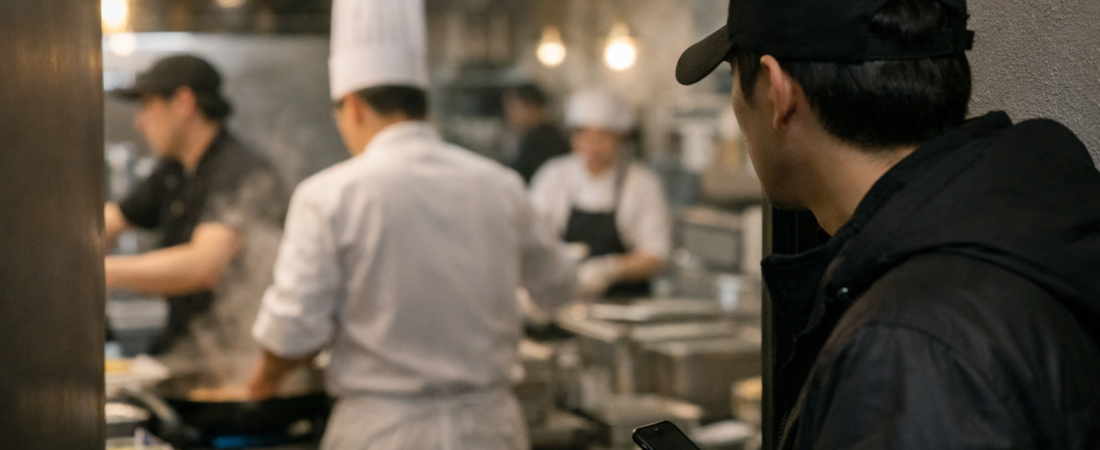
What happens when a celebrated chef gets demoted to dishwasher duty? That is the exact question tvN’s Undercover Chef answers, and Korean audiences cannot stop watching. The show sends three acclaimed chefs abroad, strips away their titles, and drops them into unfamiliar kitchens as the lowest-ranked staff member.
No fancy plating stations. No adoring fans. Just a mop, a dish rack, and a head chef who has no idea their new “trainee” once ran a Michelin kitchen back home.
Chefs Sam Kim, Jung Ji-sun, and Kwon Sung-jun each traveled to restaurants in three different countries for Undercover Chef. Their job was simple on paper: start from zero, again, in someone else’s kitchen.
In practice, it turned out to be brutally hard. Ratings for Undercover Chef climbed steadily as episodes aired, and viewers say the reason is obvious — this is what real struggle looks like, not a scripted competition.
Why Watching Top Chefs Fail Feels So Satisfying
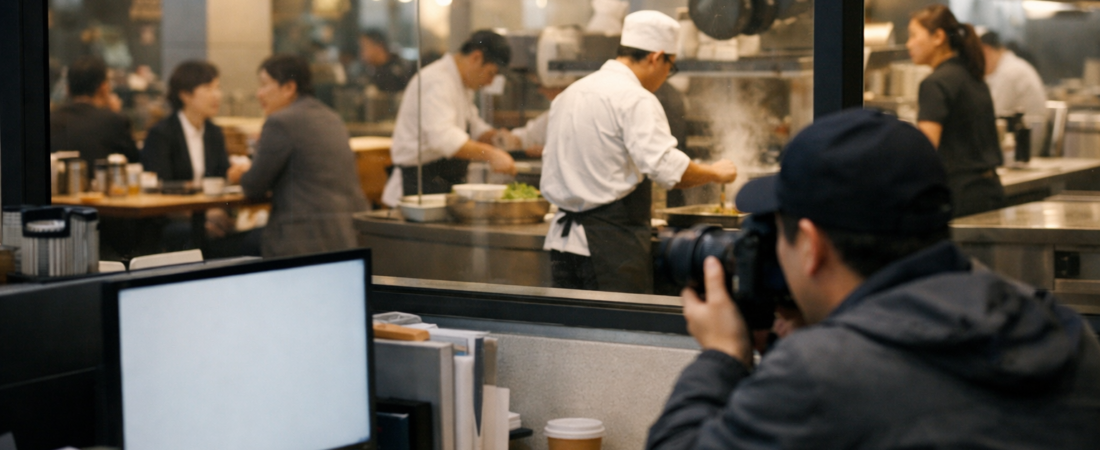
Reality cooking shows usually show us winners. Undercover Chef flips that formula and shows us beginners, even when the “beginners” are already famous names.
Why does that hit differently? Because most of us know exactly what it feels like to be the new person who cannot keep up.
Have you ever started a job and felt completely lost on day one, even though you were supposedly qualified for it? That is the emotional core of Undercover Chef, and it is why viewers connect so strongly with the show.
According to the production team, the chefs’ effort surprised even the people filming it. Producer Hong Jin-ju said the sincerity and stubborn determination the three chefs showed went far beyond what anyone expected going into filming.
They were not performing humility for the cameras. They were genuinely struggling to chop vegetables fast enough, memorize orders correctly, and earn the trust of coworkers who had no idea who they were.
Korean food culture has always valued chogi, or the beginner’s mind — the humility of starting over no matter how far you have climbed. Undercover Chef puts that cultural value directly on screen, letting viewers watch accomplished professionals rediscover it the hard way.
It turns out watching someone fail at chopping onions can be more compelling than watching them plate a perfect dessert (who knew humility tasted this good in eight-episode form?).
Behind the Scenes: How Little Production Made Undercover Chef Work
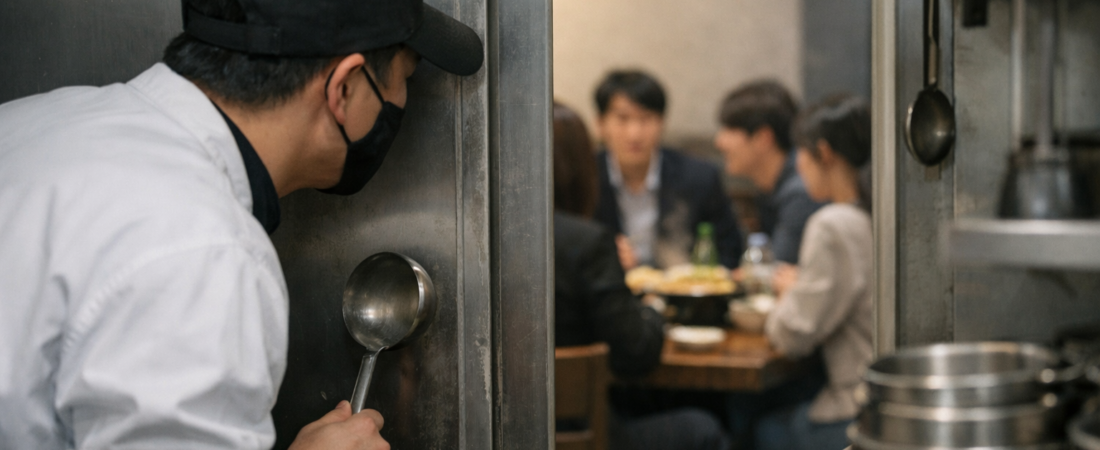
Here is the twist that makes Undercover Chef stand out from other Korean variety shows. The production team says they barely intervened at all.
Hong Jin-ju explained that the crew stayed hands-off once filming began, letting the restaurants’ real rhythms dictate what happened. There were no manufactured challenges, no dramatic twists inserted by editors — just three chefs trying to survive an actual shift.
Writer Yoon Al-eum, who helped shape the show’s format, reportedly built Undercover Chef around this restraint on purpose. Instead of designing clever gimmicks, the team trusted that authentic struggle would carry the story on its own.
That is a real gamble in Korean television, where flashy formats and big twists usually drive ratings. Innovation in editing or structure was not the winning card here.
Genuine, unscripted effort was. This matters for how we think about entertainment more broadly.
Audiences, it seems, are growing tired of manufactured drama and hungry for something that feels true. Undercover Chef succeeded precisely because it resisted the urge to manufacture anything at all.
The local restaurant staff working alongside the celebrity chefs became an unexpected bonus. Kitchen coworkers who had no idea they were on camera with famous names quickly built their own fan followings once the episodes aired.
Their genuine reactions — confusion, frustration, eventual respect — added another layer of authenticity that no scriptwriter could have planned. You can read more about the show’s reception via Kyunghyang Shinmun, the outlet that first reported on the production team’s approach.
From Local Kitchens to a Global Spin-off: What’s Next
Success has consequences, and for Undercover Chef, that means expansion. Production has already confirmed a spin-off that will invite some of the overseas restaurant staff to Korea.
The same local cooks who unknowingly worked beside Korean celebrity chefs will now get their own turn in the spotlight. It is a fitting reversal — the “extras” becoming the main story.
This kind of cross-cultural exchange fits a broader pattern in Korean entertainment right now. Shows built around real human connection, rather than competition alone, tend to travel well internationally.
Think of how Korean dramas built on quiet, sincere relationships have found global audiences far beyond what anyone predicted a decade ago. Undercover Chef may follow a similar path, precisely because its appeal is not really about cooking skill.
It is about watching people rebuild competence and humility from nothing, which is a story that translates across any language.
What does it actually mean to start over when you have already proven yourself? Undercover Chef does not answer that question with easy inspiration or forced positivity.
The chefs on screen look tired, frustrated, and occasionally embarrassed, and that honesty is worth sitting with. There is something quietly dignifying about watching accomplished people choose to be beginners again, rather than protecting a polished image at all costs.
That willingness says something true about human worth — it does not evaporate just because a person is temporarily bad at something new. But let’s be honest about the other side too: the same drive that makes these chefs excellent can also make failure feel unbearable, even humiliating, when the cameras are rolling and the whole country is watching.
Perfectionism and humility often live in the same kitchen, pulling in opposite directions. What redeems the show, and maybe redeems the moment for the chefs themselves, is the slow rebuilding of trust with strangers who owe them nothing — a busboy who starts nodding with respect, a head chef who stops double-checking their knife work.
That small, earned trust is not dramatic, but it is real, and real things tend to outlast whatever trend brought us to watch in the first place.
Korean variety television has produced plenty of formats built on spectacle. Undercover Chef suggests a quieter alternative is possible — one where sincerity, not innovation, drives the ratings.
Whether other producers follow this model remains to be seen. For now, Undercover Chef has proven that audiences will reward honesty, even when it looks like failure on screen.
What do you think — does watching successful people struggle at something new make you respect them more, or does it just make you nervous for them?
AI-Generated Photorealistic Image — All people, scenes, and details in this image are entirely AI-generated and fictional. Not a real photograph of an actual person or event. 이 이미지는 AI로 생성된 가상 이미지입니다.


Leave a Reply